

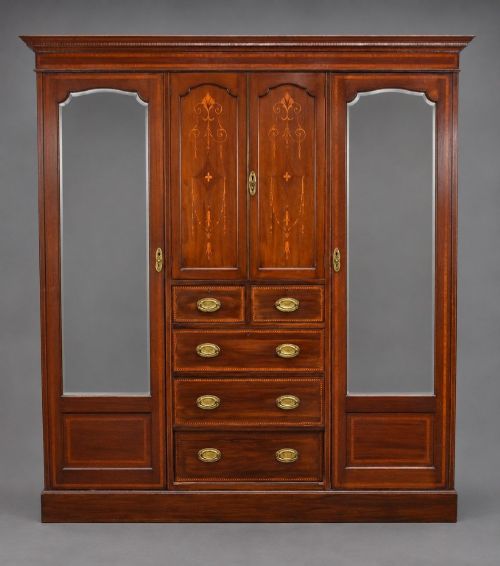
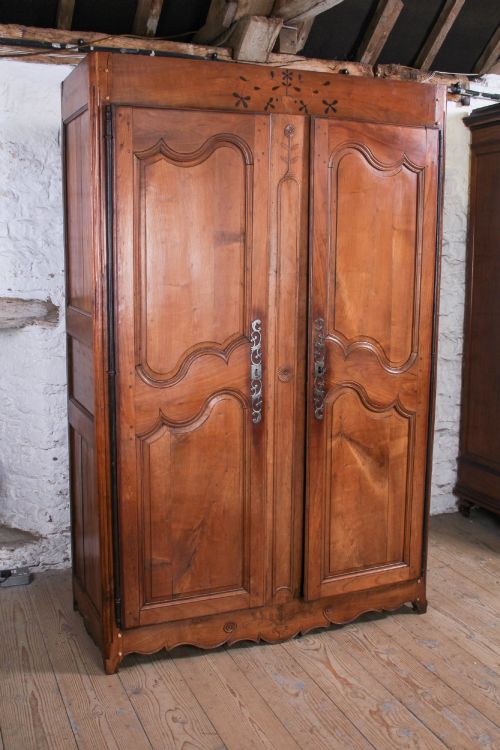
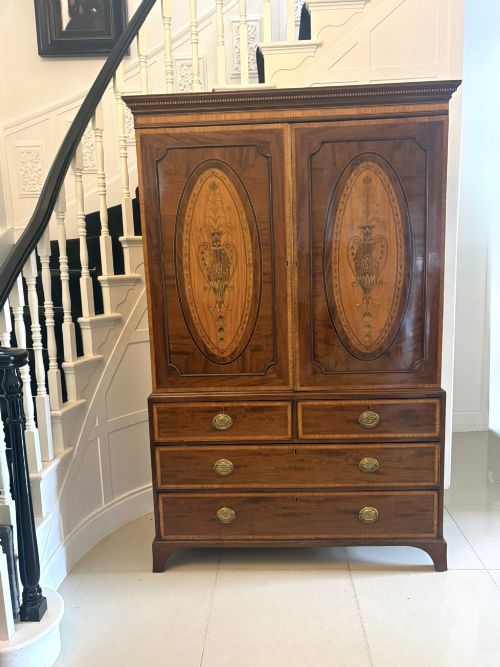


Wood Marquetry Armoire
These wood marquetry armoire pieces combine large-scale bedroom storage with intricate veneered patterns, offering both presence and practicality.
Wood Marquetry Armoire
When searching for a wood marquetry armoire, you are looking at substantial storage furniture decorated with precision-cut wood veneers that form pictorial or geometric designs. These pieces range from Georgian and Victorian wardrobe formats to Dutch baroque examples and cabinet on chest constructions.
The versions most commonly met on this page include large mahogany, rosewood, and walnut wardrobes alongside satinwood linen presses and compactum styles. Makers incorporated various timbers to build architectural cases fitted with doors, drawers, and internal hanging space.
Originating across different centuries, these items span 17th-century William and Mary forms up through Edwardian bedroom suites and Sheraton Revival pieces. Each era brought distinct proportions and framing methods to the fundamental storage carcass.
How they were made
Carpenters constructed these large carcasses using primary structural timbers like mahogany, walnut, and rosewood, applying contrasting veneers across the surface. Boxwood, satinwood, and brass elements were often inlaid into the ground timber to delineate complex floral and geometric marquetry scenes.
Cabinetmakers utilised hand-cut veneers, securing individual pieces of differing wood grains and colours into recessed channels carved directly into the carcase or backing panel. Glass panels, carved mouldings, and fitted interior compartments were then integrated to complete the wardrobe or linen press.
Wood Marquetry Armoire Retail Price Guide 2026
Typical asking prices for wood marquetry armoire among the pieces listed under this phrase on Sellingantiques today, from the lower quarter to the upper quarter. They describe what is for sale here now, not the wider market.
Materials recorded across these wardrobe and linen press listings include mahogany, satinwood, rosewood, walnut, and boxwood.
What varies in quality
The standard of a wood marquetry armoire rests largely on the intricacy of the veneer work and the selection of figured timbers. Superior pieces display seamless integration between the contrasting woods, maintaining tight joints and crisp outlines within the floral or geometric motifs without lifting or shrinkage.
Structural integrity also separates the highest-grade pieces, seen in heavy breakfront carcases, substantial mahogany or walnut carcases, and sophisticated interior fittings such as fitted drawers and linen slides. Maker attribution, such as work by Edwards & Roberts or Maples & Co, further influences the standing of the piece.
Edwards & Roberts·Maples & Co
The Wood Marquetry Armoire Glossary
- Marquetry
- The art of applying decorative pieces of veneer to a structural structure to form intricate pictures or patterns. It differs from inlay by covering the entire surface rather than fitting into carved cavities.
- Veneer
- A thin slice of fine timber applied to a coarser secondary wood base to provide a decorative surface. This technique allows cabinetmakers to utilise highly figured grains economically.
- Linen Press
- A tall storage piece featuring upper doors enclosing sliding trays or shelves, above a base fitted with drawers. They were traditionally used to store folded textiles and garments before hanging wardrobes became standard.
- Compactum
- A multi-compartment wardrobe designed to offer specialised storage including hanging space, drawers, and shoe racks within a single integrated unit. They are typically large Edwardian or Victorian case pieces.
- Breakfront
- A piece of furniture whose front projects forward in sections, with the central portion usually advancing past the flanking wings. This architectural arrangement creates depth and shadow across large wardrobes.
Wood Marquetry Armoire: Frequently Asked Questions
What is a wood marquetry armoire?
A wood marquetry armoire is a large storage cabinet or wardrobe decorated with detailed veneer patterns cut from contrasting timbers. These pieces function primarily as statement bedroom furniture providing hanging space and shelving.
They combine practical domestic storage with decorative craftsmanship, displaying pictorial or geometric designs across their doors and facades.
How do I date an armoire?
Dating relies on examining the structural timbers, overall architectural style, and the framing methods used inside the carcase. Pieces range from 17th-century William and Mary forms to Georgian mahogany designs and Edwardian satinwood suites.
Hardware, drawer construction, and secondary woods inside the piece offer further clues to the manufacturing period.
How were these wardrobes used?
These large storage pieces were designed for bedrooms to store garments, linen, and personal belongings. Many incorporate hanging sections, sliding trays, and internal drawers to handle different types of clothing.
Some formats, such as linen presses, reflect an era when clothes were predominantly folded rather than hung on hangers.
How do I care for marquetry?
Marquetry surfaces require stable environmental conditions away from direct sunlight and excessive humidity to prevent the fine wood veneers from drying out or lifting. Regular dusting with a soft, dry cloth preserves the polished finish.
Applying appropriate wax polishes occasionally helps nourish the contrasting timbers and protects the intricate veneer work.