
Wood Kitchen Table
A wood kitchen table serves as the working heart of the home, bringing enduring utility and character to daily meals.
Wood Kitchen Table
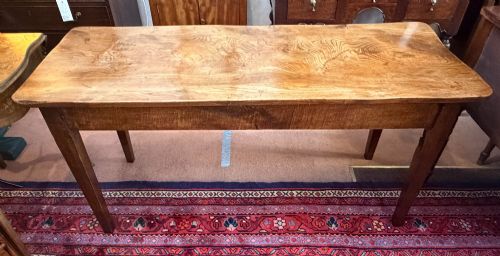
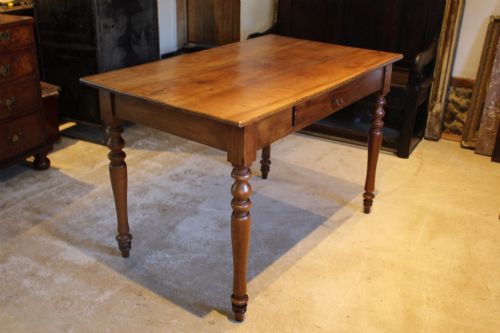
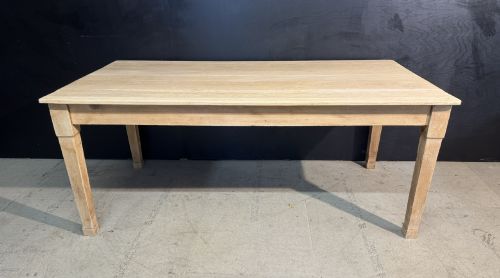
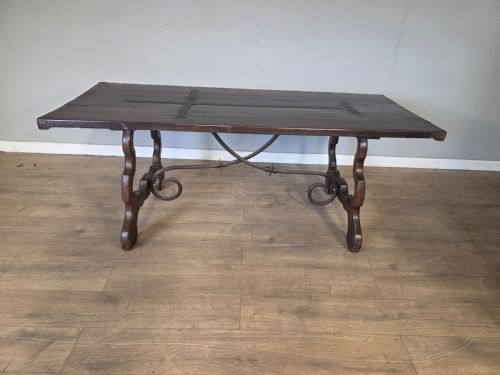
A wood kitchen table encompasses sturdy utilitarian boards and refectory forms designed for daily domestic use. The pieces appearing most frequently range from eighteenth-century oak and cherrywood farmhouse boards to nineteenth-century scrub-top pine and fruitwood prep surfaces.
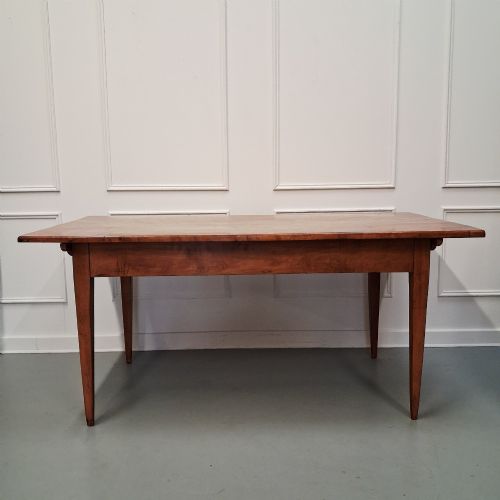
Makers built these surfaces for preparation, baking and dining, resulting in proportions suited to busy rooms. Regional styles span French provincial cherrywood benches to Welsh oak and English scrub-top tables.
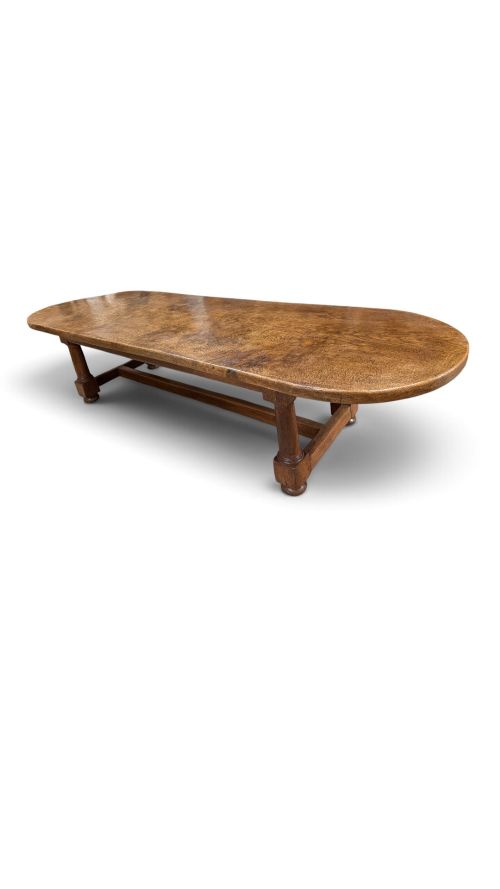
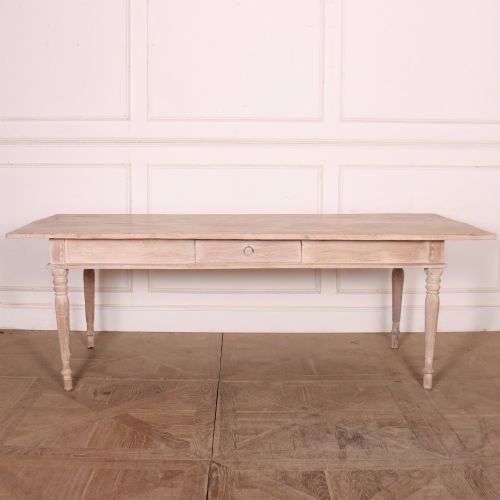
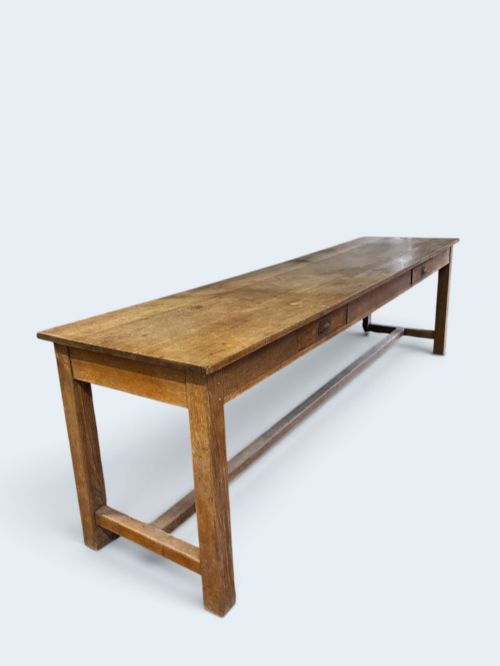
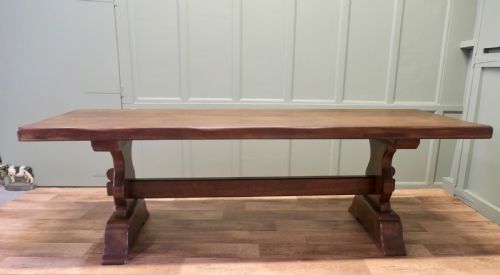
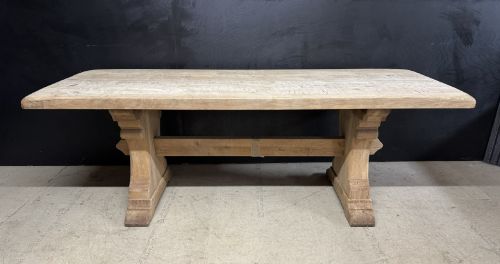
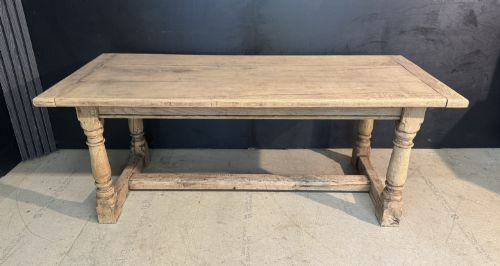
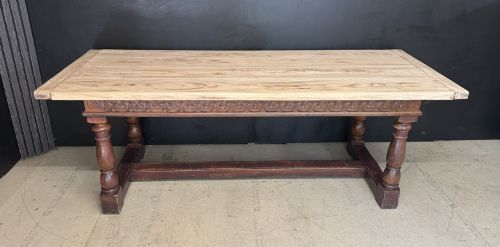
Examples often show the marks of past labour through patinated tops, end drawers and trestle bases. Buyers encounter variants from simple pine work tables to heavy oak refectory designs built to seat large households.
How They Were Made
Carpenters constructed these tables using solid native hardwoods and softwoods such as oak, pine, elm, cherrywood and fruitwood. Planks were joined with pegged mortise and tenon joints to withstand heavy downward pressure.
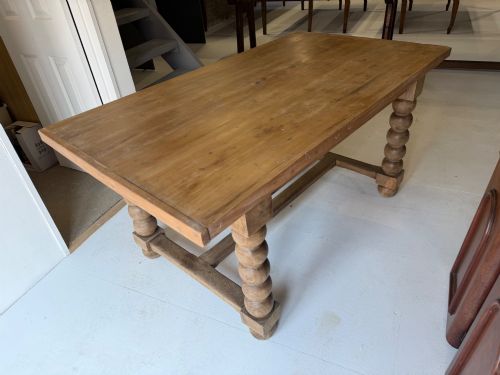
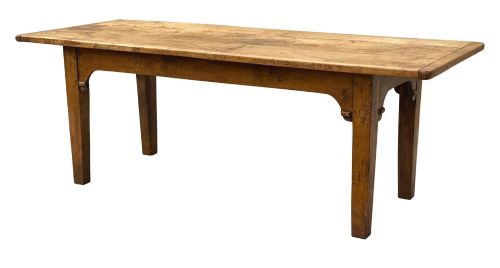
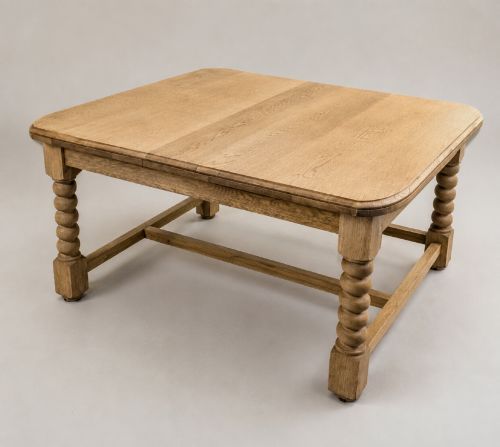
Tops frequently consist of single planks or two-board arrangements supported by sturdy stretcher bases, bobbin legs or trestles. Surfaces were left plain or scrubbed clean, allowing the natural grain of the timber to emerge through decades of use.
Listings feature oak, pine, elm, cherrywood, and fruitwood spanning the eighteenth, nineteenth, and early twentieth centuries.
What Varies in Quality
Quality rests upon the selection of timber and the structural integrity of the frame. Dense hardwoods like oak and aged cherrywood offer superior longevity compared to softer secondary timbers.
Proportion and joinery differentiate standard workshop output from finer country pieces. Well-balanced leg placement, thick top boards and minimal timber replacement preserve the original integrity of the form.
The Wood Kitchen Table Glossary
- Refectory table
- A long narrow dining table originally built for monastic dining halls and later adapted for domestic kitchens. These forms typically feature thick stretcher rails for added stability.
- Scrub top
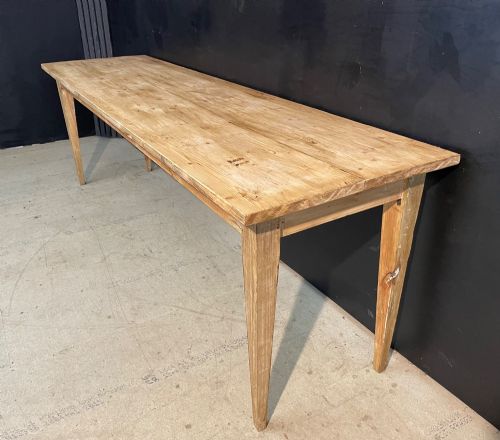
- A plain wooden tabletop designed to be repeatedly scoured clean with water and sand. This process wears away the softer summer growth of the wood, leaving a raised, textured grain.
- Draw leaf table
- A table equipped with sliding leaves stored beneath the main top that pull out to extend the surface area. This mechanism provides flexible seating capacity.
- Boulangerie table
- A long narrow prep table historically used in French bakeries for rolling dough. They often feature narrow proportions and fruitwood or pine construction.
- Trestle
- A structural support consisting of a horizontal beam fixed to two splayed feet. This design allows maximum legroom along the length of the table.
Wood Kitchen Table: Frequently Asked Questions
How do I choose the right size?
Consider the daily seating requirements and the physical dimensions of the room. Allow adequate clearance around all sides for chairs and movement.
Measure the available floor space carefully, keeping in mind that older refectory and farmhouse formats can have substantial overhangs and stretcher bases.
How should I clean a scrub top?
Use a damp cloth and mild soap to remove everyday debris from the surface. Avoid harsh chemical cleaners that strip the historic patina from the timber.
Dry the wood thoroughly after washing to prevent moisture from warping the grain or lifting old pegged joints.
Can I use these tables daily?
These pieces were originally built for heavy domestic labour and food preparation, making them well-suited for modern family life. Their robust construction handles regular use comfortably.
Protect the historic timber by using mats for hot dishes and wiping up spills promptly to maintain the integrity of the wax or oiled finish.
How do I identify fruitwood?
Fruitwood encompasses timber from trees such as cherry, apple and pear, which exhibit warm tones and fine, even grain patterns. These woods develop a deep, rich patina over time.
Inspect the grain closely under good light to distinguish the softer orange-brown hues of fruitwood from the coarser open grain of oak or ash.