
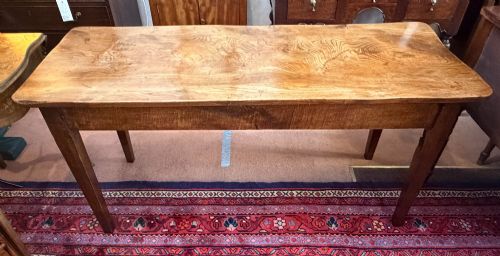
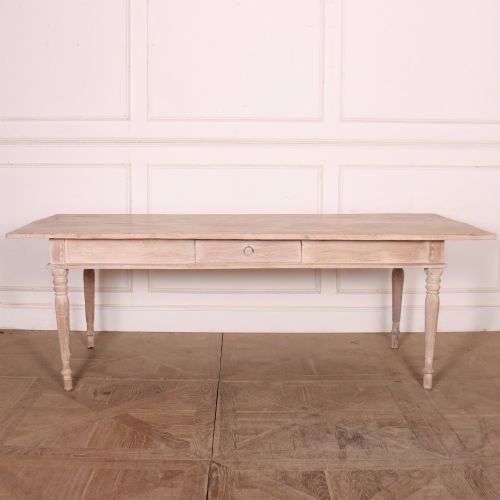
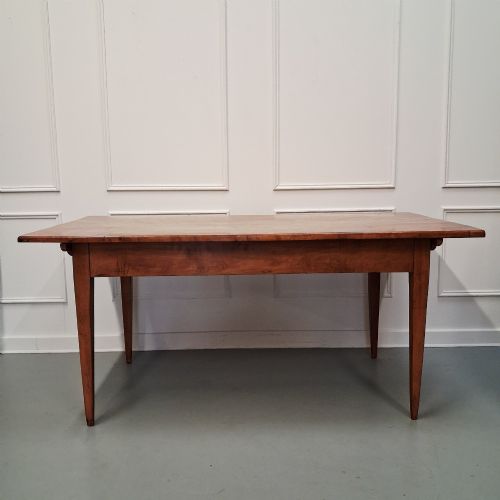
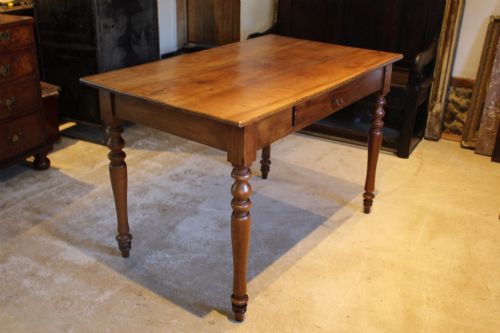
Wood Kitchen Dining Table
When you search for a wood kitchen dining table, you seek a surface shaped by daily domestic life across centuries.
Wood Kitchen Dining Table
A wood kitchen dining table serves as the central hub of domestic life, designed for meal preparation, family gatherings, and everyday use. The pieces gathered here span from the eighteenth century into the twentieth, encompassing both British provincial examples and continental European workshops.
The most frequent encounters on this page are sturdy farmhouse and refectory tables originating from French provincial regions, alongside British oak and pine kitchen tables. These forms prioritised utility, resulting in generous proportions, substantial timbers, and occasional functional additions such as drawers or sliding bread boards.
How They Were Made
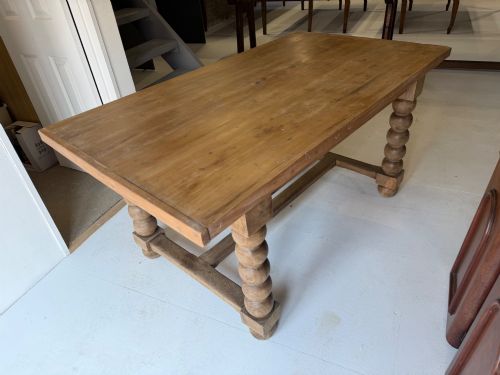
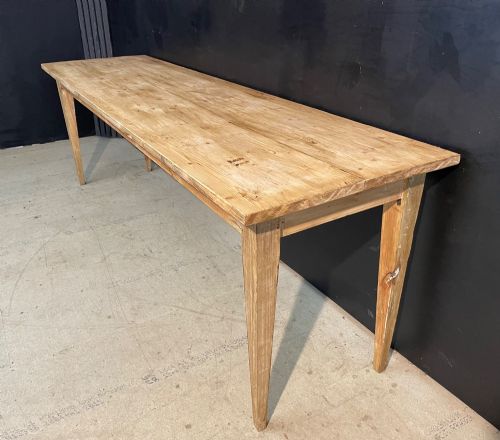
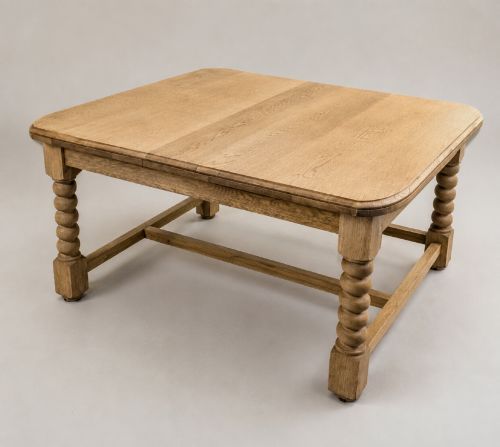
Cabinetmakers and rural joiners constructed these tables from dense domestic hardwoods like oak, elm, ash, and cherrywood, alongside durable softwoods such as pine. Single-plank or multi-board timber tops were joined using traditional pegged mortise and tenon construction, often secured to sturdy trestle, bobbin, or tapered legs.
Makers utilised breadboard ends on the timber tops to counteract natural wood movement and warping over decades of heavy service in kitchens and dining rooms. Surface finishes developed organically through decades of waxing, scrubbing, and general domestic wear rather than applied modern lacquers.
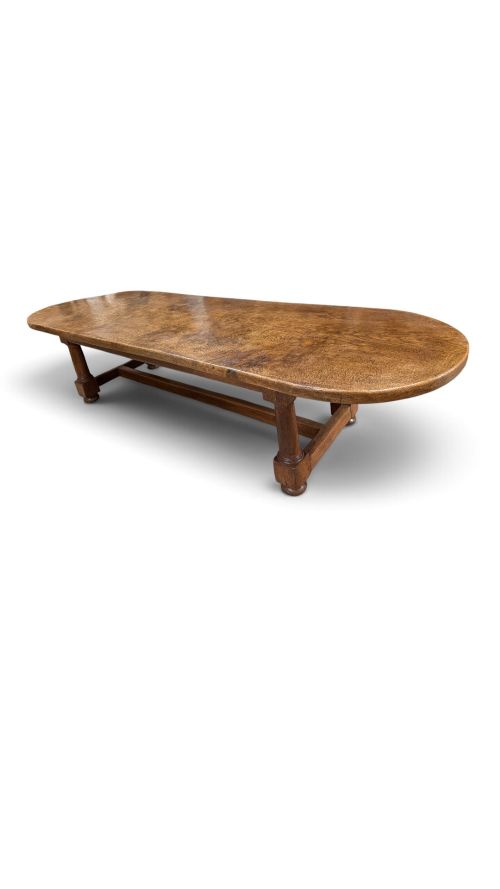
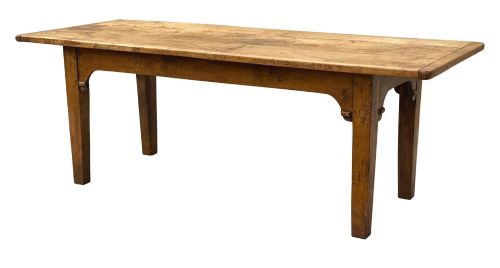
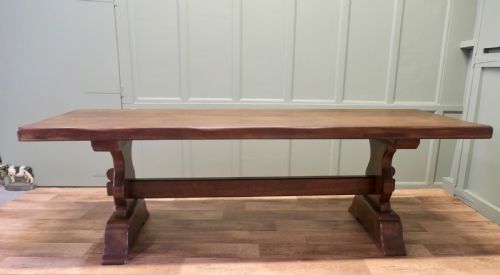
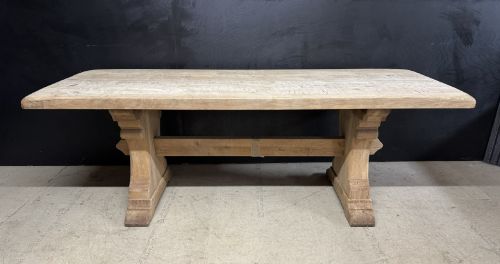
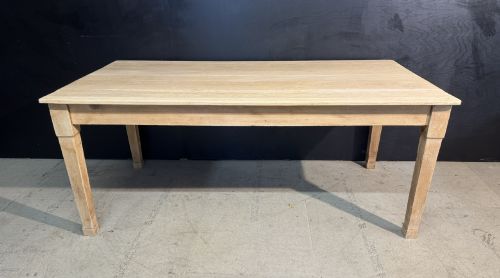
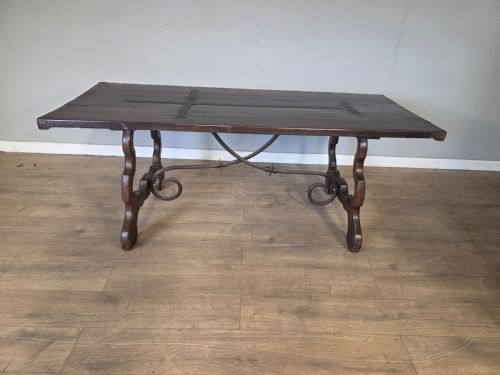
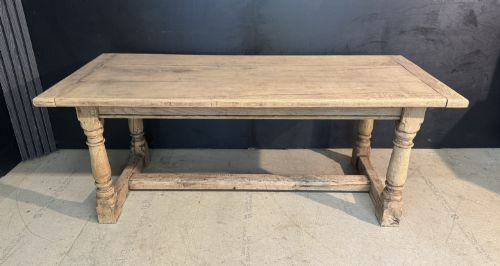
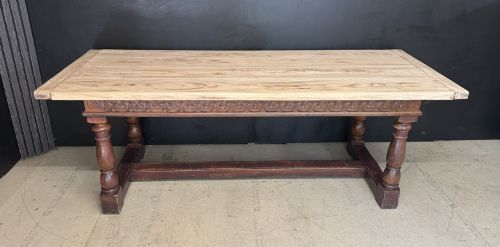
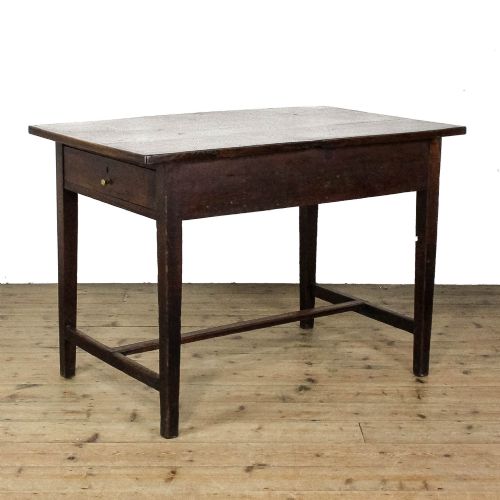
Form variations recorded across the inventory span standard dining tables, refectory styles, trestle designs, and practical additions like integrated drawers.
What Varies in Quality
The calibre of a wood kitchen dining table depends heavily on the integrity of its timber selection and the retention of its original structural form. Tables fashioned from single planks of cherrywood or seasoned oak command greater interest than those assembled from mismatched secondary timbers.
Proportion and hardware integration also dictate distinction, where original functional elements like drawers, stretchers, and breadboard ends remain intact without intrusive modern alterations. The harmony between the patinated top and the supporting base reflects the original maker's skill in balancing heavy domestic loads.
The Wood Kitchen Dining Table Glossary
- Breadboard end
- A transverse piece of wood attached to the end of a tabletop to prevent warping and stabilise the main boards. This traditional technique hides end grain and manages seasonal timber expansion.
- Refectory table
- A long, narrow dining table originally built for monastic dining halls and later adapted for domestic farmhouse use. These pieces typically feature substantial side stretchers for added leg stability.
- Trestle table
- A table supported by two or more upright frames connected by a horizontal beam or stretcher. This specific design allows maximum legroom along the length of the seating area.
- Patina
- The surface sheen and coloration developed by wood over years of handling, polishing, and exposure to light. Collectors value this natural ageing process as a mark of genuine period history.
- Draw leaf table
- A table equipped with sliding extension leaves concealed beneath the main top that pull out to lengthen the surface. This mechanical arrangement offers flexible seating capacity for larger gatherings.
Wood Kitchen Dining Table: Frequently Asked Questions
How do I care for an antique wood table?
Maintain the wood by applying natural beeswax periodically to nourish the dry grain and protect the surface from moisture. Avoid placing the table near direct heat sources or in strong sunlight to prevent timber splitting.
Clean spills promptly using a slightly damp cloth rather than harsh chemical sprays that strip the historic finish. Regular gentle buffing preserves the deep patina built up over generations of domestic use.
Can I use an antique kitchen table daily?
These tables were built specifically for heavy domestic labour, making them exceptionally well-suited for modern family dining and kitchen tasks. Their robust construction handles daily meals and preparation work with ease.
Using placemats and coasters helps shield the historic surface from hot dishes and accidental liquid rings while permitting normal use. Embracing minor new marks allows the table to continue accumulating its natural life story.
How do I date a wooden farmhouse table?
Examine the construction methods underneath the top, such as hand-cut pegged joints, saw marks, and the type of fixings used by the original joiner. Tool marks left by pit saws or adzes often point towards eighteenth or nineteenth-century provincial craftsmanship.
The choice of timber also offers clues, as regional woods like local fruitwood or dense oak reflect the specific materials available to period makers in Britain and France.
What is the difference between a refectory and farmhouse table?
Refectory tables generally feature a longer, narrower rectangular format supported by central trestles or heavy side stretchers derived from monastic dining halls. Farmhouse tables frequently adopt simpler four-leg configurations designed for everyday kitchen utility.
Both styles utilise thick timber tops, but refectory versions often project a more formal architectural presence compared to the relaxed regional character of standard farmhouse variants.