

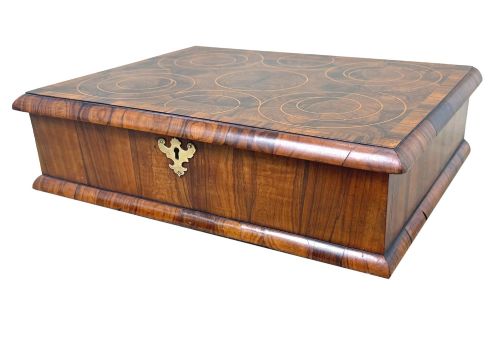
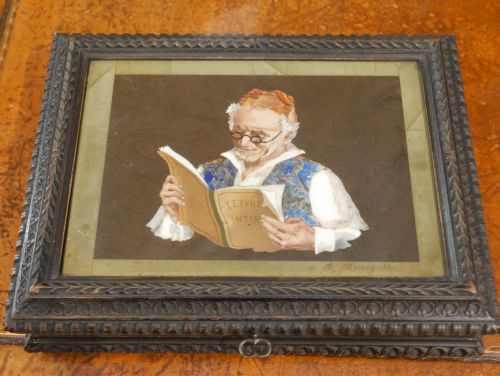
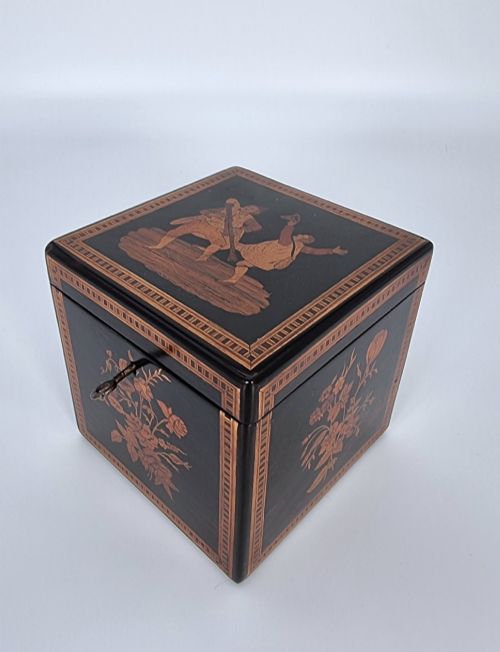

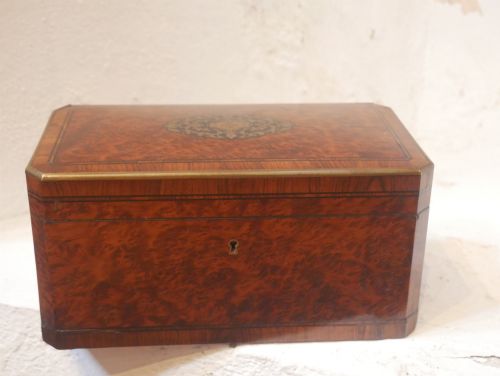
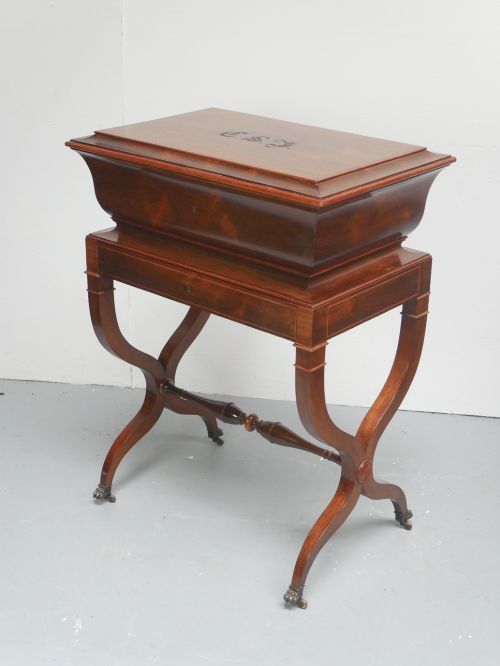
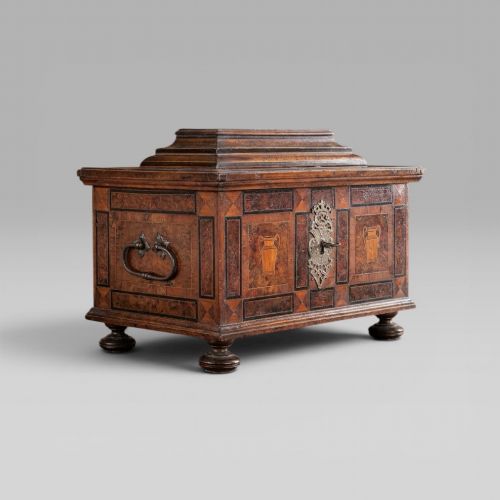

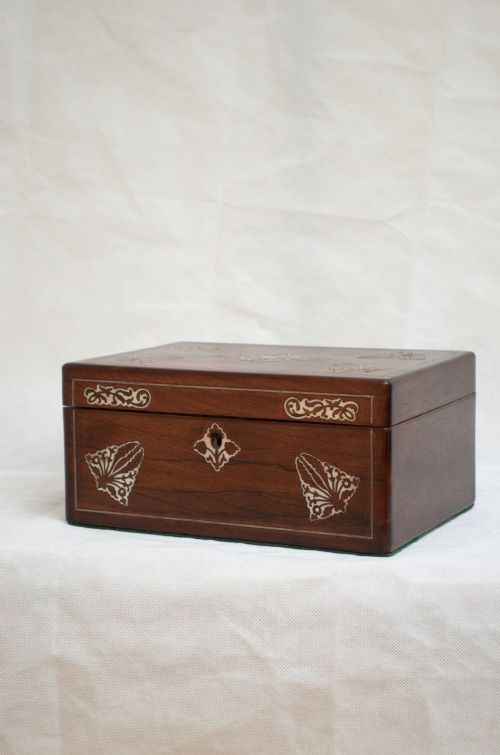


Wood Inlay Caskets
These wood inlay caskets are small domestic receptacles designed to secure personal treasures, letters and trinkets.
Wood Inlay Caskets
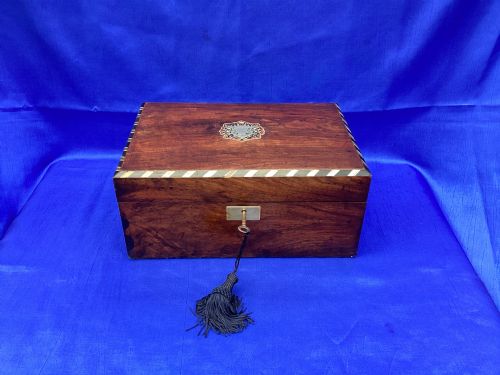
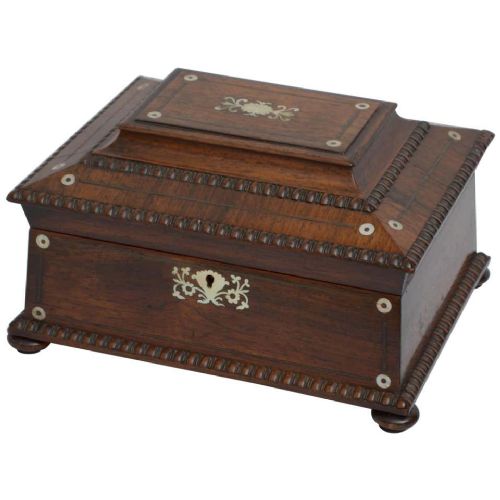
These wood inlay caskets appear primarily as Victorian, Regency and Georgian jewellery boxes, stationery cases and tea caddies. Makers fashioned these decorative boxes from dense hardwoods to house personal valuables and writing equipment upon household tables.
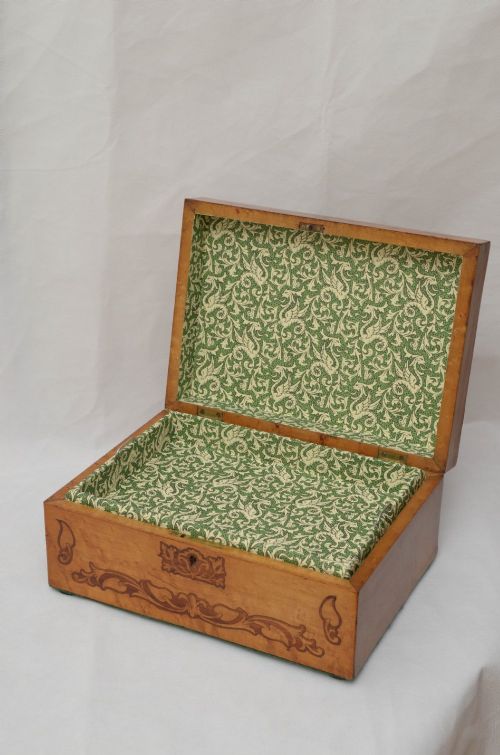
The domestic forms range from small keepsake boxes and glove boxes to fitted vanity cases and larger caskets. Many examples incorporate compartmentalised trays inside to organise jewellery and accessories.
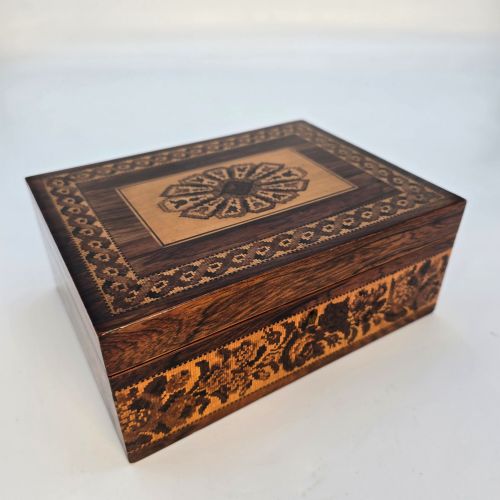
Continental pieces from Italy and France sit alongside English productions, spanning diverse regional styles from Sorrento marquetry to Tunbridge Ware. Walnut, rosewood and mahogany dominate the structural carcasses across the available periods.
Materials and construction
Craftsmen built the underlying carcass using hardwoods such as rosewood, walnut, coromandel and mahogany, providing a stable foundation for decorative treatments. Cabinetmakers then applied contrasting veneers, bandings and contrasting timbers including boxwood, maple and amboyna.
Inlay techniques incorporate precision cutting of wood veneers, alongside the insertion of mother-of-pearl, bone, brass and tortoiseshell details. Specialist workshops like those in Tunbridge Wells and Sorrento assembled tiny coloured wood blocks to form intricate mosaic pictures.
Wood Inlay Caskets Retail Price Guide 2026
Typical asking prices for wood inlay caskets among the pieces listed under this phrase on Sellingantiques today, from the lower quarter to the upper quarter. They describe what is for sale here now, not the wider market.
Victorian travellers brought home porcupine quill boxes from distant ports, turning prickly quills into surprisingly smooth stationery cases.
Distinctions in craftsmanship
The precision and complexity of the surface ornamentation separate standard productions from masterworks. Tighter joints, sharper contrast in the veneer work and the integration of delicate mother-of-pearl or brass stringing signal superior cabinetmaking.
The complexity of the interior fittings and the survival of original silk linings, working locks and compartmentalised trays influence the standing of each piece. Finer examples retain robust carcass construction without warping, allowing lids to close flush against the base.
Tahan·Edmund Nye·Lesage
The Wood Inlay Caskets Glossary
- Marquetry
- Decorative veneer work forming pictorial patterns or scenes using various coloured woods and natural materials. This technique requires exceptional skill in cutting and fitting individual pieces into a background veneer.
- Parquetry
- Geometric patterns formed by small pieces of wood fitted together to create tiled designs on box surfaces. This method creates repeating visual motifs across lids and sides.
- Tunbridge Ware
- Woodware featuring mosaic designs assembled from thousands of tiny tinted wood squares to depict flowers or buildings. This specialist craft originated in Kent during the nineteenth century.
- Pietra Dura
- Inlay work utilising polished coloured stones such as jasper, chalcedony and marble set into a wooden base. Artisans used this technique on select Italian boxes.
- Stringing
- Thin inlay lines of contrasting wood or metal set into the surface of a box to create borders and geometric framing. It defines the edges of panels and lid borders.
Wood Inlay Caskets: Frequently Asked Questions
What were wood inlay caskets used for originally?
These boxes served domestic functions to secure jewellery, letters, gloves and tea in wealthy households.
Owners kept them on dressing tables, writing desks and withdrawing room sideboards for daily convenience.
How do you date a wood inlay casket?
Dating relies upon the primary wood choices, the hardware style, and the specific inlay techniques employed.
Regency pieces often favour brass inlay and rosewood, whilst Victorian examples frequently showcase mother-of-pearl and exotic maples.
How should I clean a wood inlay casket?
Maintenance requires gentle dusting with a soft, dry cloth to protect the delicate veneer and polished surfaces.
Harsh chemical cleaners and excessive moisture must be avoided to prevent damage to the antique timber and internal linings.
Are the keys usually original?
Original keys are uncommon because small decorative items were easily misplaced over successive generations.
Locks remain functional in many instances, though replacement keys are often sourced to operate them.