
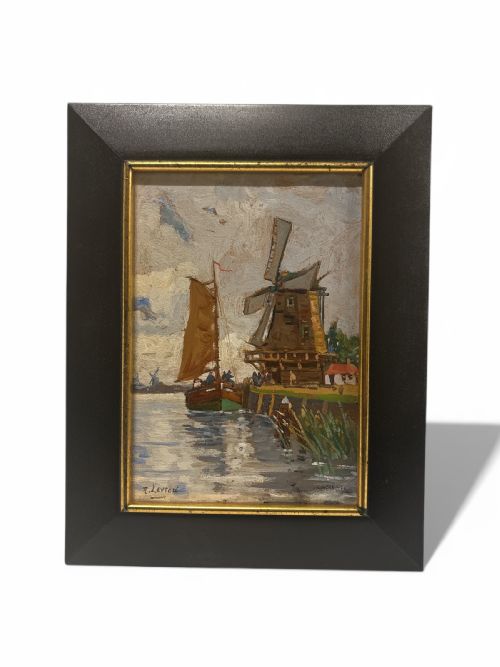

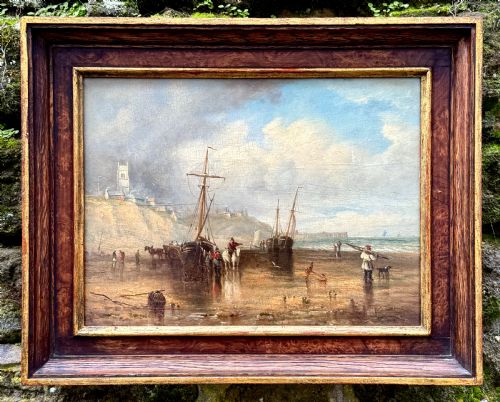
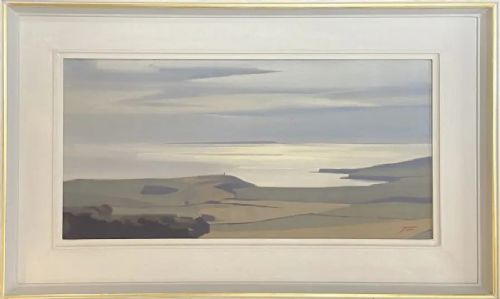
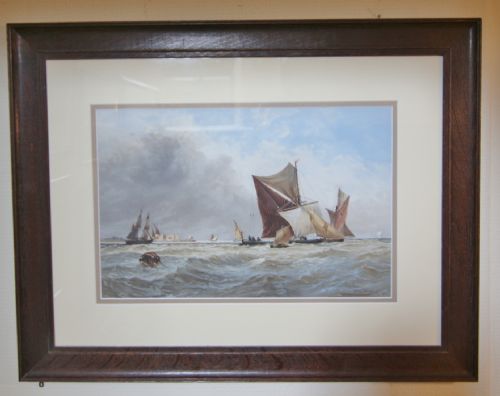
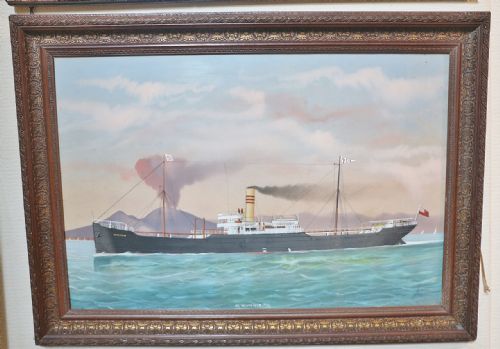
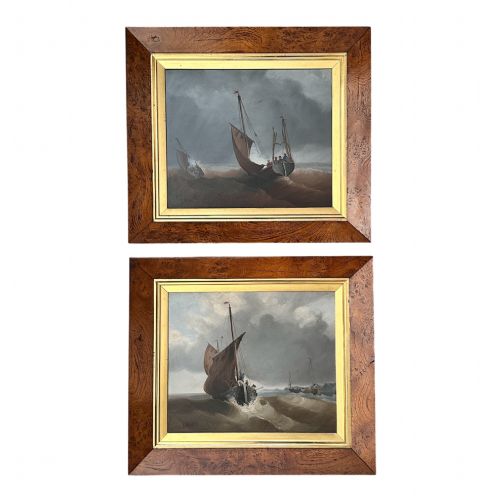


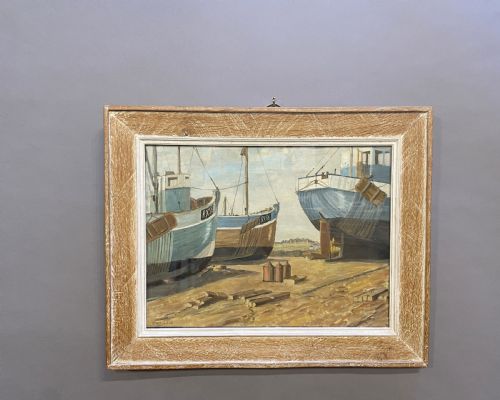


Wood Framed Coastal Art
Wood framed coastal art brings home the open sea, salt air, and historic maritime scenes preserved in oil, canvas, and watercolour.
Wood Framed Coastal Art
When you search for wood framed coastal art, you encounter a wide selection of paintings, watercolours, and wall art depicting seascapes, harbours, and coastal gatherings. These pieces span the Victorian and Edwardian eras through to the mid-twentieth century, capturing historical vessels, rugged shorelines, and calm bays.
The selections on this page feature works created by recognised artists as well as atmospheric regional pieces. Subjects range from dramatic shipwrecks and working fishing boats to quiet seaside views executed in oil and watercolour.
Materials and techniques
The works rely primarily on oil on canvas, oil on board, and watercolour on paper, housed within traditional wooden frames that frequently incorporate gilt detailing. Artists applied rich pigments to capture the changing light on water, coastal architecture, and stormy skies.
Framing forms an integral part of these pieces, utilising carved or moulded wood to enclose and complement the maritime subject matter. Protective glass commonly covers the delicate paper watercolours, while oil paintings remain open on canvas or board.
Listings feature 19th-century, Victorian, Edwardian, and mid-20th-century works executed in oil on canvas, watercolour, and charcoal.
Quality variations
The distinction between standard works and exceptional pieces rests upon the confidence of the brushwork, the handling of maritime light, and the fidelity of the perspective. Master painters render the movement of choppy seas and the structural details of ships with precise observation.
Original frames matching the period of the artwork add considerable substance to a piece. The presence of a clear signature, documented provenance, and historical exhibition details further elevate the standing of an individual artwork.
R Leyton·B Nash·Thomas Creswick·James Fry·TB Hardy·John Moore of Ipswich·Lionel Horsnell·Joseph Edward Hennah·Jean-Baptiste Olive·Cecil Rochfort D'Oyly-John·Fred Waugh·T.S. Wallis·William Raymond Dommersen·George Dodgson Callow·Frank Wood·George Stanfield Walters·Charles Cameron Baillie·Ernst Louizor·Eugene Boudin·J Wilson
The Wood Framed Coastal Art Glossary
- Seascape
- A work of art depicting the sea, ocean, or coastal views. These pieces frequently focus on ships, waves, and shorelines.
- Gilt
- Gold leaf or gold paint applied to the wooden frame. This finish adds reflective warmth and highlights decorative mouldings.
- Watercolour
- A painting method where the pigments are suspended in a water-based solution on paper. It requires precise control to achieve transparent washes of coastal light.
- Post-Impressionism
- An art movement following Impressionism that extends its use of vivid colours and thick brushstrokes. It appears in several twentieth-century seaside interpretations.
- Provenance
- The documented history of ownership of an artwork. A clear record verifies the authenticity and origin of the piece.
Wood Framed Coastal Art: Frequently Asked Questions
What periods do these pieces date from?
The works span from the early nineteenth century through the Victorian and Edwardian periods into the mid-twentieth century. You will find examples representing distinct historic painting traditions and twentieth-century modernist approaches.
Each period brings its own characteristic palette and framing style, allowing you to match the artwork precisely to your interior aesthetic.
How do I hang a heavy oil painting?
Heavy oil paintings in wooden frames require secure picture hooks fastened directly into wall studs or heavy-duty wall anchors. Ensure the hanging wire and D-rings on the back of the frame are robust enough to support the weight.
Check the stability of the frame joints before hanging to guarantee the security of the artwork over time.
Are watercolours sensitive to sunlight?
Watercolours on paper are sensitive to direct, prolonged sunlight and can fade if placed in bright windows. Hang these pieces away from intense, direct rays to preserve the original pigments.
Using conservation-grade glass with UV protection provides an extra layer of defence against environmental light degradation.
How do I identify a maritime painting?
Maritime paintings feature prominent nautical themes, including sailing ships, steam liners, fishing vessels, lighthouses, and coastal harbours. The focus remains primarily on the sea and coastal life rather than inland scenery.
Signatures, date inscriptions, and framing styles often help pin down the exact era and geographic origin of the scene.