






Vintage Marine Painting Pair
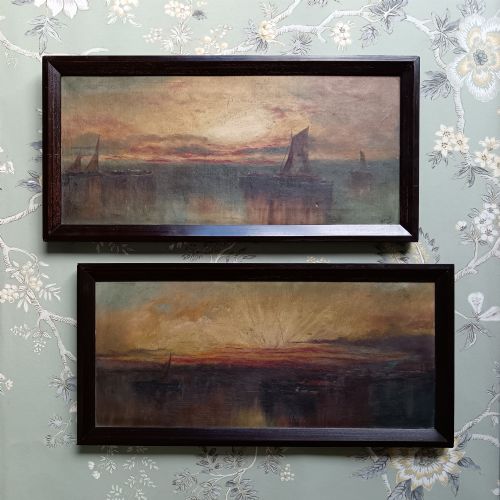
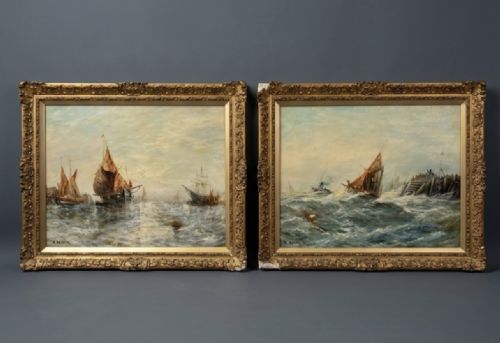
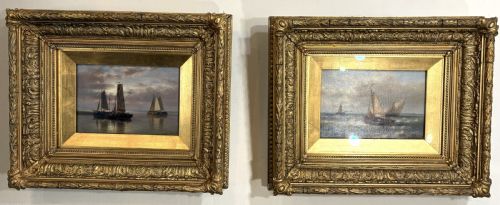
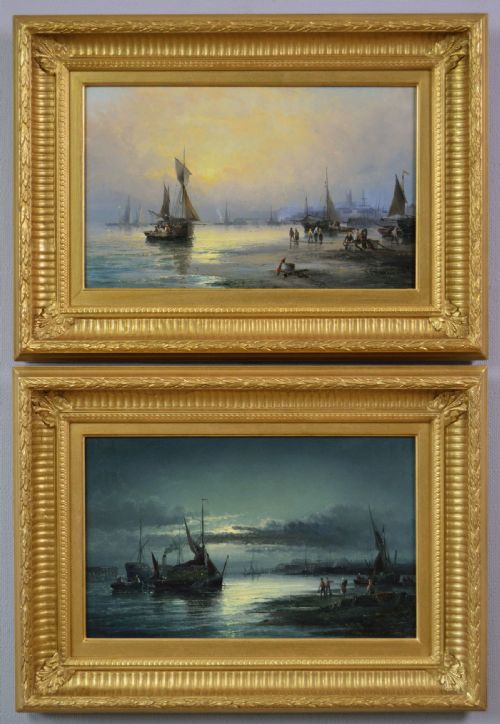
A vintage marine painting pair brings the atmosphere of the coast and open water directly to your interior walls through matched depictions of ships, seascapes, and coastal scenes.
Vintage Marine Painting Pair
When you search for a vintage marine painting pair, you encounter matched works depicting maritime subjects across the nineteenth and twentieth centuries. These pairings most commonly feature oil on canvas or board, alongside watercolours, capturing vessels, coastal shores, and open seas.
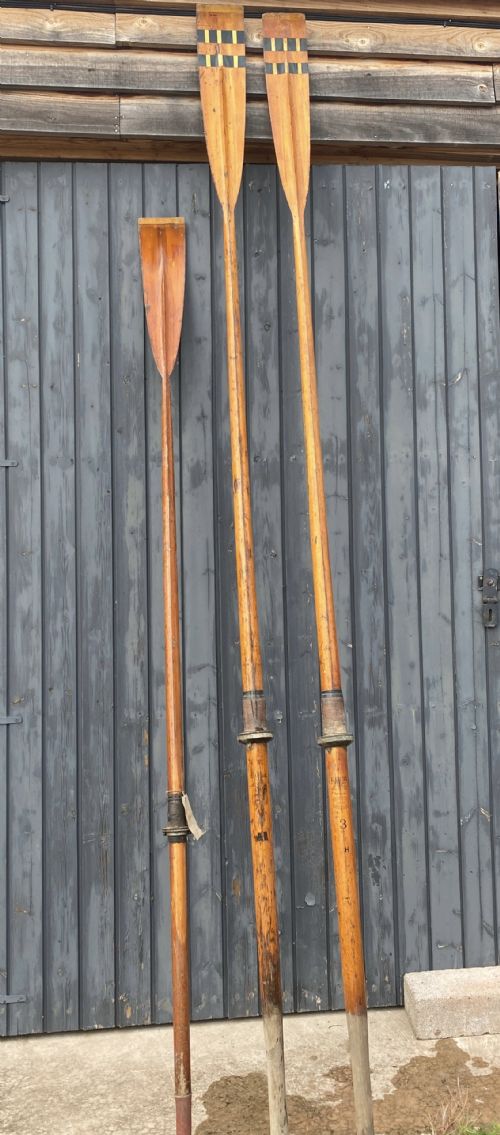
The selections on this page range from Victorian and Edwardian portrayals of fishing boats and barques to specific regional watercolours. Alongside traditional oil paintings and watercolours, the listings also include decorative rowing oars.
Makers and artists represented across the selection include Abraham Hulk I, Adrian Van Porten, George Dodgson Callow, Hubert Thornley, Pieter Cornelis Dommersen, B. Nash, Sadee, and Gordon Meadows. These artists capture varied maritime moments, from sunrise and sunset scenes to Dutch shores and the Thames.
How they were made
Artists painted these maritime scenes primarily using oil paint on canvas or board, applying pigment to capture the movement of water and the play of light on sails. Watercolours on paper also appear, utilising fluid washes to render coastal atmospheres and cliffs.
Many of the paintings are housed within wood frames enhanced by giltwood, gilt wood, and gold leaf. These gilded surrounds complement the maritime subjects by adding a formal border to the canvas or board.
Some maritime pairs capture the Thames and Dutch shores so vividly you can almost smell the salt.
What varies in quality
The distinction between standard works and superior examples lies in the artist's handling of light, atmosphere, and maritime detail. Finer works display confident brushwork in the rendering of rigging, waves, and coastal architecture.
The quality of the framing also influences the piece, with well-preserved gilt wood and gold leaf frames enhancing the overall visual balance of the matched pair.
Abraham Hulk I·Adrian Van Porten·George Dodgson Callow·Hubert Thornley·Pieter Cornelis Dommersen
The Vintage Marine Painting Pair Glossary
- Oil on canvas
- Pigment mixed with drying oil applied to a stretched woven fabric support. This traditional medium allowed artists to build rich textures and deep colours for maritime scenes.
- Giltwood
- Wood carved and coated with a thin layer of gold leaf or metallic paint. It provides a bright, reflective border suited to nineteenth-century and Edwardian frames.
- Barque
- A sailing vessel with three or more masts. This specific ship type frequently appears as the central subject in maritime paintings.
- Seascape
- A work of art depicting the sea, coast, or marine vessels. These compositions form the core of the paintings found in this category.
Vintage Marine Painting Pair: Frequently Asked Questions
How are marine painting pairs usually displayed?
Matched pairs are typically hung side by side on a wall to create a balanced focal point in a room. Their shared subject matter and frame style allow them to anchor a seating area or hallway.
Spacing them evenly ensures the eye travels naturally between both canvases, preserving the narrative link between sunrise and sunset or companion coastal views.
What subjects feature in these pairs?
The subjects range from fishing boats on the Medway and Dutch shores to barques at sea and Thames watercolours. Artists frequently paired morning and evening scenes to create a complete diurnal cycle.
Other works focus on coastal cliffs, rowing vessels, and specific regional waters like the Isle of Wight.
How do I distinguish Edwardian from Victorian pieces?
Victorian marine works often lean towards dramatic maritime action and detailed atmospheric lighting. Edwardian examples tend to embrace a softer palette and broader brushwork, particularly in watercolours.
Examining the stretcher bars, paper types, and framing styles helps confirm the period alongside any signatures and dates provided.
Can I mix watercolours with oil paintings?
Mixing watercolours and oil paintings in the same room depends on lighting and framing rather than strict rules. Watercolours require protection from direct sunlight under glass, whereas oil on canvas is more robust.
Keeping frames complementary in tone helps unify different mediums when displayed together.