

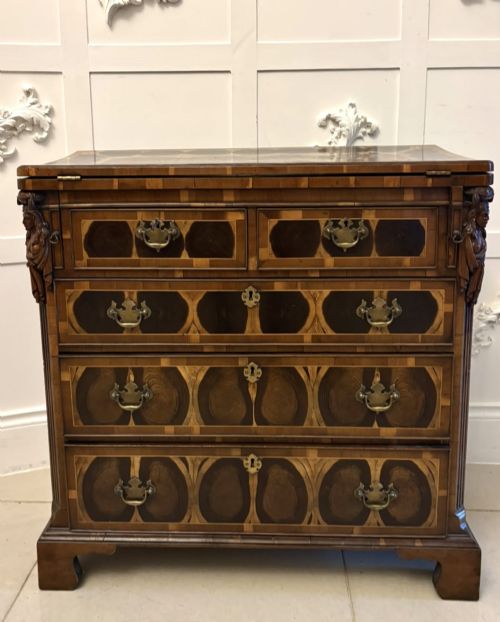
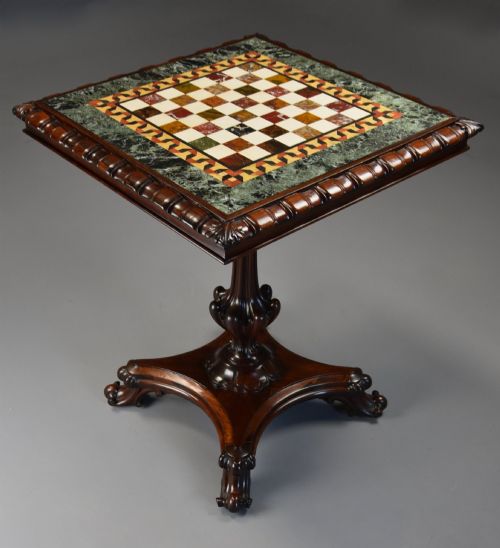
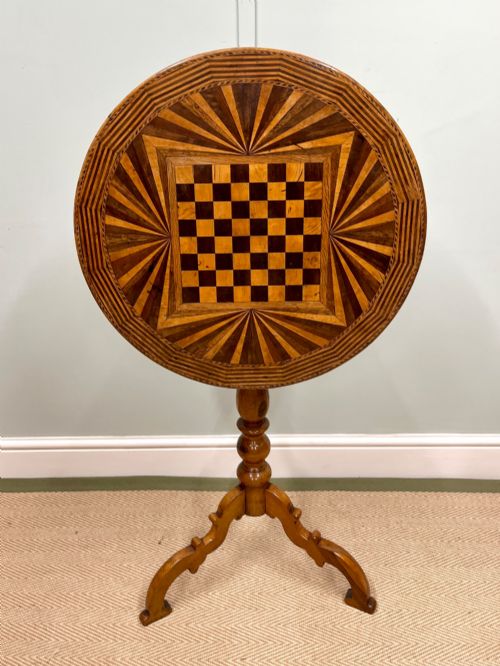
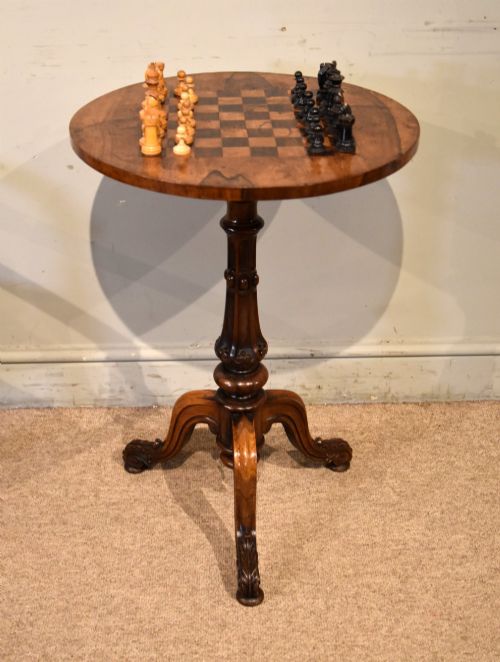

Wood Chess Table
A wood chess table brings the centuries-old battleground directly into the parlour, offering both a functional playing surface and a handsome piece of furniture.
Wood Chess Table
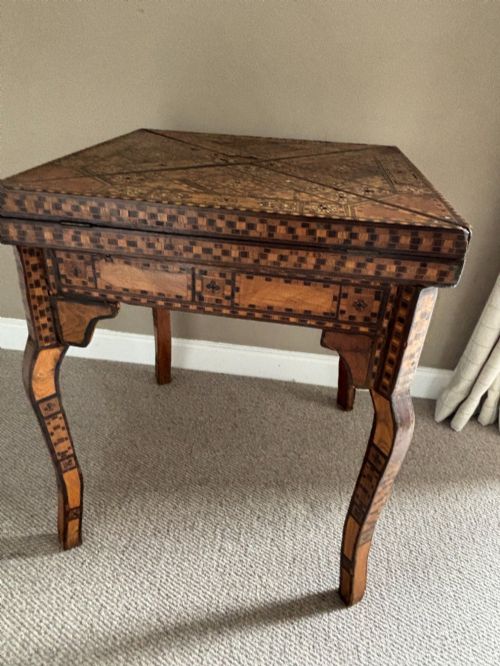
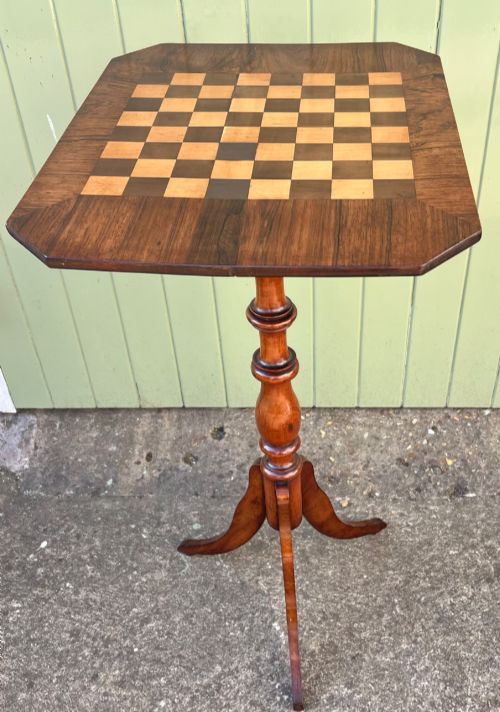
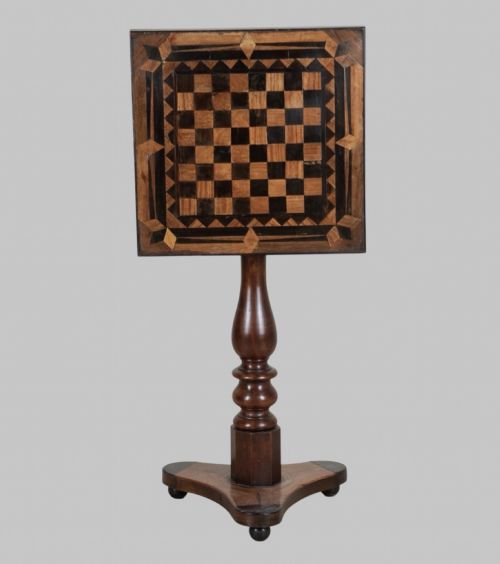
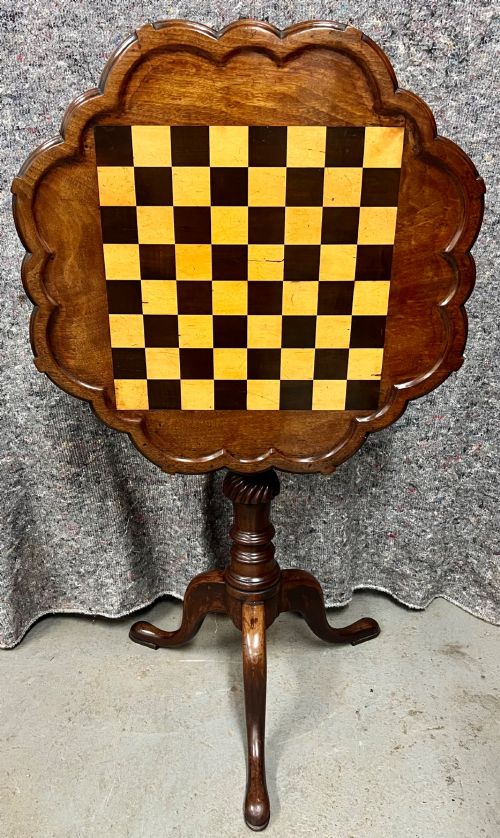
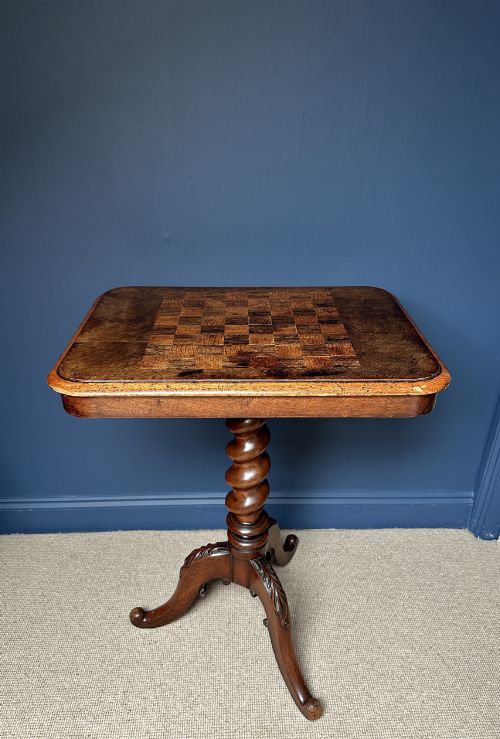
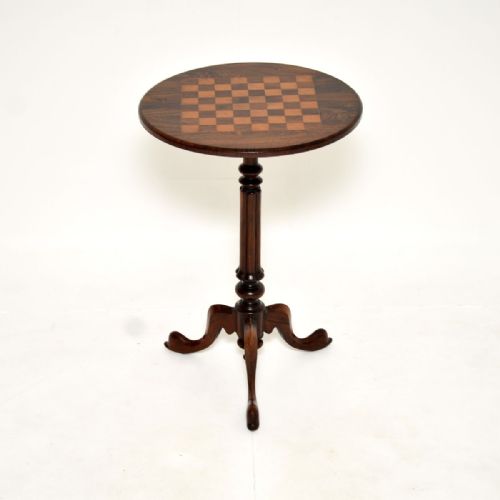
When you search for a wood chess table, you encounter diverse forms ranging from tilt-top occasional pieces to elaborate multipurpose furniture designed for the parlour. The listings on this page centre heavily on nineteenth-century examples, spanning the Regency, William IV, and Victorian periods.
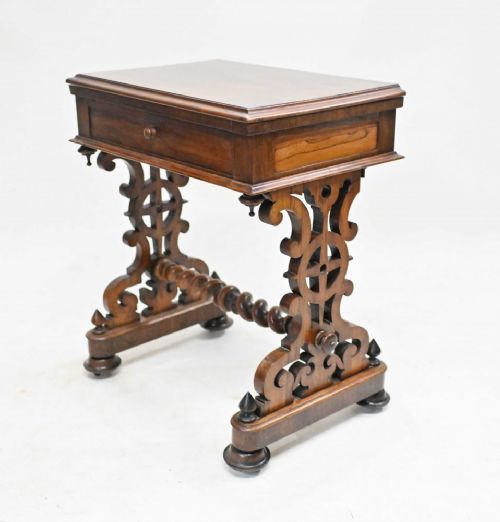
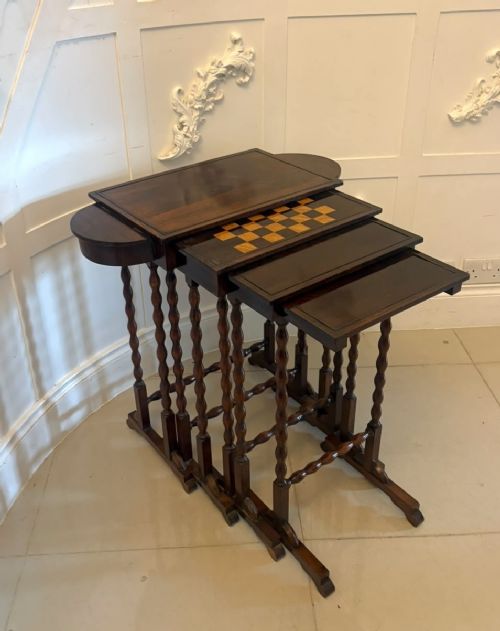
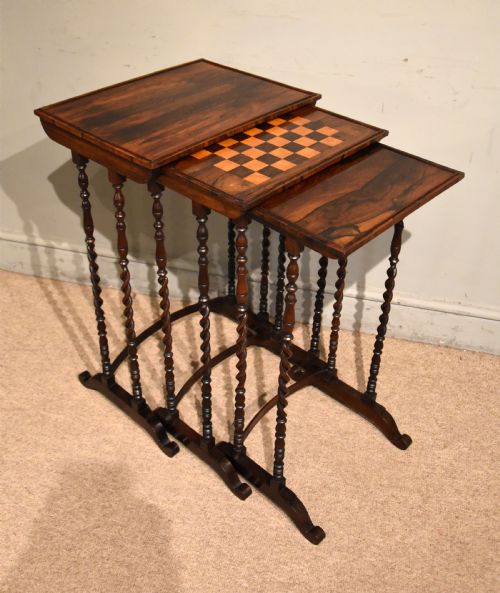
You meet pieces featuring dedicated chequer tops alongside more versatile designs that incorporate foldover leaves, removable boards, or combination units for backgammon and card games. Some tables integrate the playing surface into nests of tables or occasional tables rather than standing alone as dedicated gaming desks.
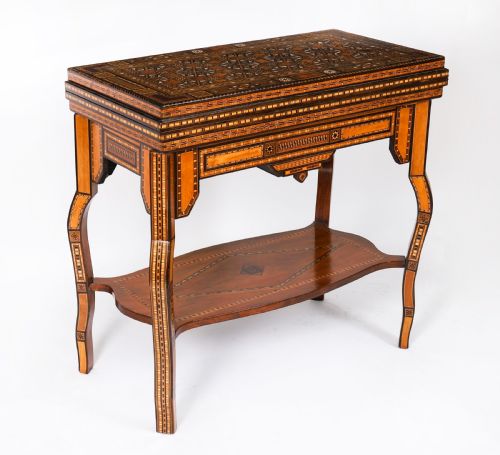
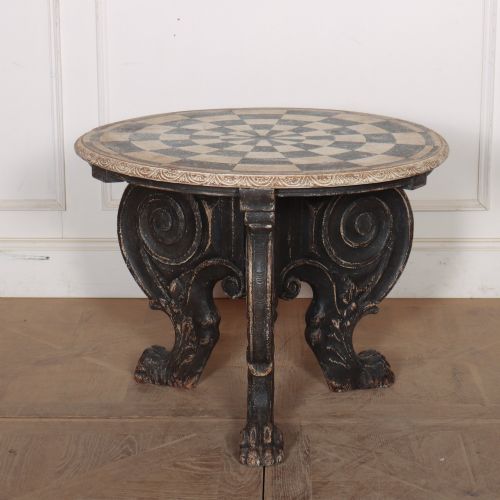
Origins stretch across British workshops as well as continental and international makers, including Syrian, Damascan, and Sorrento examples. The variety reflects how households in different regions adapted the form for domestic entertainment.
How they were made
Cabinet makers utilised dense, richly figured timbers such as rosewood, walnut, mahogany, and burr walnut for the primary structures and veneers. Contrast for the squares was achieved through the careful pairing of light and dark woods like boxwood and ebony.
Intricate surface decoration relied on wood inlay, parquetry, and marquetry techniques to construct precise geometric playing grids. Specialised workshops also employed mother-of-pearl, brass, and bone elements alongside complex turned tripod bases and carved central pillars.
Wood Chess Table Retail Price Guide 2026
Typical asking prices for wood chess table among the pieces listed under this phrase on Sellingantiques today, from the lower quarter to the upper quarter. They describe what is for sale here now, not the wider market.
Some nineteenth-century makers built tables clever enough to hide backgammon, chess, and cards all beneath a single swivelling top.
What varies in quality
The distinction between ordinary and exceptional pieces lies in the precision of the wood inlay and the crispness of the contrasting squares. Superior examples maintain perfectly flat playing surfaces despite seasonal timber movement.
Joinery execution on swivelling mechanisms, foldover hinges, and drawer construction dictates the structural integrity of multi-use tables. Finer pieces demonstrate thoughtful timber selection, ensuring grain patterns on the top complement the supporting pedestals.
Gillows·British Chess Company
The Wood Chess Table Glossary
- Chequer top
- A surface patterned with alternating light and dark squares designed specifically for games like chess and draughts. This grid forms the visual focal point of the furniture.
- Quartetto tables
- A nested set of four graduated tables designed to slide neatly beneath one another. Some Regency examples integrate chess boards into the design.
- Marquetry
- The art of applying pieces of veneer to a structure to form decorative patterns and pictures. Makers used this technique to create elaborate floral or geometric motifs around the playing board.
- Tripod table
- A small freestanding table supported by a central pillar resting on three legs. These often feature tilt-top mechanisms to save space when not in use.
- Parquetry
- A geometric mosaic of wood pieces used for surface decoration. It differs from marquetry through its strict reliance on angular, repeating shapes.
Wood Chess Table: Frequently Asked Questions
What periods do these chess tables date from?
The pieces on this page originate predominantly from the nineteenth century, including Georgian, Regency, William IV, and Victorian eras. Makers during these periods produced diverse interpretations ranging from simple tripod stands to elaborate multiboard compendiums.
Datings often rely on stylistic markers such as pedestal turning, leg configuration, and veneer choices typical of English and continental workshops between 1800 and 1900.
How were these tables used historically?
Families utilised these furnishings as everyday occasional tables that converted quickly into gaming boards for evening entertainment. Multipurpose versions combined chess with backgammon, cards, or writing desks to maximise utility in formal parlours.
Removable boards and foldover leaves allowed rooms to transition seamlessly from sitting spaces to gaming salons without cluttering the interior.
How do I care for a wood chess table?
Maintenance requires keeping the timber away from direct heat sources and dramatic humidity fluctuations that cause veneers to lift. Regular dusting with a soft, dry cloth preserves the polished finish of rosewood, walnut, or mahogany.
Avoid abrasive cleaners and excessive moisture when cleaning inlaid squares, as water can seep into the fine joints between contrasting light and dark woods.
Can I use an antique chess table for daily play?
Most antique examples remain structurally sound for regular games provided they are handled with reasonable care. Foldover mechanisms and pivoting tops should be operated smoothly without forcing worn hinges.
Careful placement ensures the delicate parquetry or marquetry borders around the playing squares avoid scuffs from heavy pieces or dropped items.