


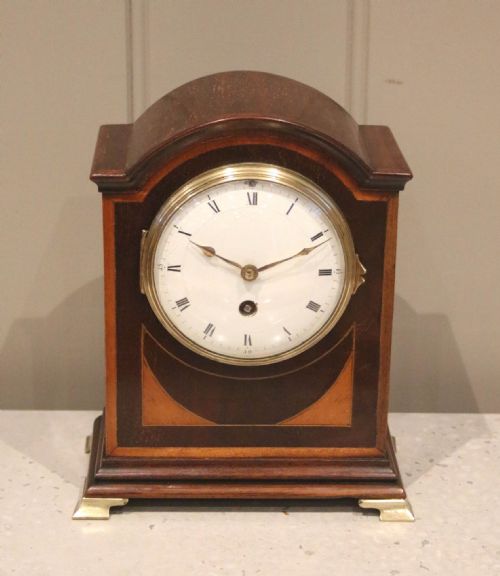


Wood Case Mantel Clock
A wood case mantel clock sits quietly on a shelf, housing brass movements and enamel dials in timber enclosures crafted to keep time.
Wood Case Mantel Clock
When you search for a wood case mantel clock, you are looking at timepieces housed in timber enclosures designed to stand on a shelf, mantelpiece or bracket. The selection spans the nineteenth century alongside Edwardian and Regency periods, featuring styles from Victorian and Gothic Revival to French nineteenth century and Empire.
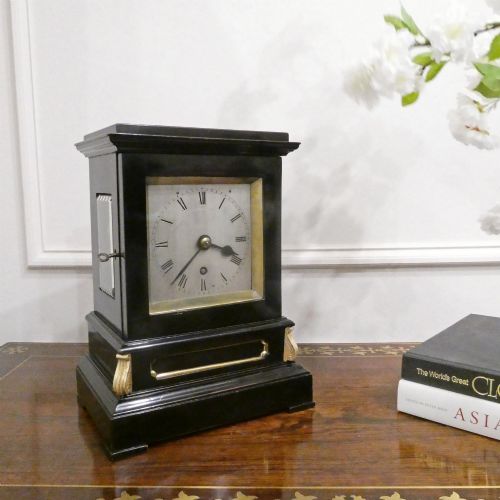
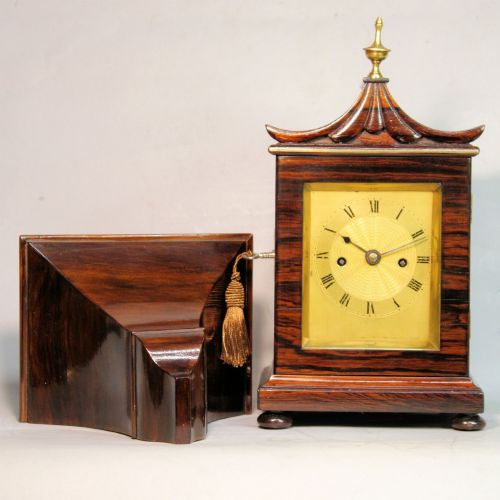
You will most commonly meet mahogany, rosewood, and ebonised wood cases, alongside fruitwood, pine, and walnut examples. The forms include standard mantel clocks, library clocks, desk clocks, and occasional clock cases paired with display domes and cloches.
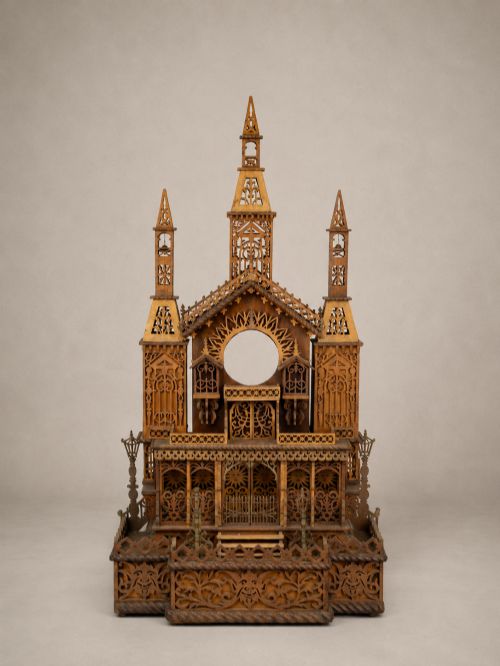
These clocks range from compact miniature timepieces to large architectural and bracket pieces. Many incorporate brass mounts, glass panels, and enamel dials, reflecting the domestic interior fashions of their respective eras.
What varies in quality
The refinement of the cabinet work separates different tiers of these clocks, visible in the choice of figured veneers, precise brass inlay, and crisp fretwork carving. Plain pine or fruitwood carcases contrast with highly figured Cuban mahogany, pollard oak, or burr walnut.
The sophistication of the internal movement dictates the standard of the piece, distinguishing simpler timepieces from complex single fusee or bell-striking mechanisms by known makers. Original components, undamaged enamel dials, and well-preserved timber patination elevate an example above heavily altered or later substituted parts.
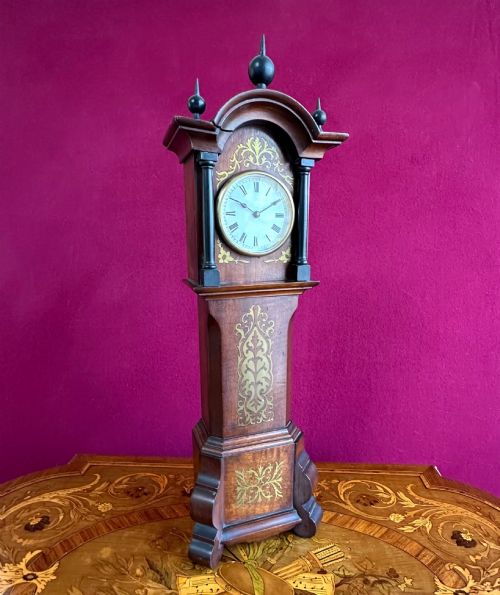
One tiny miniature grandfather clock from nineteen-twenty proves that cabinet makers occasionally enjoyed building towering forms in pocket-sized timber dimensions.
Walker·Junghans·Paul Garnier·Joseph Jump·Pennington·Walker and Hall·John Taylor·Baldwin·Fatton Eleve de Breguet·Thomas Cox·Potonie·Robert Bryson
The Wood Case Mantel Clock Glossary
- Fusee
- A conical pulley used in spring-driven clocks to ensure even tension as the mainspring unwinds. This mechanism helps the clock maintain consistent timekeeping throughout its run.
- Verge
- An early type of escapement that controls the release of power in a clock movement. It works with a balance spring or pendulum to regulate the gear train.
- Ebonised
- Wood treated with a dark stain or finish to imitate ebony. This technique was popular in Victorian cabinet making for a dramatic, dark contrast.
- Bracket clock
- A portable clock originally designed to sit on a wall bracket or a table. Many include carrying handles or matching wall brackets.
- Single fusee
- A movement driven by a single fusee chain or cord without striking trains. These mechanisms focus purely on accurate timekeeping rather than chiming the hours.
Wood Case Mantel Clock: Frequently Asked Questions
What is a fusee movement?
A fusee movement uses a conical drum and a chain to equalise the pull of the mainspring as it winds down. This mechanical arrangement delivers steady power to the escapement for greater accuracy.
You will find this system in better quality English mantel and bracket clocks from the nineteenth century.
Where should I place a mantel clock?
These clocks are designed for stable, flat surfaces such as mantelpieces, shelves, desks, or specialised wall brackets. They require a level foundation to keep the pendulum swinging evenly.
Keep them away from direct sunlight, damp areas, and extreme temperature fluctuations to protect the wood case and delicate internal oils.
How do I date an ebonised clock?
Dating relies on the casework style, dial design, and mechanical configuration rather than the black finish alone. Early Victorian examples often feature clean lines and single fusee movements.
Comparing the timber species, hinge types, and signature styles of the period helps narrow down the decade of manufacture.
What is the difference between a desk clock and a library clock?
Library clocks are traditionally heavier, substantial pieces with fusee movements housed in architectural or Gothic timber cases. Desk clocks tend to be smaller timepieces intended for personal workspaces.
Both styles utilise glass panels or doors to showcase the dial and internal craftsmanship.
How do I read a clock signature?
Makers often signed their names on the enamel dial, the backplate of the movement, or on a plaque inside the wood case. These inscriptions sometimes include the city of work, such as London, Paris, or Edinburgh.
Signatures help attribute the piece to a specific workshop and provide clues about its production date.