
Wood Canterbury Stand
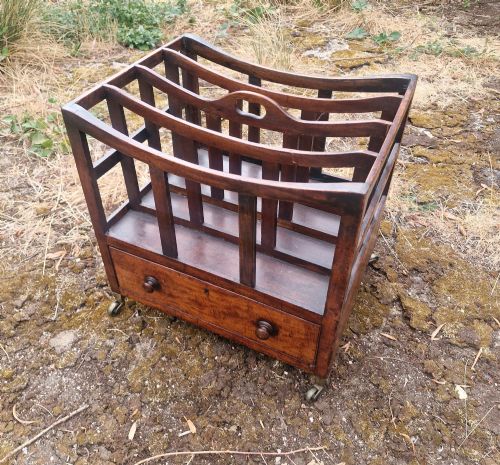
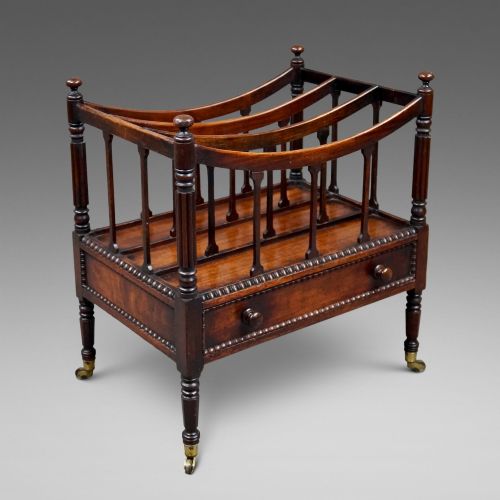
A wood canterbury stand holds scores, folios and papers within partitioned vertical slots, built to move easily beside a chair.
Wood Canterbury Stand
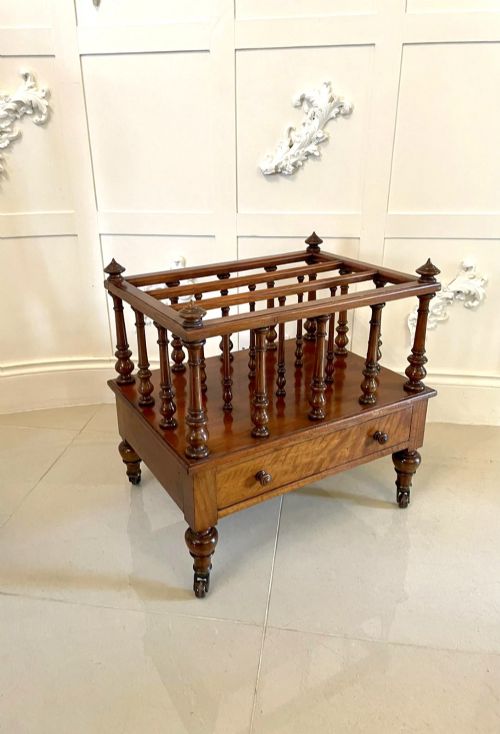
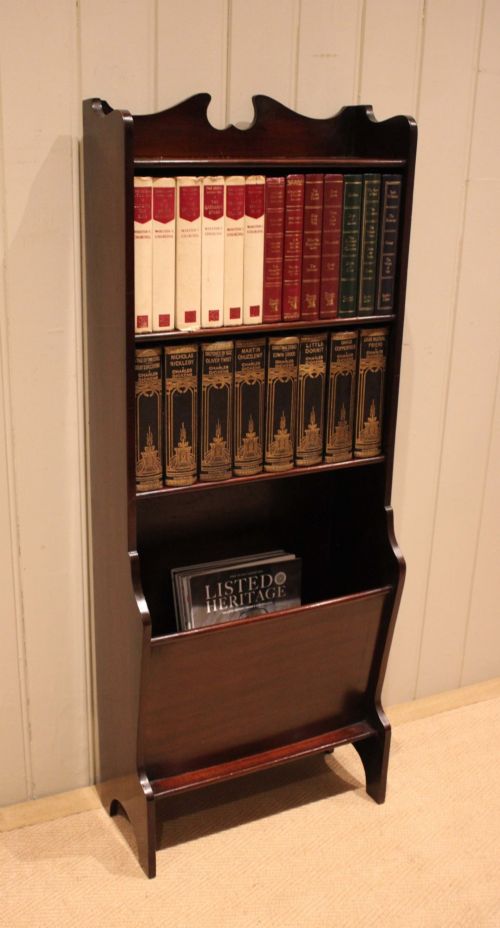
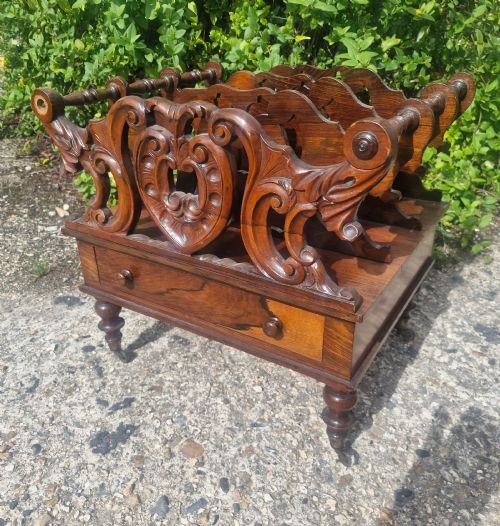
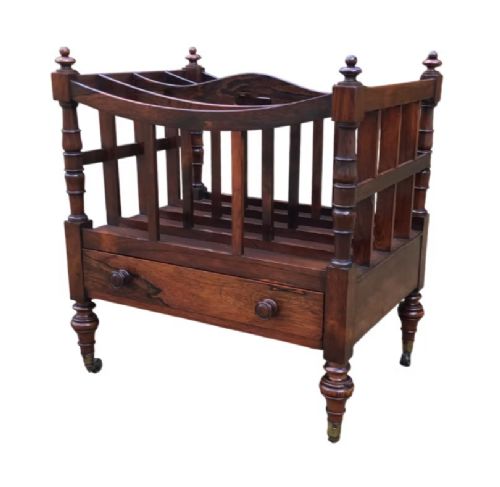
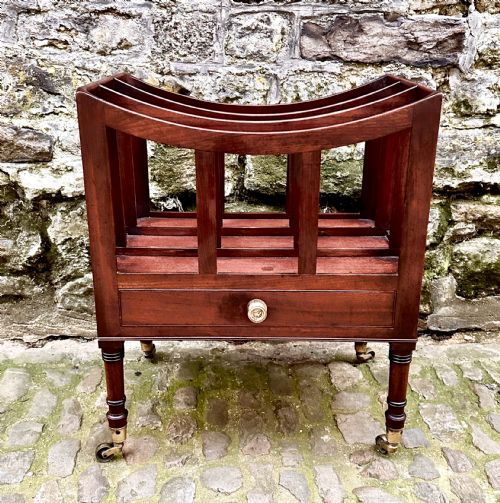
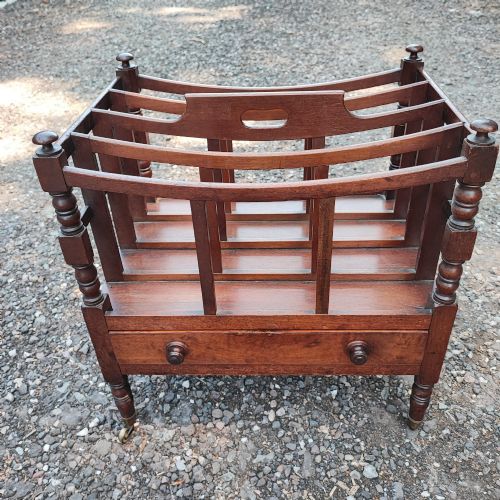
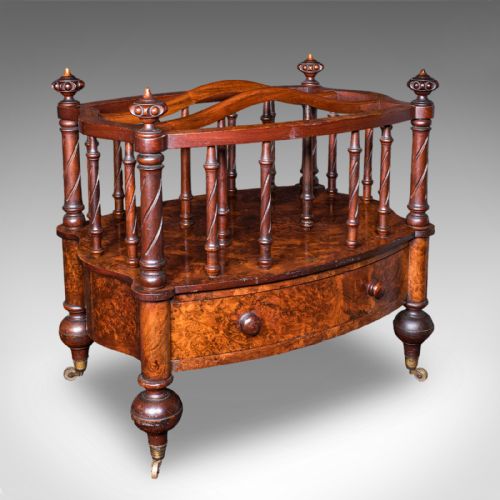
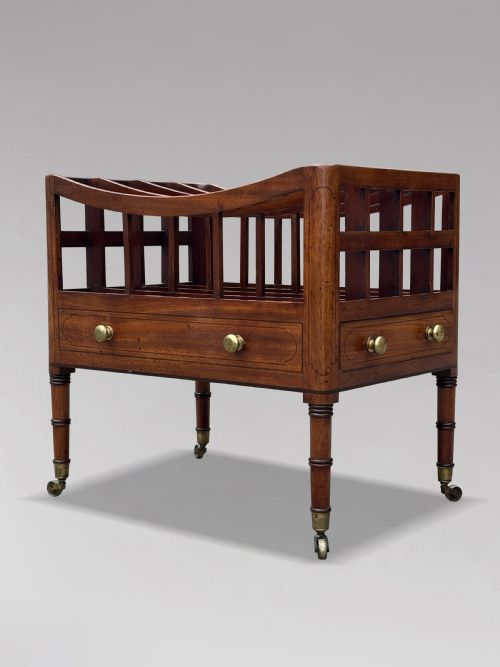
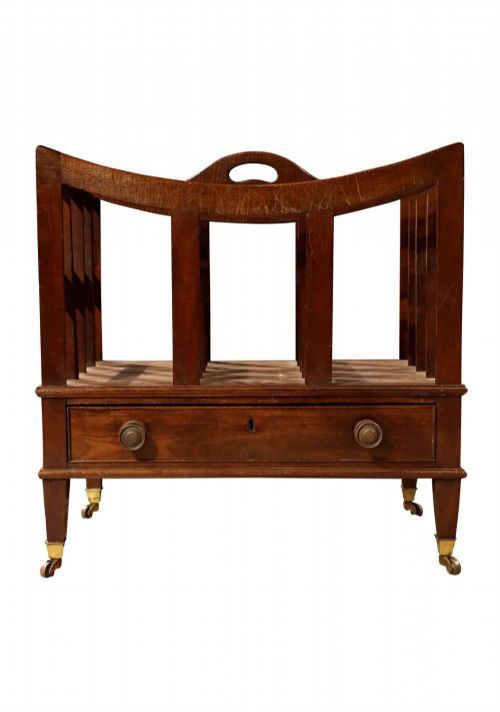
When you search for a wood canterbury stand, you encounter pieces spanning the Georgian, Regency, William IV and Victorian periods, often taking the form of low open rack frames or multi-tiered combinations. The most frequent iteration on this page is the mahogany or rosewood canterbury featuring slatted vertical dividers for newspapers, sheet music and folios, frequently mounted on small castors.
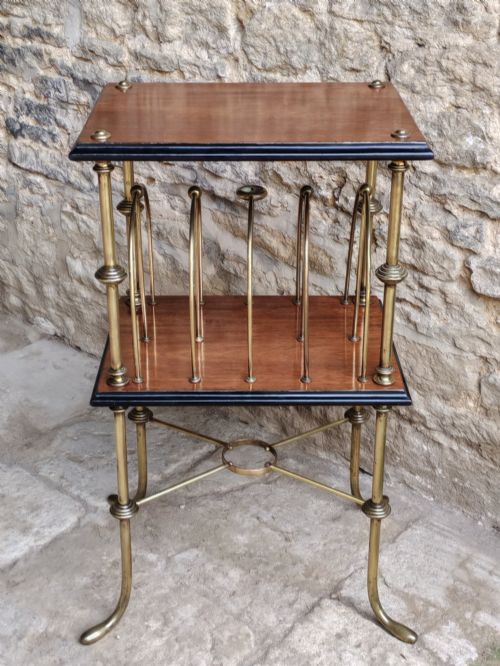
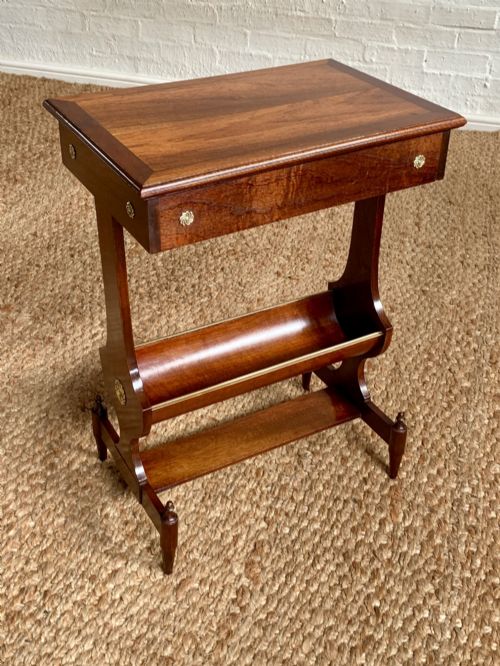
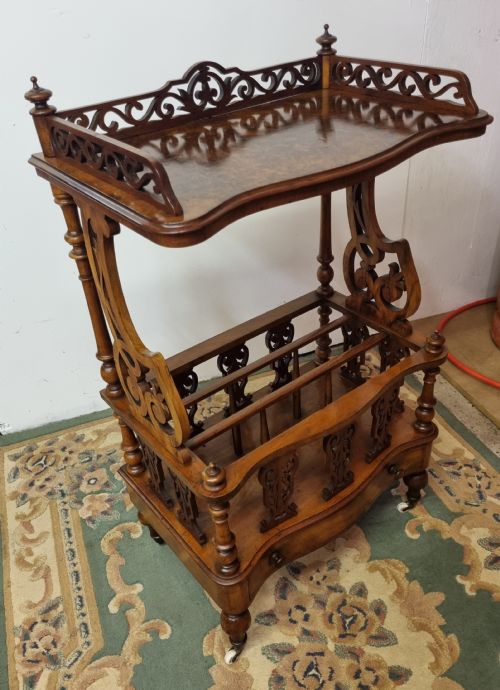
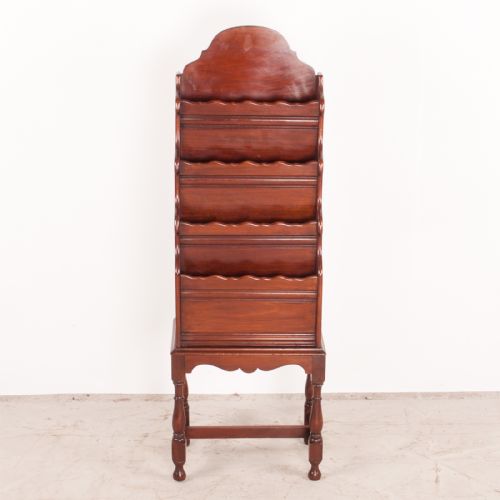
Many examples incorporate a single drawer beneath the partitions, while others extend upward into a two-tier whatnot or combine with a music stand or side table format. Makers applied these designs across the eighteenth, nineteenth and early twentieth centuries to serve as movable tidies in drawing rooms and parlours.
How they were made
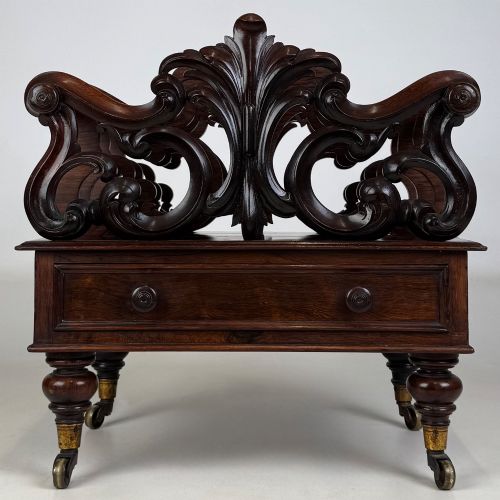
Cabinet makers built these pieces primarily from dense hardwoods like mahogany and rosewood, occasionally utilising burr walnut, satinwood, ebony or contrasting brass mounts for structural framing and decorative inlay. Turned spindle uprights and carved supports join the slatted dividers to low bases fitted with brass castors for mobility across carpets.
Joinery relied on traditional mortise and tenon construction for the partitions and framing, whilst lower drawers employed hand-cut dovetails. Details such as carved Prince of Wales feathers, ebonised knobs and ceramic inserts appear on specific regional and period examples.
Several stands feature carved Prince of Wales feathers, bringing royal flair directly to the daily newspaper run.
What varies in quality
The standard of timber selection and joinery execution separates standard utility pieces from finer cabinet work, visible in the grain of the rosewood or mahogany and the crispness of turned spindles. Pieces attributed to distinguished workshops display superior proportion in the slatted uprights and refined execution in drawers and castor mounts.
Design complexity also defines the tier, with multi-functional formats combining a Canterbury base with a whatnot superstructure or fold-down writing surfaces requiring more intricate carpentry than a simple open magazine rack.
The Wood Canterbury Stand Glossary
- Canterbury
- A low stand with partitioned vertical sections designed for holding sheet music, newspapers and folios. The name originates from the Archbishop of Canterbury, who commissioned an early rack for his music books.
- Whatnot
- An open set of freestanding shelves with multiple tiers used for displaying ornaments or holding books. These are frequently combined with a Canterbury base in nineteenth-century examples.
- Folio stand
- A piece designed specifically for large books, prints and loose paper sheets, often featuring adjustable sloping sides. They appear within the Regency period alongside standard Canterbury racks.
- Boat shaped
- A curved profile given to the partitions or ends of a Canterbury, resembling the hull of a vessel. This form is particularly prevalent in Regency mahogany and rosewood pieces.
Wood Canterbury Stand: Frequently Asked Questions
What is a wood canterbury stand used for?
These stands served primarily to hold sheet music, newspapers, folios and periodicals within reach of a seating area. They functioned as movable tidies for the drawing room.
Today, they perform the same role for contemporary magazines, vinyl records and books while acting as low side tables.
How do I date a wood canterbury stand?
Dating relies upon timber choice, hardware and stylistic details such as turned legs, brass castors and carved motifs. Regency and George III pieces generally feature cleaner classical lines in mahogany or rosewood.
Victorian and Edwardian versions often introduce heavier turned spindles, Burr walnut veneers, ornate serpentine shapes or multi-tier whatnot superstructures.
Are these stands sturdy enough for daily use?
Most pieces were built from solid hardwoods like mahogany and rosewood with traditional mortise and tenon joinery, making them structurally sound for holding books and papers.
Care should be taken when moving them across heavy carpets due to the original brass castors beneath the low frame.