
Vintage Canterbury Rack
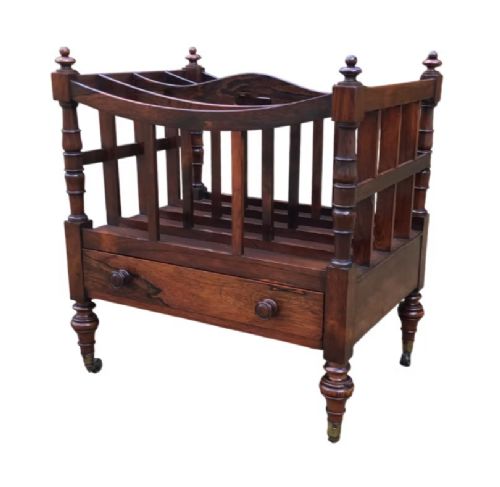
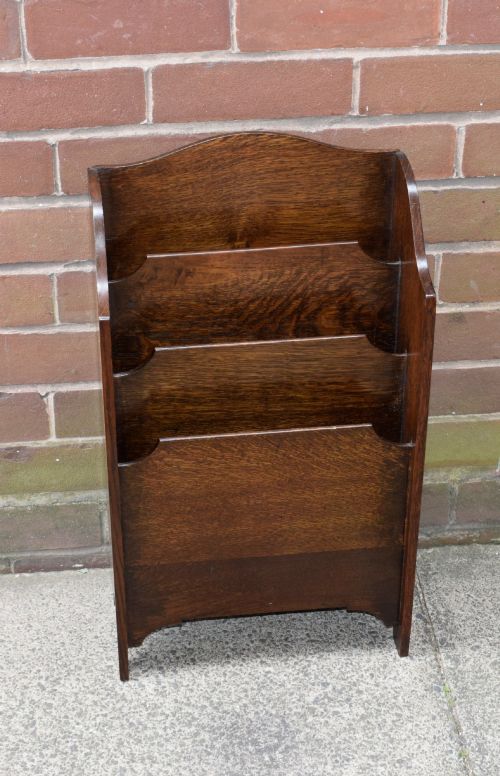
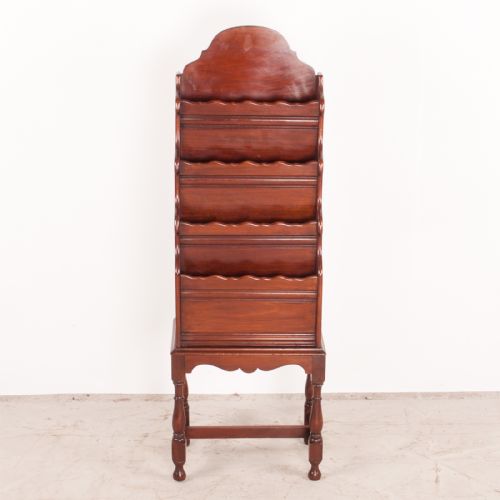
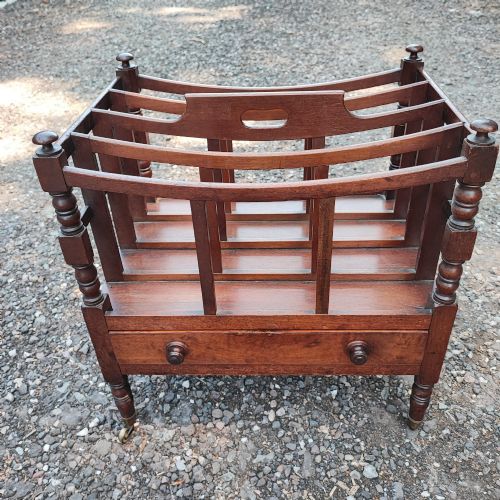
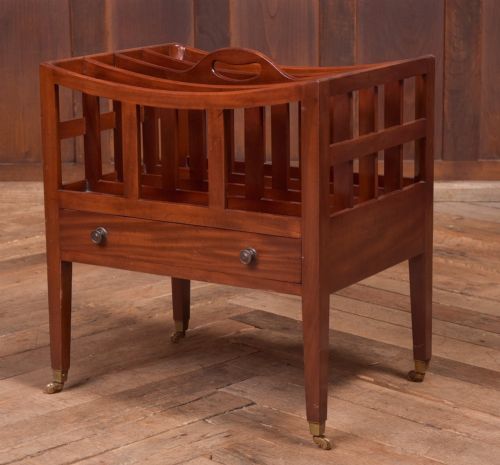
A vintage canterbury rack holds folios and papers with a compartmented frame, offering traditional utility for the study.
Vintage Canterbury Rack
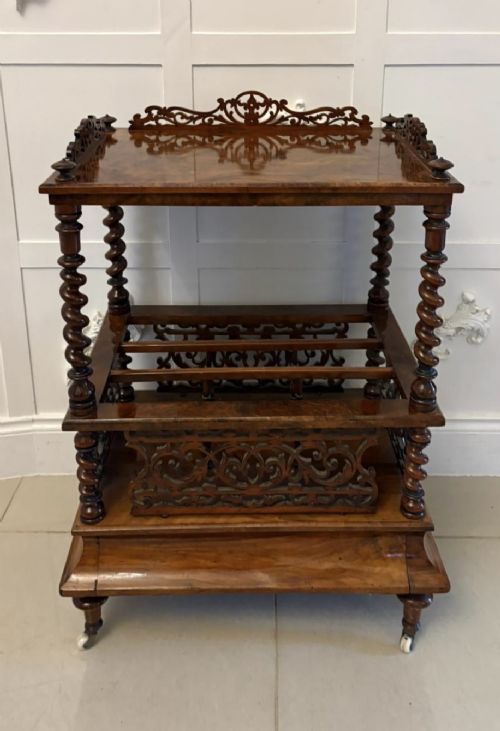
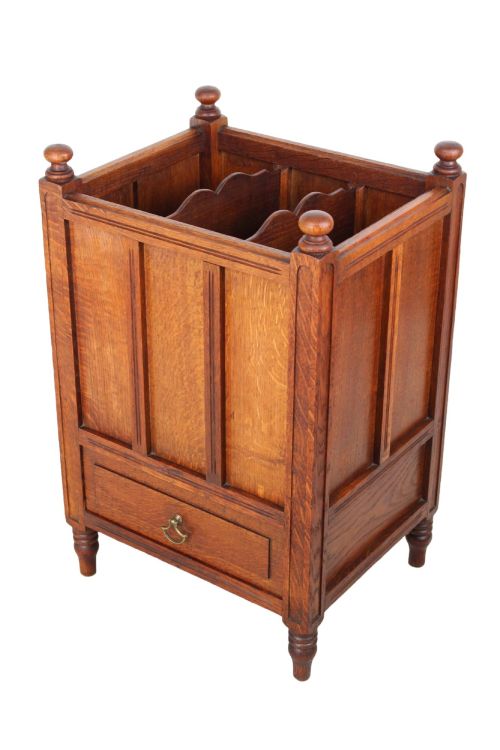
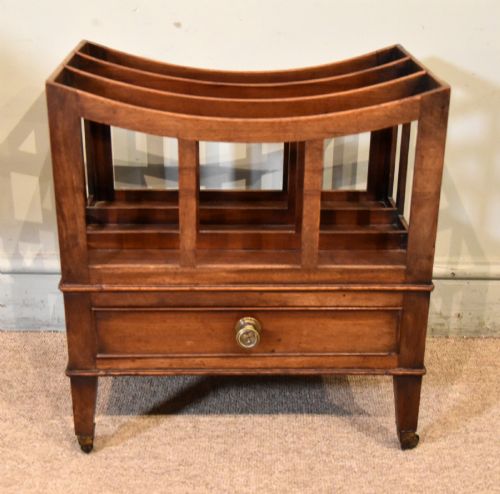
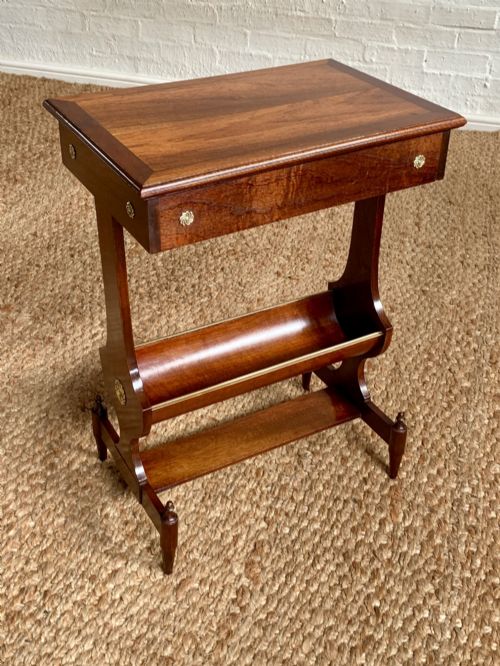
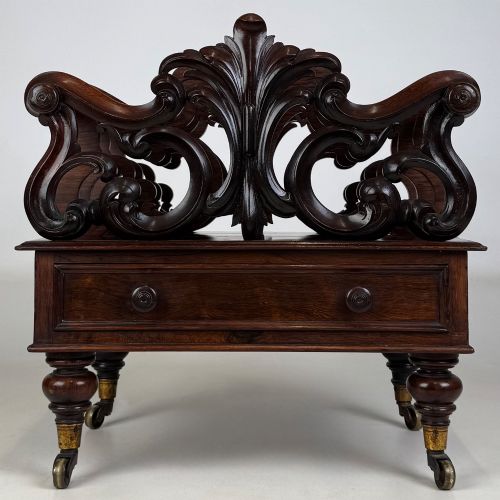
When searching for a vintage canterbury rack, a buyer looks at compartmented stands traditionally used for sheet music, newspapers, and magazines. The listings here present numerous versions spanning the Georgian, Regency, Victorian, and Edwardian eras, predominantly taking the form of low tiered stands or combined side tables.
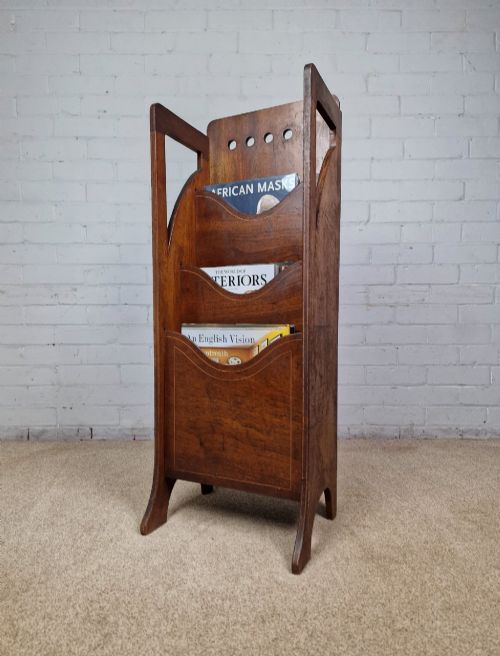
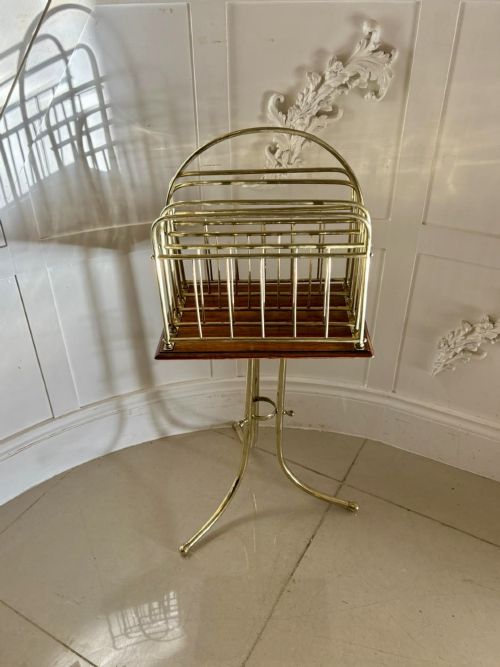
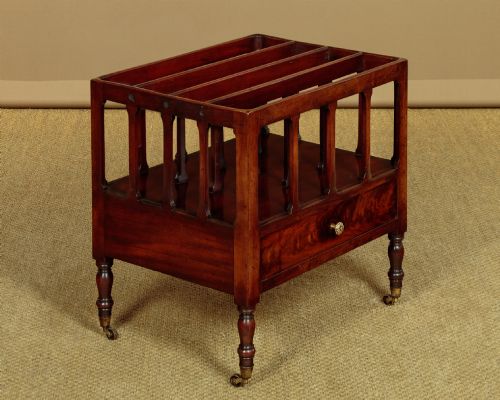
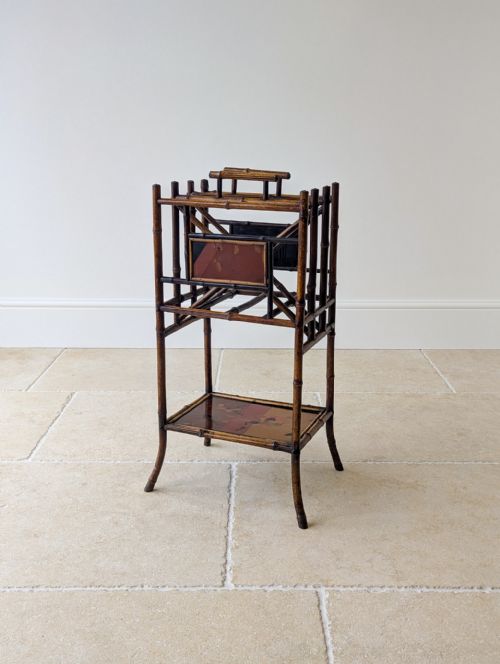
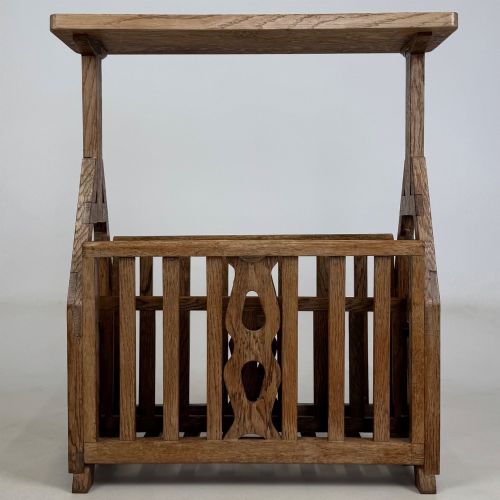
Mahogany and rosewood appear frequently among the pieces, alongside burr walnut, oak, bamboo, and brass. Many examples integrate partitioned partitions above a single drawer or rest upon turned legs with castors, while others take boat shapes or incorporate music cabinets.
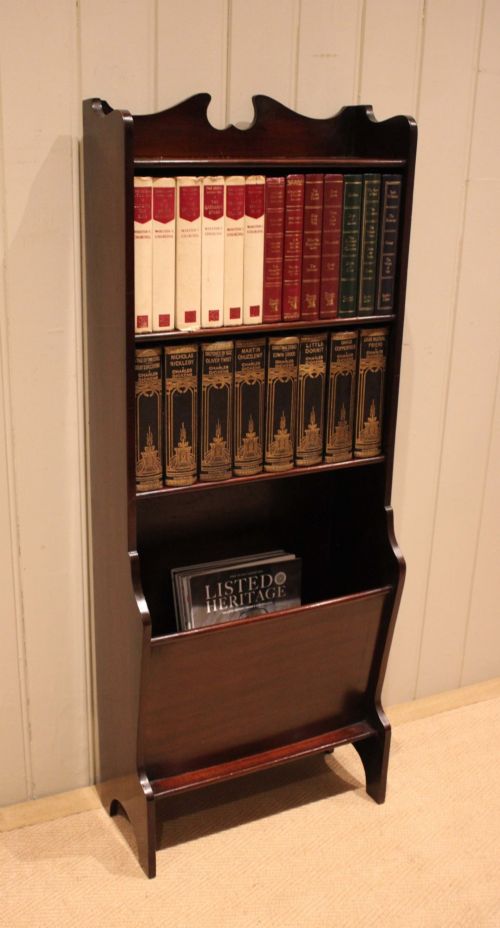
The collection ranges from early pieces attributed to makers such as Gillow's to later Arts and Crafts iterations. Buyers will encounter both standard magazine racks and multifunctional items serving as occasional tables or music stands.
How they were made
Cabinetmakers constructed these pieces primarily using dense timbers such as mahogany, rosewood, and walnut, often accentuating the grain with burr walnut veneers or fruitwood. Joinery methods included finely fitted partitions for the rack sections and dovetailed joints for the integrated drawers.
Alternative materials like bamboo and lacquer surface in Aesthetic Movement and late-nineteenth-century examples, whilst brass and copper feature in structural frames, revolving stands, and decorative hardware.
Some nineteenth-century makers built metamorphic stands that adapt their frames for changing reading habits.
What varies in quality
The distinction between tiers rests upon the choice of timber and the sophistication of the joinery, such as figured Cuban mahogany versus plain secondary woods. Subtle decorative carvings, such as Prince of Wales feathers or inlaid banding, elevate the cabinetwork beyond simple utility.
Proportion and structural integrity define the upper tier of pieces, where balanced boat shapes, well-turned legs, and original castors remain intact. The integration of functional drawers and music cabinet compartments also marks out more ambitious workshops.
The Vintage Canterbury Rack Glossary
- Canterbury
- A low stand with partitioned vertical sections used originally for sheet music and folios. It often includes a drawer below and rests on castors for mobility.
- Regency
- A style period dating from the early nineteenth century characterised by classical restraint, boat shapes, and elegant turned supports. Pieces from this era frequently utilise premium mahogany or rosewood.
- Aesthetic Movement
- A late-nineteenth-century design approach prioritizing visual beauty over narrative function. It introduces materials like bamboo and lacquer to traditional stand forms.
- Folio
- A large-format sheet of paper or musical score. Canterburys were specifically designed to hold these upright without bending.
Vintage Canterbury Rack: Frequently Asked Questions
What is a canterbury rack used for?
These stands were originally designed to hold sheet music, folios, and newspapers in drawing rooms and studies. Today, they serve equally well for modern magazines, books, and daily post.
Their compartmented design keeps reading materials organised and upright, preventing clutter on surrounding tables.
How do I date a vintage canterbury?
Dating relies on observing the timber, hardware, and stylistic details recorded across different eras. Regency and Georgian examples tend to feature solid mahogany or rosewood with refined turning, whilst Edwardian and Arts and Crafts pieces often incorporate oak or copper.
Secondary indicators include the presence of hand-cut dovetails in drawers and the style of the castors supporting the frame.
Are these racks sturdy enough for heavy books?
Most pieces are constructed from durable hardwoods like mahogany, walnut, or oak designed to bear the weight of paper folios and music books. The vertical partitions provide inherent structural support to the upright sections.
However, delicate bamboo or lighter occasional table hybrids are better suited to lighter periodicals rather than heavy volumes.
Did these racks always have drawers?
Not all pieces include storage drawers beneath the vertical compartments. Many traditional canterburys consist solely of an open rack structure mounted on legs.
When drawers do appear, they provide supplementary space for smaller items like scores, writing instruments, or periodicals.