

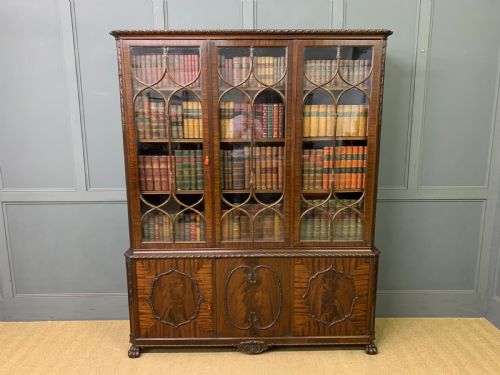
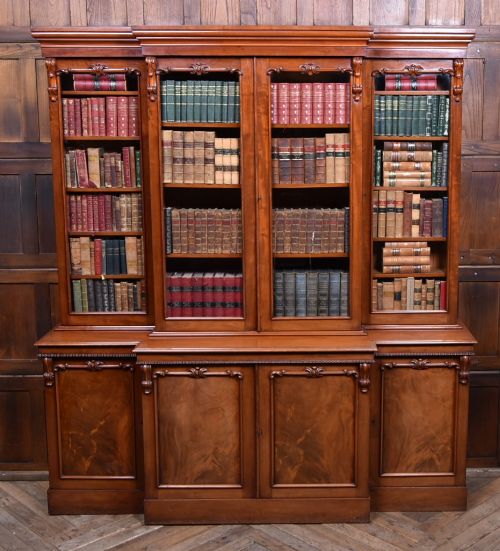
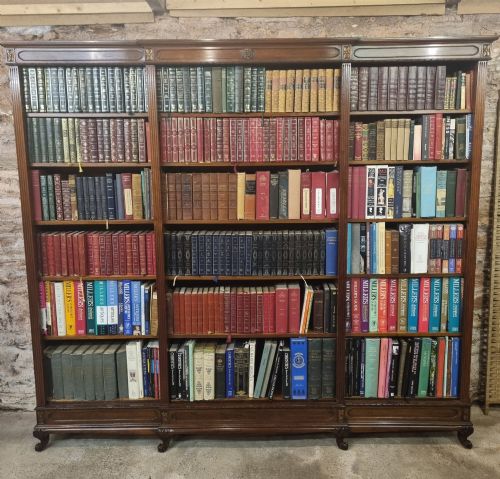
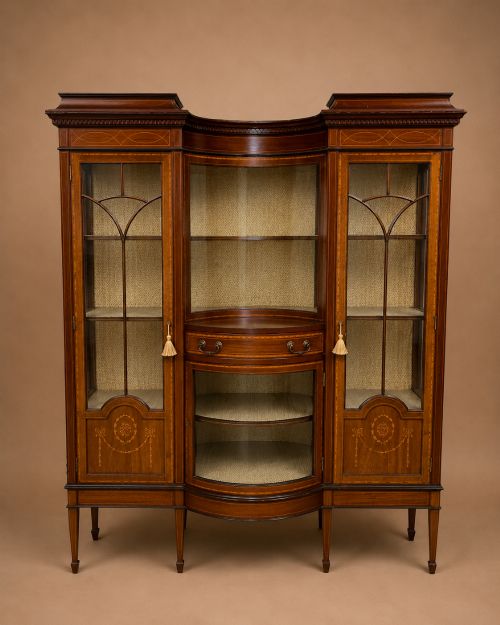
Wood Breakfront Bookcase
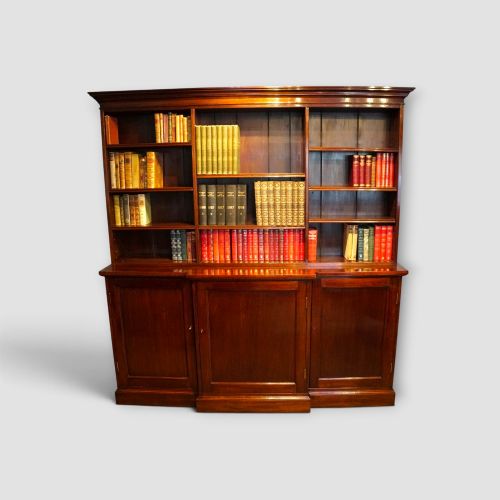
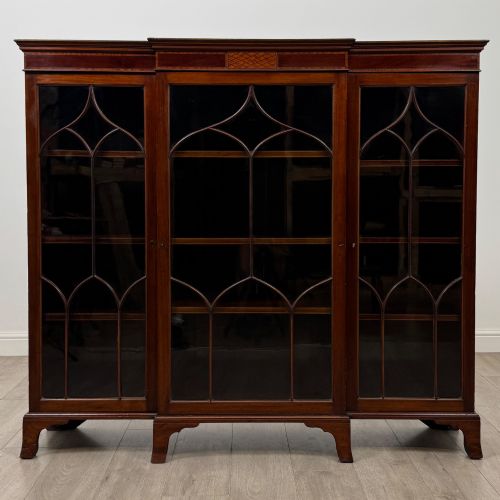
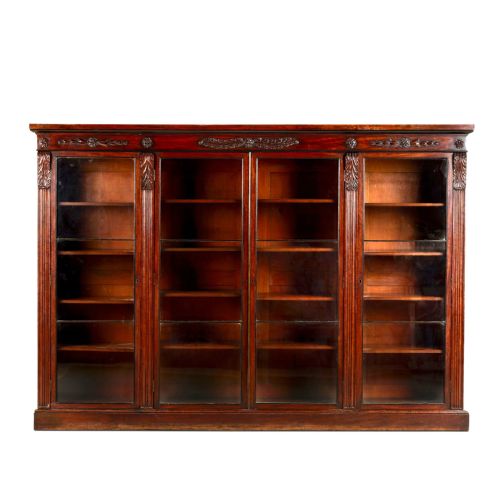
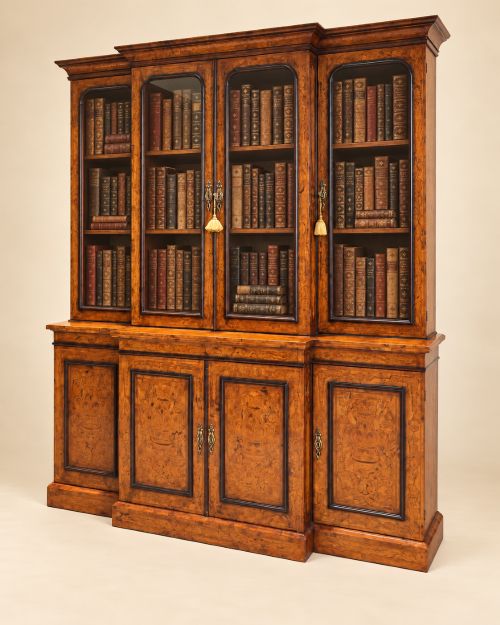
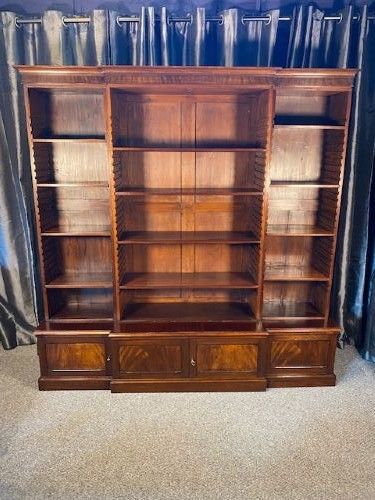
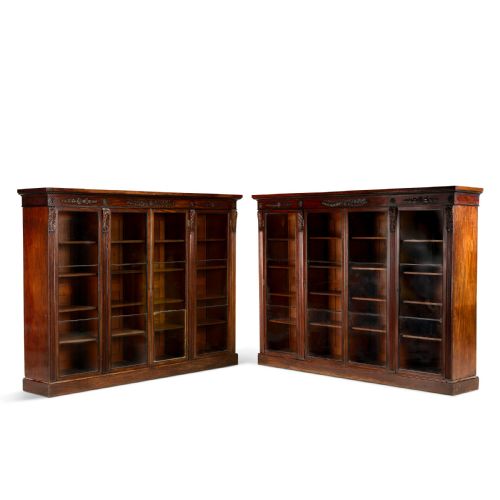
A wood breakfront bookcase is a grand statement piece designed to anchor a formal library or sitting room.
Wood Breakfront Bookcase
Most examples found in these records date from the nineteenth century, spanning Regency, Victorian, and Edwardian periods, constructed primarily as large library fixtures or lower dwarf cabinets.
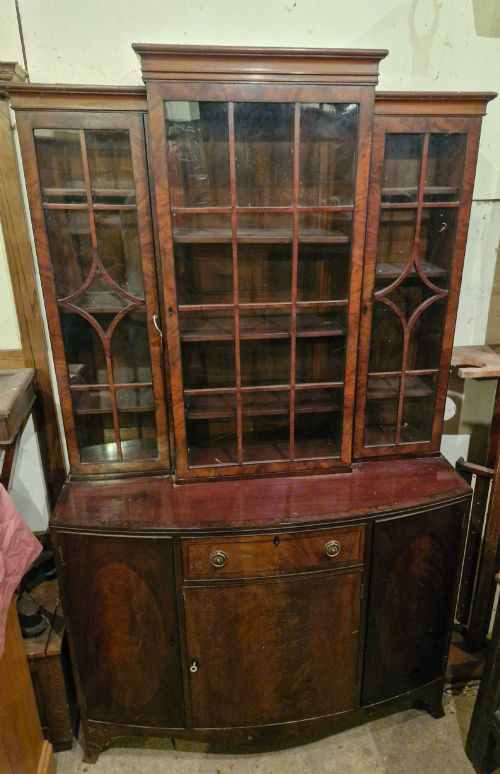
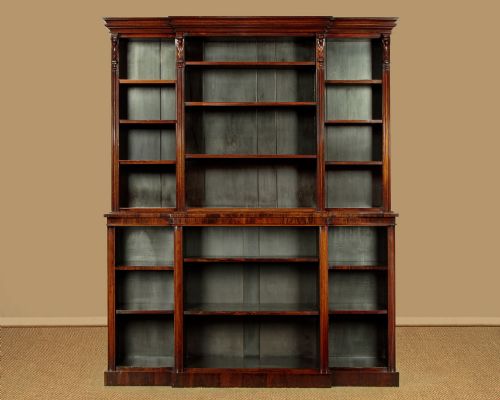
Makers utilised rich timbers such as mahogany, rosewood, and walnut, frequently incorporating glass doors for display or leaving the upper shelves open for immediate access.
Materials and construction
Cabinet makers built the primary carcase using solid foundational woods like mahogany or oak, often applying figured mahogany veneers or exotic timbers such as rosewood and satinwood to the visible exterior surfaces.
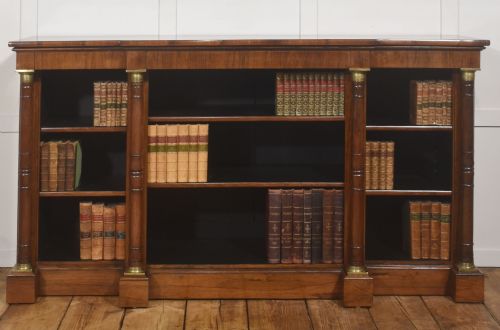
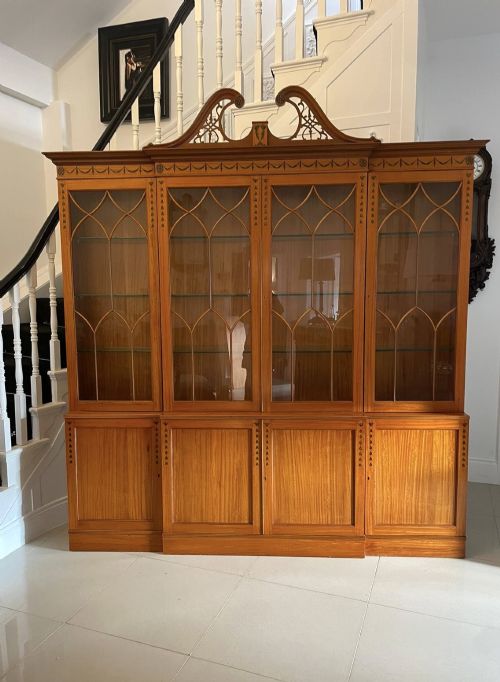
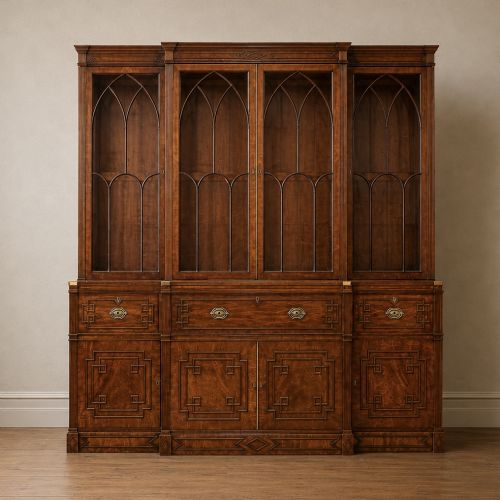
Detailing relied on precision brass inlays, marquetry boxwood work, and hand-carved Gothic or classical motifs, while glazed doors utilised individual wooden glazing bars to house glass panels securely.
Wood Breakfront Bookcase Retail Price Guide 2026
Typical asking prices for wood breakfront bookcase among the pieces listed under this phrase on Sellingantiques today, from the lower quarter to the upper quarter. They describe what is for sale here now, not the wider market.
Listings feature mahogany, rosewood, and walnut woods across Victorian, Regency, and Edwardian periods.
Assessing quality and execution
Superior pieces display exceptional selection in wood grain, utilising flame mahogany or highly figured rosewood veneers that match symmetrically across the breakfront facade.
The refinement of secondary details distinguishes finer workshops, evident in the crispness of inlay work, original brass mounts, and the proportioned integration of architectural cornices.
Jas Shoolbred·Collinson & Lock·Robert Strahan
The Wood Breakfront Bookcase Glossary
- Breakfront
- A cabinet design where the central section projects forward beyond the flanking side sections. This creates depth and visual interest in large library furniture.
- Dwarf Bookcase
- A low bookcase, generally standing at waist or chest height, designed to fit beneath windows or display decorative objects on the top surface.
- Astral Glazing
- Cabinet doors divided into small glass panes held together by slender wooden bars. This technique was popular in eighteenth and nineteenth-century display furniture.
- Marquetry
- The art of applying decorative pieces of veneer to a structure to form intricate geometrical patterns or pictorial designs. It often incorporates contrasting woods like boxwood and satinwood.
Wood Breakfront Bookcase: Frequently Asked Questions
What is the difference between open and glazed bookcases?
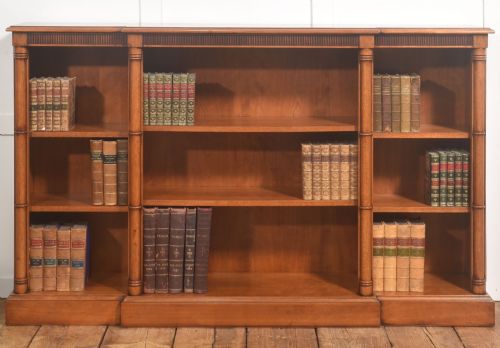
Open bookcases provide immediate, unobstructed access to book collections and were frequently built as dwarf or low library cabinets. Glazed versions protect fragile or valuable volumes behind glass doors, often featuring decorative wooden framing.
Enclosed cabinets are better suited for preserving antique bindings from dust and environmental wear over decades of use.
How can I identify a Regency period bookcase?
Regency pieces often display classical architectural influences, featuring dark rosewood or mahogany timbers accented with brass inlay work or grille panels. The proportions are typically formal and restrained, reflecting the neoclassical tastes of the early nineteenth century.
Look for clean lines combined with rich timber grain and restrained classical mounts rather than heavy Victorian carving.
Where were these bookcases traditionally used?
These large cabinets were commissioned for the principal rooms of grand houses, specifically libraries, drawing rooms, and studies. They served to house substantial private book collections while demonstrating the owner's status and taste.
Today, they function similarly in domestic settings, providing substantial storage alongside a commanding visual presence.