

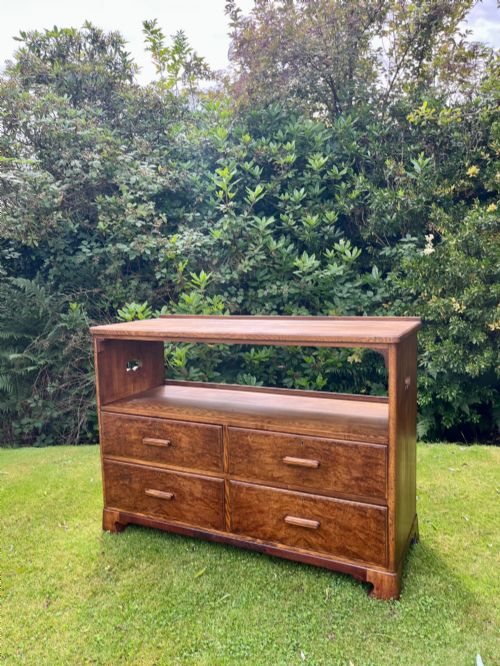
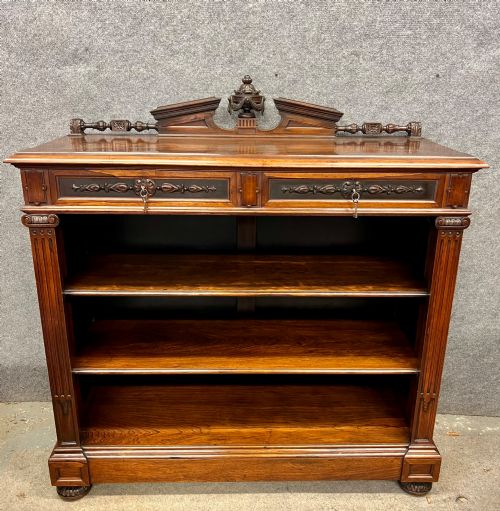


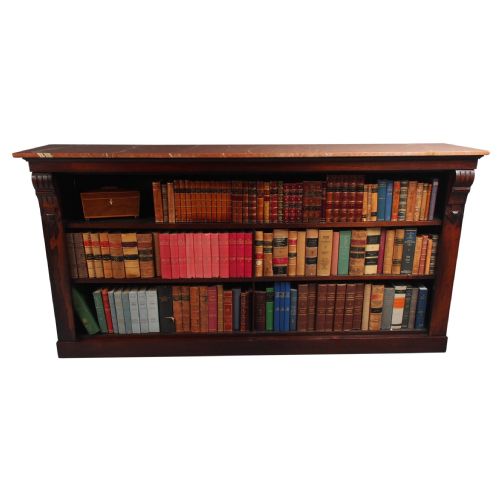


Vintage Open Shelf Credenza
These vintage open shelf credenza examples combine display space and cabinetry, offering the ideal centrepiece for a discerning collector.
Vintage Open Shelf Credenza
A vintage open shelf credenza encompasses a varied selection of bookcases, side cabinets, dressers, and chiffoniers originating from periods spanning the nineteenth century through to the nineteen thirties. These pieces bridge the gap between open display shelving and enclosed storage, offering versatile utility for modern and traditional interiors alike.
The most common examples on this page draw upon Victorian, Art Deco, Arts and Crafts, and Edwardian design traditions. Buyers encounter forms ranging from compact side cabinets to large breakfront bookcases fitted with drawers or marble tops.
Materials and construction methods
Cabinet makers utilised a rich palette of timbers, including walnut, figured walnut, oak, elm, mahogany, and satinwood veneer, often paired with brass hardware. Selected pieces incorporate contrasting elements such as pink marble tops and painted wood surfaces.
Construction relies on traditional joinery techniques suited to the period, accommodating large breakfront forms, potboard bases, and integrated open shelving designed to bear the weight of heavy volumes and display objects.
Vintage Open Shelf Credenza Retail Price Guide 2026
Typical asking prices for vintage open shelf credenza among the pieces listed under this phrase on Sellingantiques today, from the lower quarter to the upper quarter. They describe what is for sale here now, not the wider market.
Current listings feature pieces spanning the nineteenth century up to nineteen thirty, constructed from walnut, elm, oak, mahogany, and brass.
Assessing quality and craftsmanship
Quality reveals itself in the selection of timber veneers, particularly figured walnut and satinwood, where grain matching across large breakfront surfaces elevates the visual impact. The crispness of carved details and the integration of secondary materials like pink marble or brass fixtures separate standard production from superior workshop output.
Structural integrity and proportion also dictate worth, as evidenced by pieces carrying documented workshop attributions. The handling of complex forms, such as breakfront bookcase cabinets and fitted drawers, demonstrates the maker's mastery.
Whytock and Reid·Maple & Co.
The Vintage Open Shelf Credenza Glossary
- Breakfront
- A cabinet design where the central section projects forward from the flanking sections. This configuration adds architectural depth and visual weight to large bookcases and sideboards.
- Chiffonier
- A low cabinet originating in the nineteenth century, often equipped with open book shelves or a raised superstructure. It served as a versatile piece for displaying china and holding books.
- Potboard dresser
- A traditional storage unit featuring an open lower shelf traditionally used for storing pots and kitchenware. These pieces anchor English country interiors with robust utility.
- Satinwood veneer
- A fine, lustrous timber veneer applied to surface areas for decorative contrast and a golden sheen. It appears frequently on refined cabinetwork from later periods.
Vintage Open Shelf Credenza: Frequently Asked Questions
What defines a vintage open shelf credenza?
These pieces combine open display shelving with enclosed cabinet storage, drawing on historical forms like chiffoniers, breakfront bookcases, and dresser bases.
They reflect diverse stylistic influences ranging from nineteenth-century revival movements to Art Deco modernism.
How do I style these cabinets at home?
Use the open shelves for displaying collections of books, ceramics, or decorative objects while keeping clutter concealed within the lower cupboards or drawers.
Their substantial presence makes them natural focal points in living rooms, studies, or dining spaces.
What woods were used in these pieces?
Maker workshops utilised durable hardwoods and decorative veneers, notably walnut, figured walnut, oak, elm, mahogany, and satinwood.
Some examples incorporate contrasting elements such as pink marble tops and brass mounts to enhance their visual appeal.
How can I tell the period apart?
Stylistic markers help identify the era, with heavy carved mouldings suggesting nineteenth-century Victorian or William IV origins, and streamlined geometries pointing toward nineteen thirties Art Deco.
Material choices and structural proportions further clarify whether a piece belongs to the Arts and Crafts tradition or earlier revival styles.