

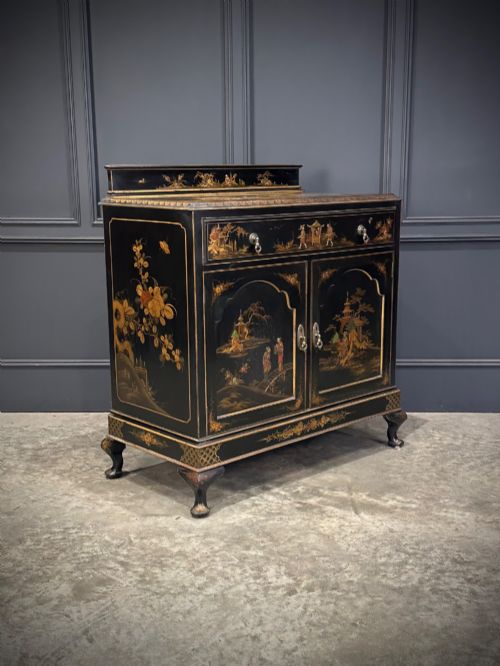


Chinoiserie Painted Sideboard
A chinoiserie painted sideboard brings the rich, decorative narrative of East Asian motifs into a room through vibrant lacquer and intricate hand-painted detail.
Chinoiserie Painted Sideboard
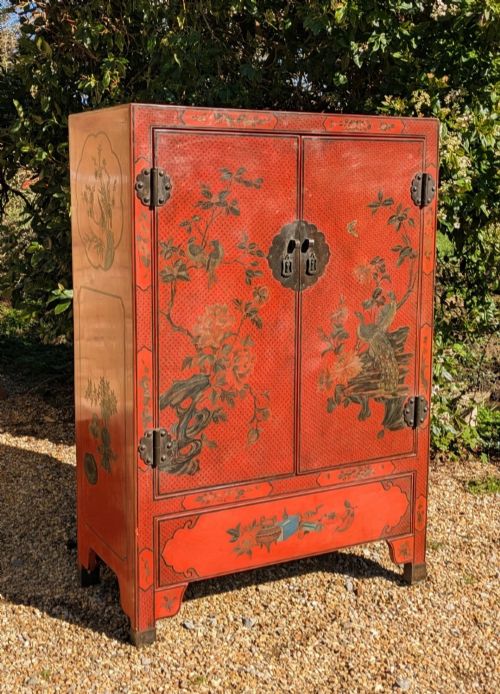
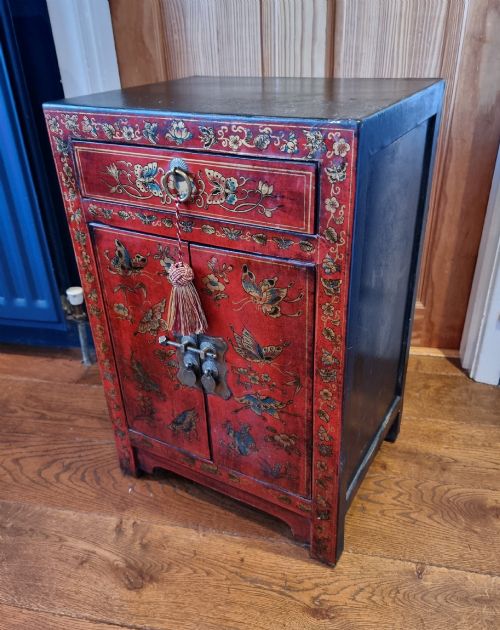
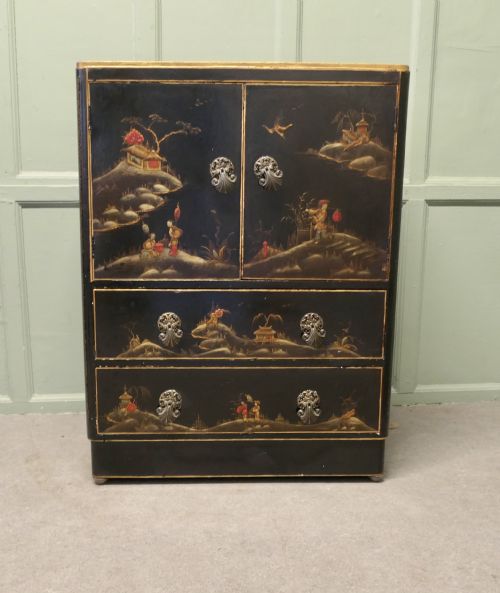
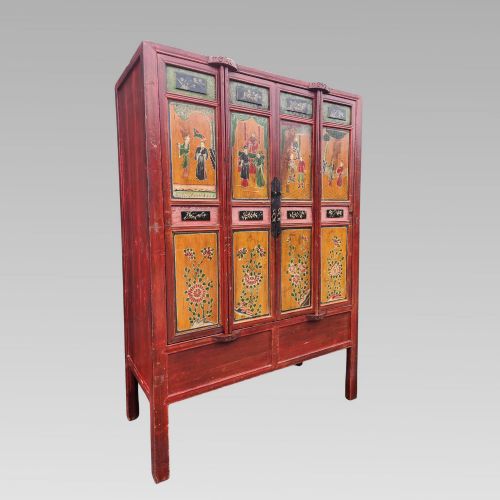
A chinoiserie painted sideboard encompasses a striking range of storage forms, including side cabinets, cupboards, and marriage cabinets that bring distinct focal points to an interior. These pieces emerge from periods spanning the eighteenth, nineteenth, and early twentieth centuries, capturing evolving interpretations of Chinese Qing Dynasty aesthetics.
The buyer frequently encounters black or red lacquered surfaces adorned with birds, flowers, and figural scenes, often elevated on carved stands or console bases. While traditional sideboards and side cabinets dominate the offerings, related forms such as bookcases and console tables occasionally appear alongside the core storage pieces.
Origins stretch from European interpretations employing japanning techniques to authentic pieces originating directly from regions like Fujian. Each object reflects a blend of practical utility and ornamental ambition, designed to store household goods while displaying meticulous surface decoration.
Materials and Construction
The construction of these pieces relies heavily on wood as a foundation, coated in layers of lacquer to achieve a smooth, durable finish. Artisans then applied gilt work, brass hardware, and occasionally soapstone inlay to accentuate the decorative panels and provide structural contrast.
Surface ornamentation involved painstaking hand-painting, often building up motifs in red and black lacquer to create depth and contrast. Stand-mounted variants incorporated carved wooden bases, while marble tops featured on specific eighteenth-century console iterations.
Chinoiserie Painted Sideboard Retail Price Guide 2026
Typical asking prices for chinoiserie painted sideboard among the pieces listed under this phrase on Sellingantiques today, from the lower quarter to the upper quarter. They describe what is for sale here now, not the wider market.
Many twentieth-century cupboards secretly longed to be oriental palaces, packing enough painted birds and blossoming branches into a hallway to confuse any local pigeon.
Assessing Quality and Execution
Quality rests primarily in the depth and preservation of the lacquer work and the fineness of the painted details depicting figures, birds, and botanical scenes. Superior examples display crisp lines and layered pigments that retain their vibrancy across centuries.
The integrity of the underlying woodwork and the survival of original hardware, such as brass mounts and hinges, distinguish finer specimens. Furthermore, the sophistication of the accompanying stands and the balance of the proportions dictate the visual success of the piece.
The Chinoiserie Painted Sideboard Glossary
- Chinoiserie
- European artistic interpretation of Chinese and East Asian artistic traditions, prominent in decorative arts and furniture design. It typically employs whimsical scenes of figures, pavilions, and flora.
- Japanning
- A European imitation of East Asian lacquerware developed in the seventeenth and eighteenth centuries. The technique involves applying successive coats of varnish and hardening them by heat.
- Lacquer
- A durable resin finish derived from tree sap or synthetic varnishes, applied in multiple coats to wood surfaces. It provides a glossy, protective sheen that accepts pigment and gilt decoration readily.
- Marriage Cabinet
- A traditional Chinese storage cabinet historically given to newlyweds as part of a dowry. These tall cupboards often feature prominent brass metalwork and symbolic ornamentation.
Chinoiserie Painted Sideboard: Frequently Asked Questions
Where should I place a chinoiserie painted sideboard?
These cabinets suit dining rooms, living spaces, or hallways where their decorative surfaces can function as a primary visual anchor. They offer functional storage while introducing strong colour and pattern to a neutral interior.
Position them away from direct sunlight and heat sources to protect the delicate lacquer and gilt finishes from drying or cracking over time.
How do I clean a lacquered surface?
Dust the cabinet regularly with a soft, dry, lint-free cloth to prevent particulate buildup on the delicate painted panels. Avoid using water, chemical polishes, or abrasive cleaners, which can permanently damage the historic lacquer.
If deeper cleaning is necessary, consult a professional conservator who understands historical finishes and organic resins.
Are these cabinets purely decorative or useful for storage?
Despite their ornate appearance, these pieces were designed for practical containment, offering deep shelving and enclosed compartments behind their doors. They function effectively for storing tableware, linens, or modern media equipment depending on the interior layout.
Verify the internal dimensions and shelf configurations before purchase to ensure the storage space meets your daily requirements.
How can I tell an eighteenth-century piece from a twentieth-century one?
Dating relies on examining the construction methods, the wood shrinkage, the wear patterns on the lacquer, and the style of the hardware. Eighteenth-century examples often display hand- cut joinery and oxidized brass that reflect centuries of handling.
Twentieth-century interpretations, including pieces from nineteen-twenty or nineteen-thirty, may utilise machine-sawn elements while still employing traditional hand-painting techniques.