


Wood Brass Candle Stand
A wood brass candle stand brings together warm timber and gleaming metal to hold light with quiet gravity.
Wood Brass Candle Stand
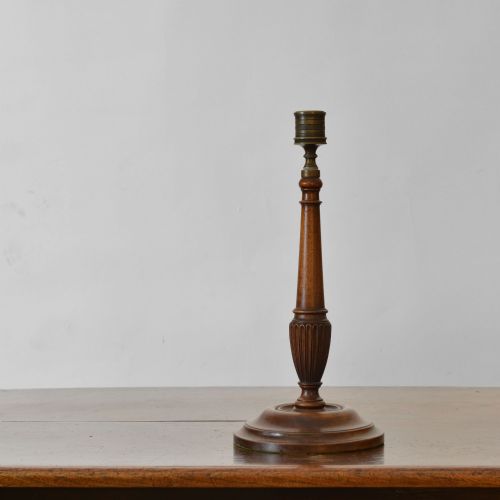
A wood brass candle stand unites turned timbers with metal nozzles and bases, creating functional lighting pieces that span from the Georgian period through the early twentieth century. When searching for a wood brass candle stand, buyers encounter pairs of candlesticks fashioned from oak or mahogany alongside occasional items incorporating metal mountings.
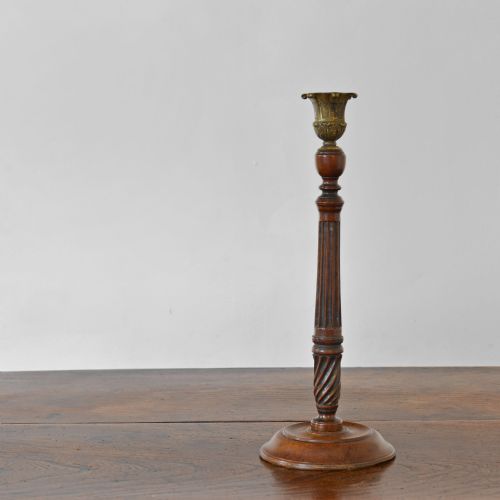
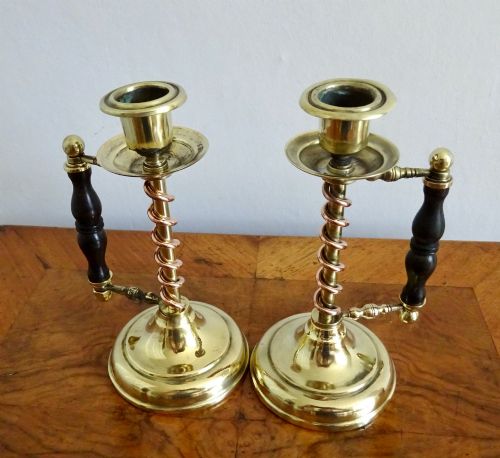
The selection here encompasses several distinct forms, most notably pairs of barley twist or turned candlesticks incorporating brass sconces. Examples stretch across the nineteenth century into Edwardian and later periods, showing how makers combined organic grain with polished metal across different styles.
Materials and Construction
Makers utilised dense timbers such as mahogany, oak, rosewood, and teak for the main shafts and bases, often turning them on a lathe into smooth columns or barley twist formations. These wooden bodies were paired with cast or sheet brass for drip pans, sockets, and weighted base plates.
Construction relies on secure joints and threaded metal fittings where the brass sconces meet the wooden stem. Copper elements and ormolu details occasionally appear alongside the primary brass components, adding tonal variation to the finished stands.
One pair of teak candlesticks spent its early life serving aboard the Royal yacht HMS Renown before finding a quieter existence on land.
Judging Quality and Execution
Quality rests in the precision of the wood turning and the weight and finish of the brass elements. Finer pieces display crisp, deep barley twist carving or smoothly tapered columns that sit straight and true on their bases.
The integration between timber and metal indicates the maker's hand, with superior examples featuring well-fitted brass sockets that complement the grain and colour of the chosen hardwood rather than masking it.
GILLOWS
The Wood Brass Candle Stand Glossary
- Barley twist
- A type of turning that resembles a spiralling rope or vine. This decorative form appears frequently on seventeenth-century revival and early twentieth-century wooden shafts.
- Gueridon
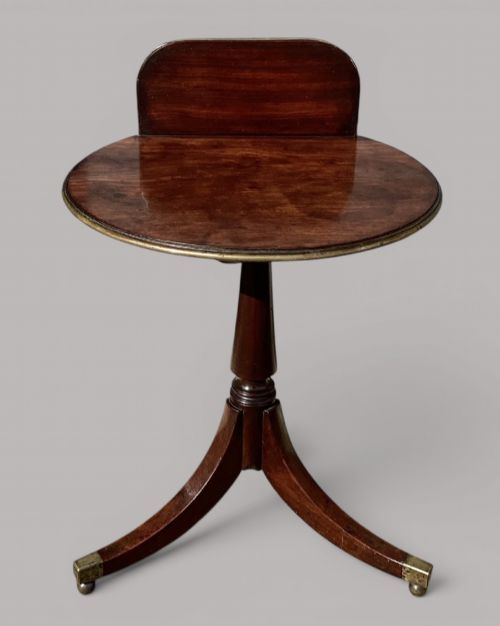
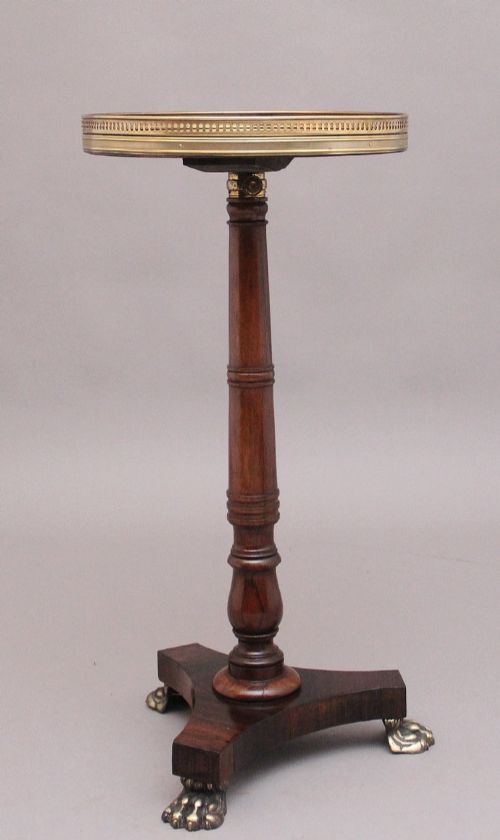
- A small ornamental stand or occasional table, often supported by a central column. French examples from the early nineteenth century sometimes utilise exotic woods like coromandel.
- Torchère
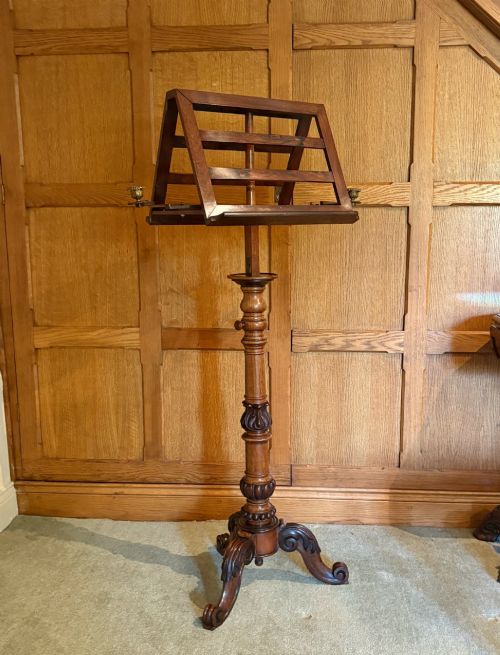
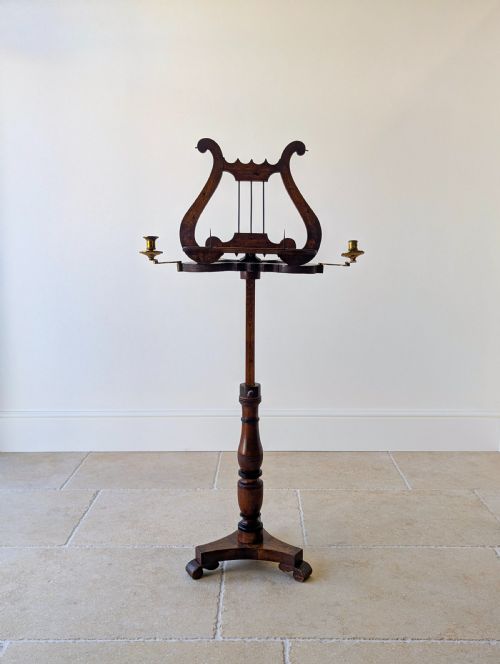
- A tall, slender stand designed to support a light or candle. These pieces elevate the flame to cast light across a room from a corner position.
- Ormolu
- Gilded bronze used for decorative mounts and accents. It brings a bright metallic contrast to dark woods on select period pieces.
Wood Brass Candle Stand: Frequently Asked Questions
Were these stands used on floors or tables?
Most candlesticks listed under this description are designed for tabletops, sideboards, or mantelpieces rather than direct floor placement. Their height generally ranges from modest proportions up to fifteen inches.
Larger torchères and pedestals serve the purpose of floor standing, whereas the smaller turned items require an elevated surface to display their brass sconces properly.
How should I care for the brass parts?
Brass components benefit from gentle dusting and occasional cleaning with a non-abrasive metal polish to maintain their brightness. Care must be taken to prevent polish from contacting the surrounding wood.
Unlacquered brass develops a natural patina over time, which many collectors prefer to leave undisturbed rather than restoring it to a bright finish.
What woods are most common?
Oak and mahogany appear most frequently amongst the surviving pieces, reflecting the favoured cabinet timbers of the eighteenth and nineteenth centuries. Rosewood, teak, and general hardwoods also present themselves in specific regional or later designs.
The choice of timber often dictates the overall visual weight of the stand, with dark mahogany offering a formal look and oak lending a rustic presence.