

Wine Cooler Furniture
Wine cooler furniture encompasses Georgian and Regency cellarettes and jardinières designed to hold bottles and ice at the dining table.
Wine Cooler Furniture
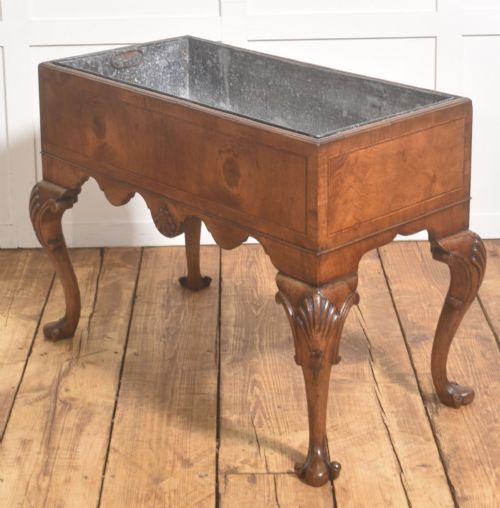
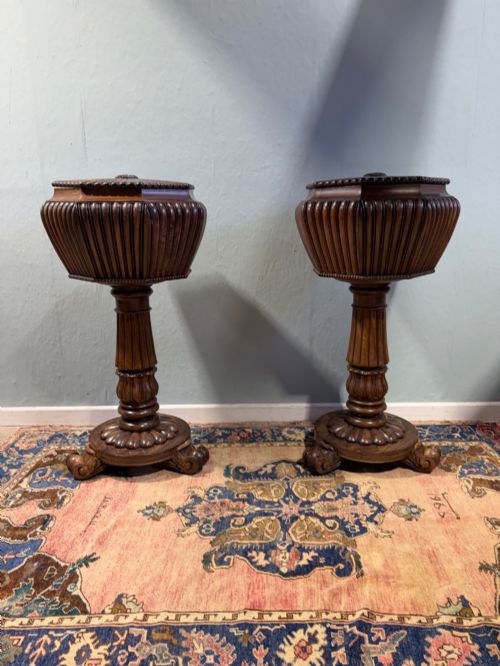
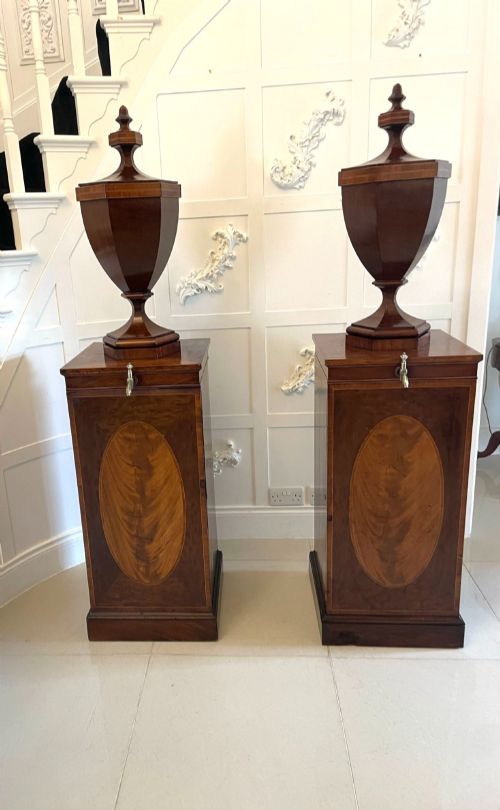
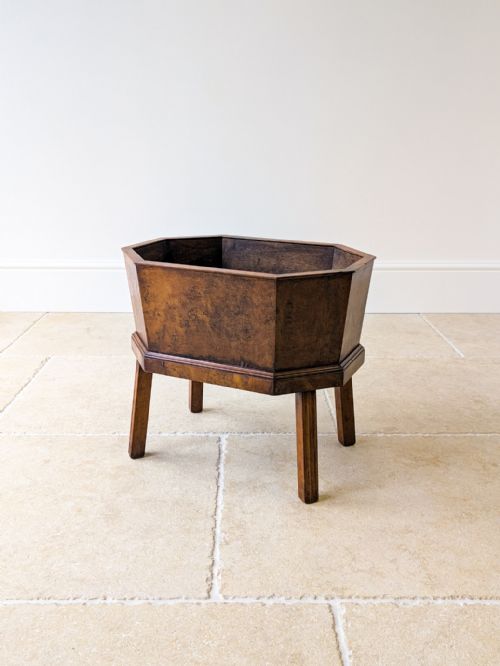
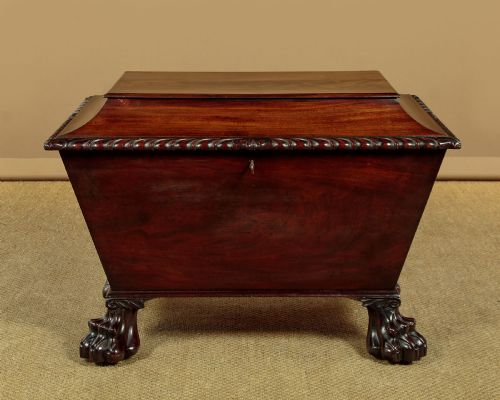
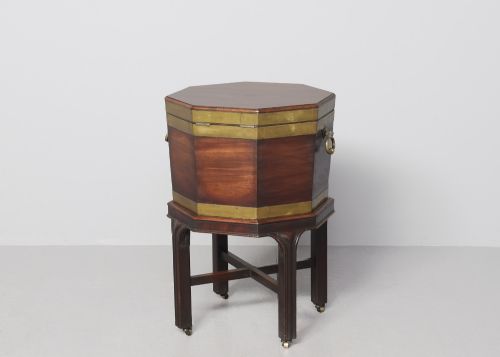
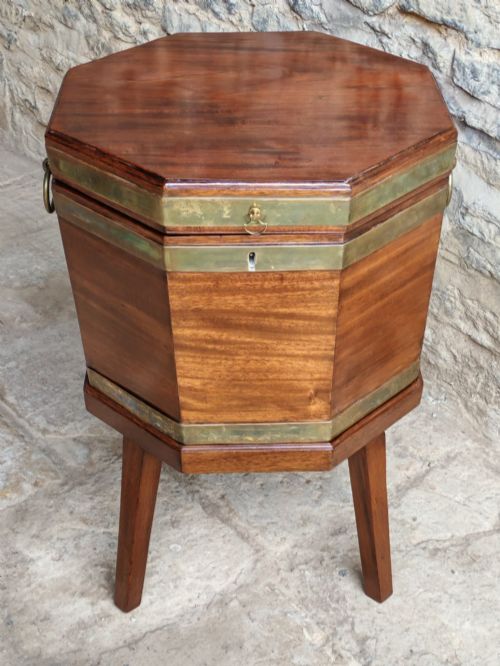
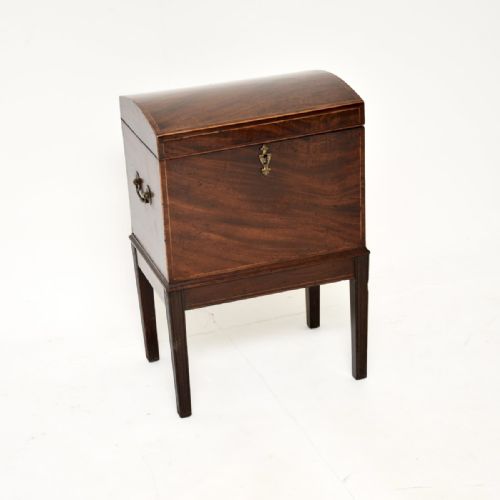
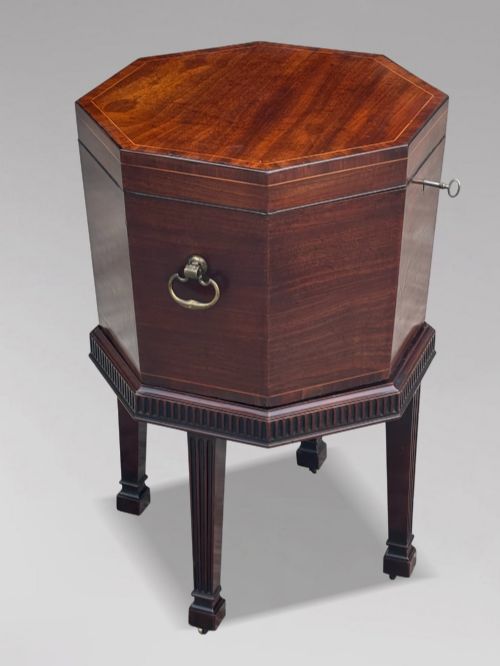
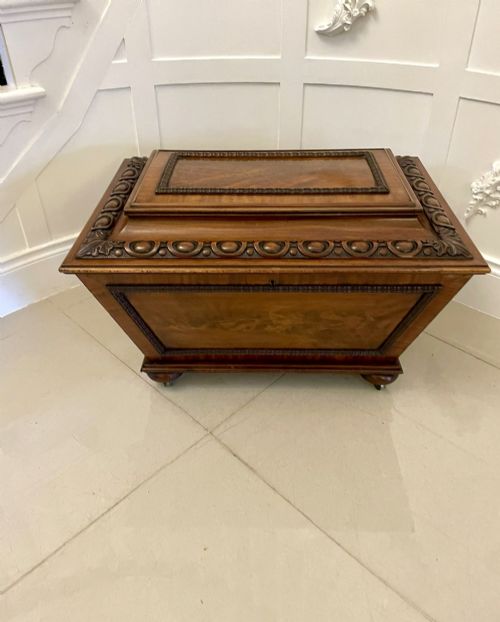
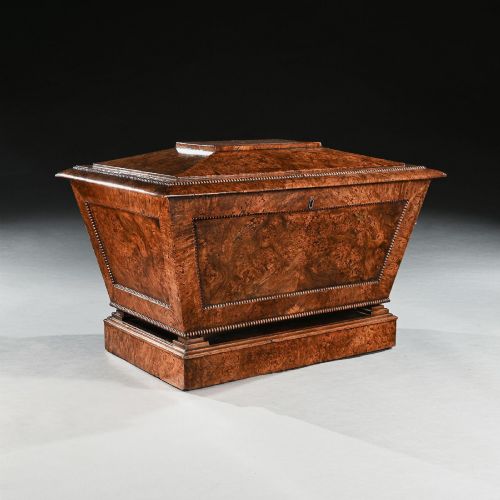
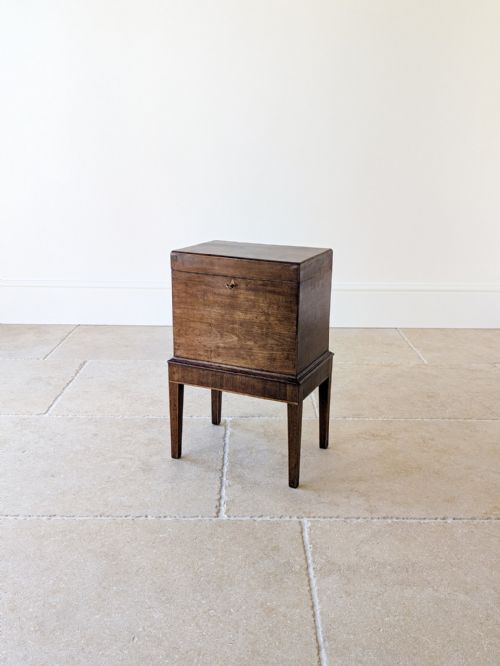
Wine cooler furniture consists primarily of cellarettes, wine coolers, and jardinières originating from the 18th and 19th centuries. Buyers searching this phrase meet octagonal, oval, and sarcophagus-shaped storage vessels designed for the formal dining room.
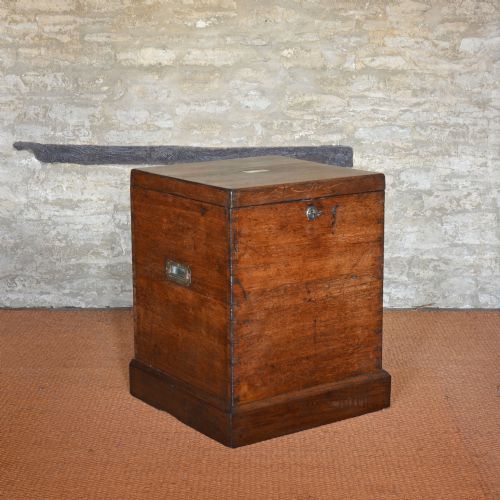
Examples date predominantly from the Georgian, Regency, and William IV periods, constructed to house wine bottles alongside ice. Many take the form of lidded boxes on stands, chests of drawers, or low basins.
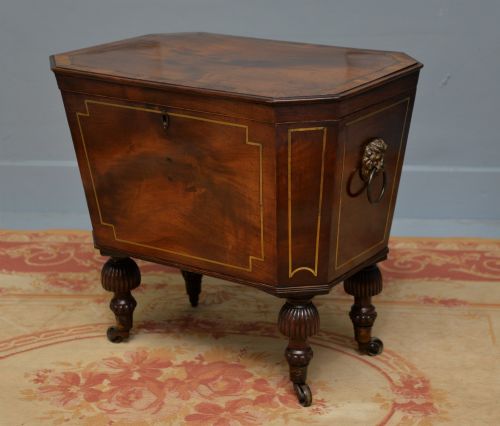
Makers and cabinet-makers of these periods produced portable bottle holders and freestanding planters that served both practical dining functions and display purposes. The selection spans straightforward mahogany boxes to elaborate brass-bound or inlaid designs.
How they were made
Cabinet-makers utilised solid timbers such as mahogany, walnut, and rosewood, frequently selecting flame veneers or pollard oak for decorative impact. Boxwood stringing and ormolu mounts added contrasting detail to the primary woods.
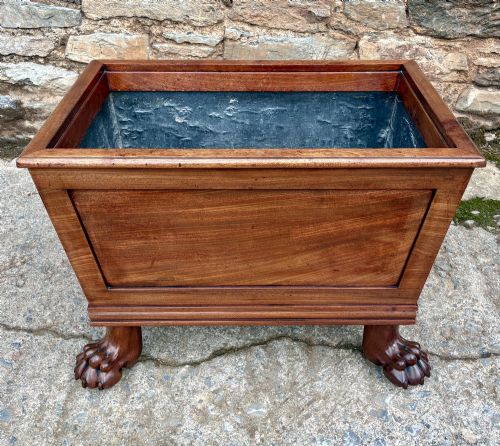
Metal components played a structural and decorative role, with brass bands securing the stave construction of oval and octagonal vessels. Zinc linings and lead linings inside the wooden bodies protected the timber from melting ice and spilled wine.
Wine Cooler Furniture Retail Price Guide 2026
Typical asking prices for wine cooler furniture among the pieces listed under this phrase on Sellingantiques today, from the lower quarter to the upper quarter. They describe what is for sale here now, not the wider market.
Some wine coolers double as sneaky chests of drawers, proving that Georgian hosts appreciated both order and deception.
What varies in quality
Quality rests upon the selection of timber figure, such as flame mahogany or figured grain, and the crispness of carved details like paw feet and brass bindings. Pieces retaining their original stands or fitted interior partitions command greater interest than altered examples.
The sophistication of internal construction, including lead or zinc linings and dividers for individual bottles, distinguishes finer workshop production from standard utility items.
Gillows·Gillingtons·Freemans of Norwich
The Wine Cooler Furniture Glossary
- Cellarette
- A lockable container used for storing wine bottles near the dining table. They often feature internal divisions and metal linings to hold ice.
- Jardiniere
- An ornamental stand or container used for holding plants or flowers. In this context, some examples share forms with wine coolers.
- Sarcophagus
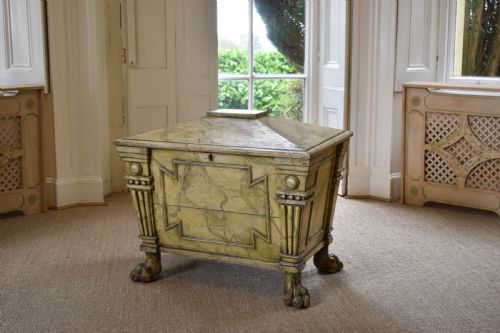
- A coffin-shaped box form popular during the Regency period for large wine coolers. These often stand on carved paw feet.
- Brass-bound
- A technique where metal hoops encircle wooden staves to hold the vessel together securely. This detail is common on coopered oval and octagonal wine coolers.
Wine Cooler Furniture: Frequently Asked Questions
What is wine cooler furniture?
Wine cooler furniture comprises antique storage vessels, including cellarettes and jardinières, built to keep bottles chilled during meals.
These objects range from compact tabletop boxes to large freestanding sarcophagi on dedicated stands.
How were cellarettes used?
Servants placed wine bottles inside the containers alongside ice to lower the temperature before serving guests.
Interior divisions kept the glass bottles separated while lead or zinc linings prevented water damage to the outer wood.
What woods were used?
Mahogany served as the primary timber for the vast majority of these pieces, appearing in solid form or as veneers.
Walnut, rosewood, and pollard oak also appear alongside boxwood stringing and brass hardware.
How do I identify a Regency wine cooler?
Regency examples frequently display classical architectural motifs, such as sarcophagus shapes, lion paw feet, and faux marble finishes.
Cabinet-makers of this era favoured bold mahogany grains and robust brass mountings.