



William IV Table Box
A william iv table box brings together refined timber construction and practical compartments, offering an authentic piece of period design for your room.
William IV Table Box
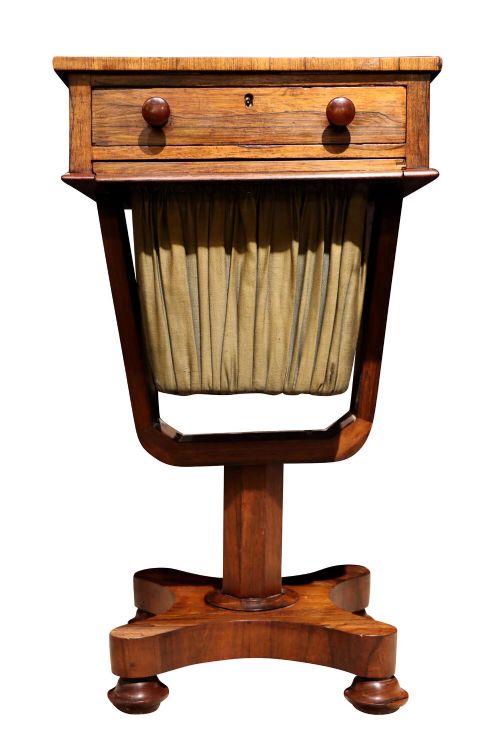
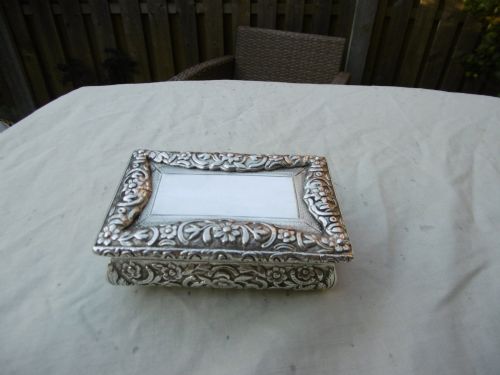
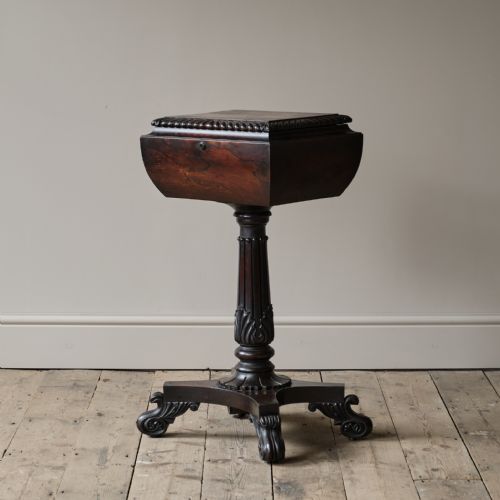
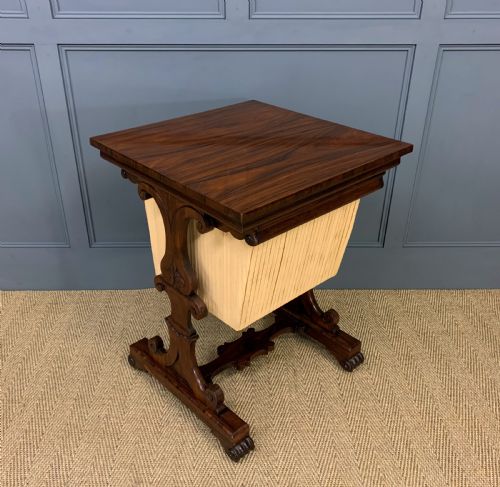
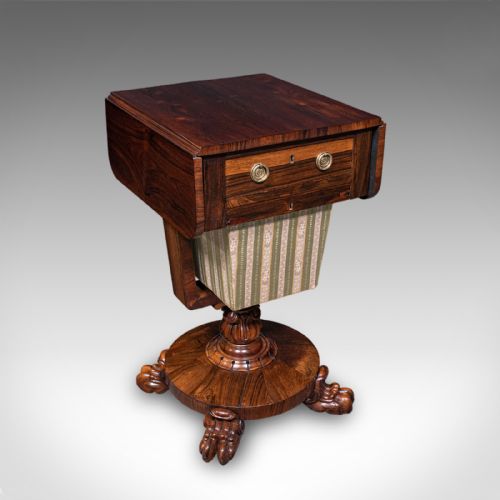
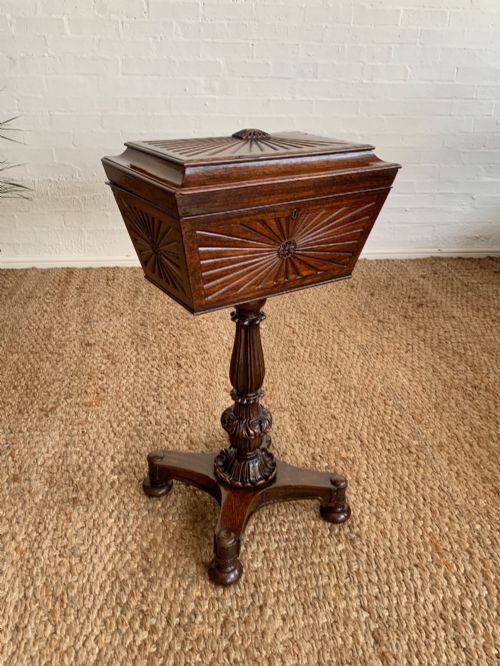
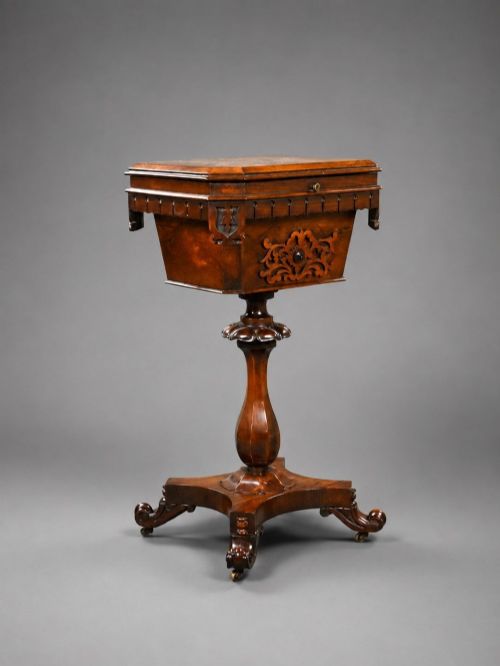
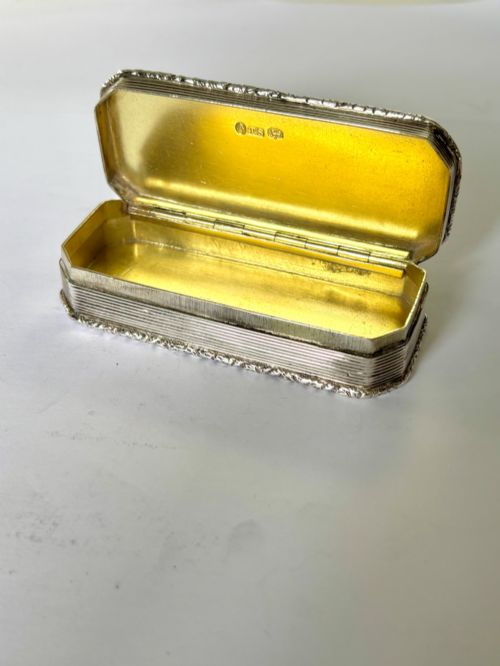
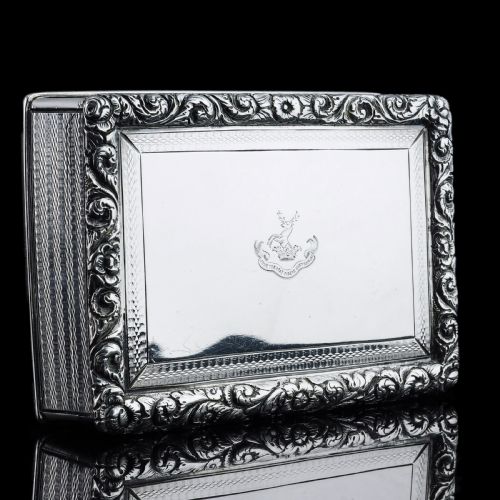
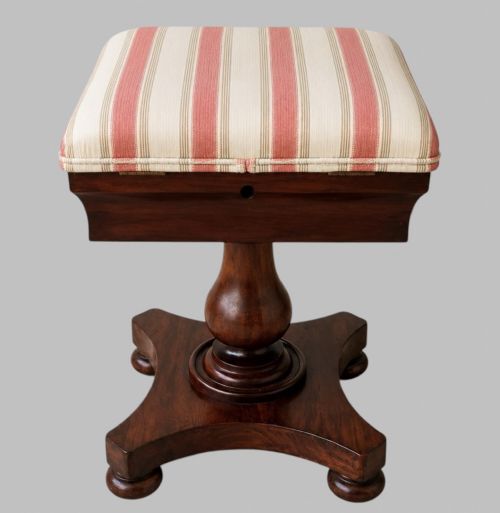
When you search for a william iv table box, you encounter pieces designed for specialised domestic tasks such as sewing, writing or storing tea. The most common forms on this page include work tables, tea poys and heavy silver table snuff boxes.
These items originate primarily from the nineteenth century, spanning periods recorded as Georgian, Regency, William IV and Victorian. Craftsmanship from this era prioritises functional compartments enclosed in substantial timber frames or chased silver bodies.
The objects serve as both portable containers and static furniture pieces. You will find table-top boxes alongside freestanding tables equipped with fitted internal trays and drop leaves.
Materials and construction
Cabinet makers utilised dense hardwoods such as rosewood and mahogany for the primary structures, frequently selecting figured veneers to display rich grain patterns. Burr maple, burr walnut and burr yew appear in specific examples to provide contrasting surface textures.
Metal components include cast brass handles, hinges and feet, alongside sterling silver and silver gilt for high-status snuff boxes. Silk and other fabrics line the interior compartments of sewing tables and tea caddies to protect delicate contents.
William IV Table Box Retail Price Guide 2026
Typical asking prices for william iv table box among the pieces listed under this phrase on Sellingantiques today, from the lower quarter to the upper quarter. They describe what is for sale here now, not the wider market.
Some tea poys double as spirit stands, keeping guests well supplied with both tea and stronger refreshments.
Evaluating craftsmanship
The standard of carving and joinery dictates the distinction between standard production and exceptional examples. Fine pieces display crisp relief work, such as sunburst carvings and floral chased borders, executed by skilled silversmiths or cabinet makers.
The integrity of internal fittings, including complete nesting compartments, original fabric linings and functioning brass locks, influences the overall standing of an item. Superior specimens maintain their structural cohesion and retain matching components across all drawers and lids.
Joseph Wilmore·Thomas Shaw·Gillows
The William IV Table Box Glossary
- Teapoy
- A container or small table designed for holding tea, often featuring internal caddies and a sarcophagus shaped box.
- Work table
- A small freestanding table containing drawers or fabric bags fitted for sewing and needlework accessories.
- Snuff box
- A small hinged container used for holding powdered tobacco, frequently fashioned from solid silver with decorative chasing.
- Caddy top
- A hinged lid style reminiscent of a tea caddy, featuring moulded edges and substantial depth.
- Silver gilt
- Silver covered with a thin layer of gold, providing a rich metallic finish often seen on interior surfaces of high-grade boxes.
William IV Table Box: Frequently Asked Questions
What is a teapoy?
A teapoy is a lidded box or small table designed to hold loose tea leaves, often featuring internal compartments for different varieties.
These pieces sit either on dedicated table bases or directly on tabletops, reflecting the high value placed on tea during the nineteenth century.
How do I use a work table today?
Work tables function well as bedside units or compact side tables in a living room, where their internal compartments store small modern accessories.
Their hinged tops and drop leaves allow you to adapt the surface area to suit your available space.
What is the difference between mahogany and rosewood?
Mahogany provides a deep reddish-brown tone with straight or figured grain patterns, used extensively for durable structural furniture.
Rosewood offers a heavier density with darker, more dramatic figuring that polishes to a high gloss.
How are silver table boxes dated?
Silver pieces carry hallmarks that indicate the assay office, the maker's mark and a specific year letter code.
Timber items rely on construction methods, timber choice and stylistic markers to identify their period of origin.