




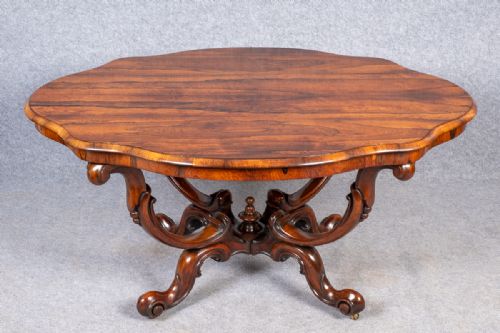


William IV Rosewood Breakfast Table
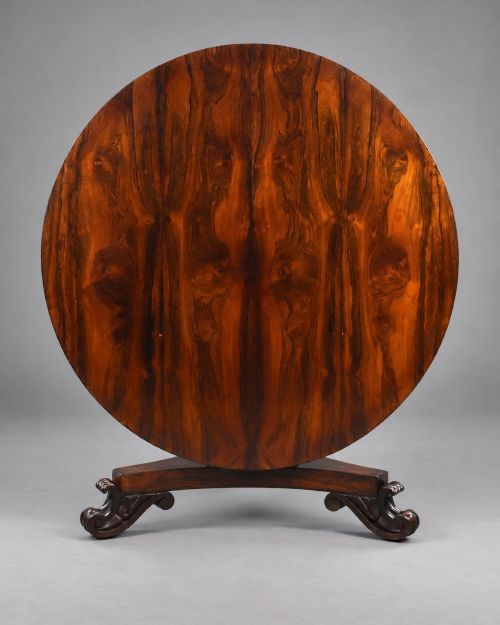
A william iv rosewood breakfast table brings architectural weight and rich timber grain to a room, serving as a grand centrepiece for dining or display.
William IV Rosewood Breakfast Table
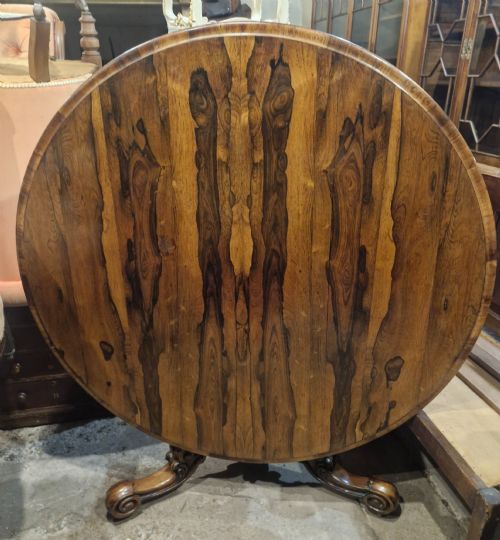
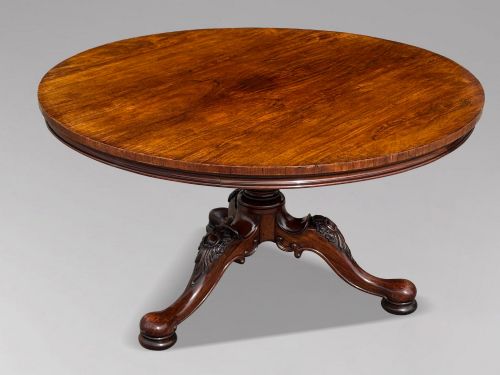
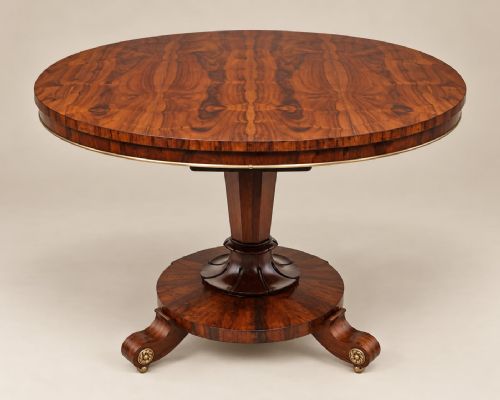
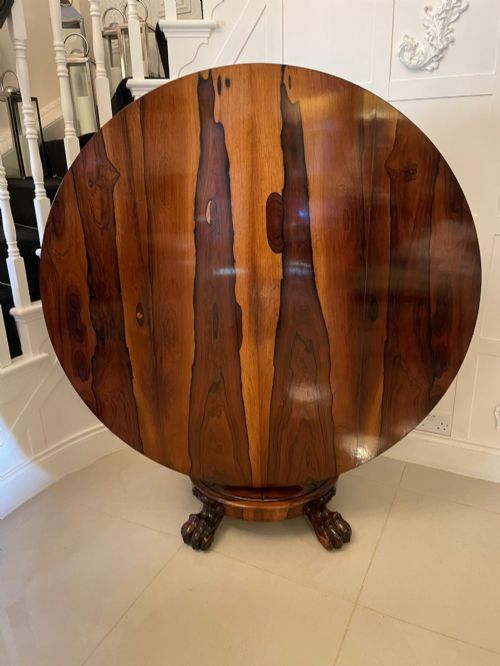
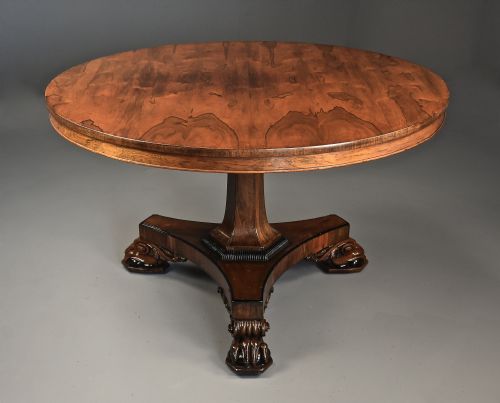
A william iv rosewood breakfast table is a substantial circular pedestal piece designed primarily for nineteenth-century domestic interiors. The examples seen here span the 19th Century, Regency, and Victorian periods, often functioning interchangeably as dining tables, centre tables, or loo tables.
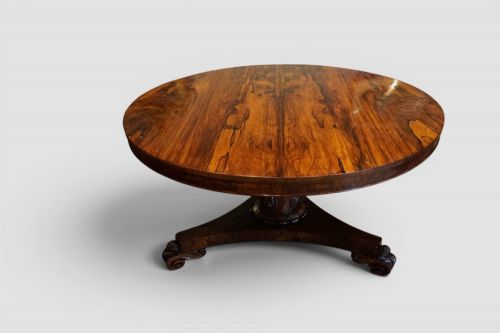
Most pieces feature a circular top supported by a central pedestal and a robust base, frequently incorporating a tilt-top mechanism for convenient storage against a wall when not in use. The forms range from simple round tops to shaped circular designs supported by triform or basket bases.
Materials and Construction
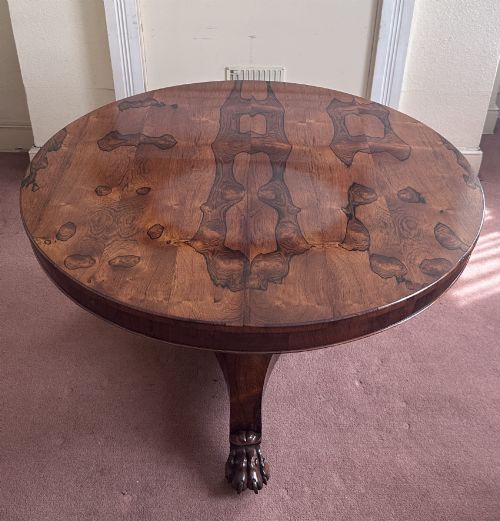
Makers utilised solid timber and rosewood veneer over secondary woods, often selecting highly figured stock to create striking grain patterns across the circular tops. In some instances, exotic timbers such as goncalo alves appear alongside brass fittings and inlaid wood details.
The heavy tops are balanced on robust central pedestals that anchor into heavy triform or basket bases, providing stability for the tilting mechanism. Cabinetmakers constructed these joints to support the considerable weight of dense tropical hardwoods while allowing smooth pivoting action.
William IV Rosewood Breakfast Table Retail Price Guide 2026
Typical asking prices for william iv rosewood breakfast table among the pieces listed under this phrase on Sellingantiques today, from the lower quarter to the upper quarter. They describe what is for sale here now, not the wider market.
Some tables tilt so efficiently you could practice your martial arts with a very heavy shield.
Craftsmanship and Proportion
Quality rests in the selection of the timber veneer and the architectural vigour of the pedestal base, where finer pieces display exceptional figuring and deeply carved scrollwork. The integration of the tilt-top mechanism dictates mechanical success, with superior examples sitting flush and stable when locked horizontal.
Proportion separates standard production from exceptional work, as the best tables balance a wide circular top against a weighty base without appearing clumsy. The crispness of the carving on the pedestal and the subtlety of the polish reveal the hand of a more accomplished workshop.
James Winter of Wardour Street in London
The William IV Rosewood Breakfast Table Glossary
- Tilt-top
- A hinged tabletop mechanism that allows the surface to pivot vertically for storage. This functional design was standard for large pedestal tables in nineteenth-century parlours.
- Triform base
- A three-sided pedestal foot configuration common in nineteenth-century tables. It provides wide structural support beneath a heavy central column.
- Rosewood veneer
- A thin layer of richly grained tropical timber applied over a secondary wood core. Cabinetmakers used it to display decorative figuring across large tabletops.
- Goncalo alves
- A dense exotic timber known for its distinctive contrasting grain patterns. It appears occasionally in nineteenth-century cabinet work alongside standard rosewood.
- Loo table
- A large round table used for nineteenth-century card games such as loo. These pieces frequently share the pedestal and tilt-top construction of breakfast tables.
William IV Rosewood Breakfast Table: Frequently Asked Questions
What is a william iv rosewood breakfast table?
A william iv rosewood breakfast table is a heavy circular pedestal table dating from the early nineteenth century. These pieces were built for domestic dining and social use in grand rooms.
They typically feature a pivoting circular top mounted on a substantial column and a carved tripartite base. The rich grain of the timber forms the visual centrepiece of the design.
How do you use a tilt top table?
The tilting mechanism allows the circular top to be unlocked, pivoted ninety degrees, and secured vertically against the pedestal. This ingenious function enabled large tables to be pushed against a wall to clear floor space.
In daily use, the top is lowered and locked flat for dining or display. Modern owners often keep them lowered as centre tables rather than tilting them frequently.
Where does a breakfast table go?
These tables are traditionally placed in the centre of a dining room, morning room, or large entrance hall. Their circular footprint allows chairs to be arranged freely around the perimeter.
Because the pedestal sits beneath the centre, diners enjoy unobstructed legroom compared to four-legged dining tables. They also make striking focal points beneath a central ceiling rose or chandelier.
How do I care for rosewood furniture?
Rosewood surfaces require minimal moisture and protection from direct sunlight to prevent the timber from fading or drying out. Regular dusting with a soft, dry cloth maintains the natural lustre of the polished wood.
Avoid placing hot dishes or wet glasses directly on the antique polish. Periodic application of a suitable wax preserves the historic finish without building up heavy residues.
How do I date a nineteenth century table?
Dating relies on examining the construction methods, timber choices, and decorative motifs characteristic of specific reigns and decades. Pieces from the 1830s often display robust architectural carving and dense rosewood veneers.
Later Victorian examples may incorporate different base forms or lighter proportions. Comparing the joinery and hardware to documented examples helps narrow down the period.