


William IV Low Cabinet
A william iv low cabinet anchors a room with rich rosewood or mahogany and quiet architectural balance.
William IV Low Cabinet
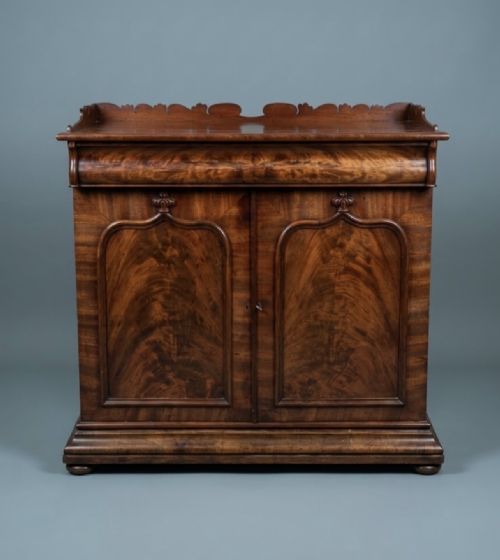
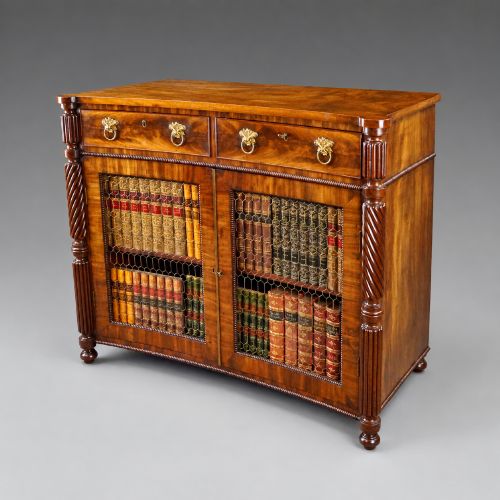
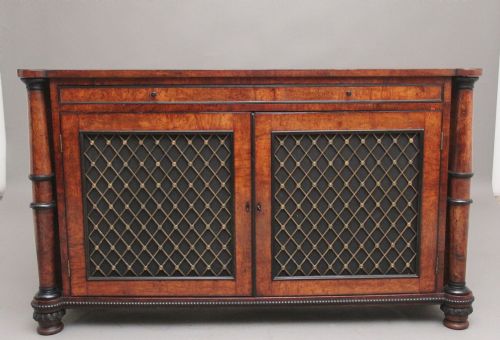
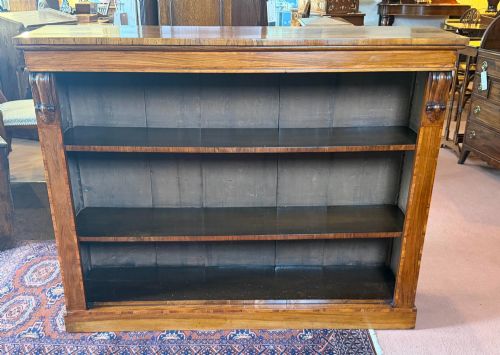
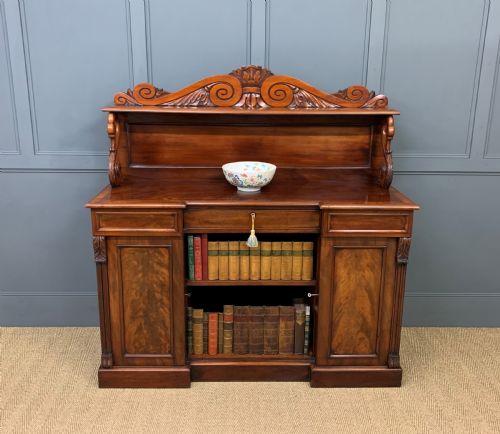
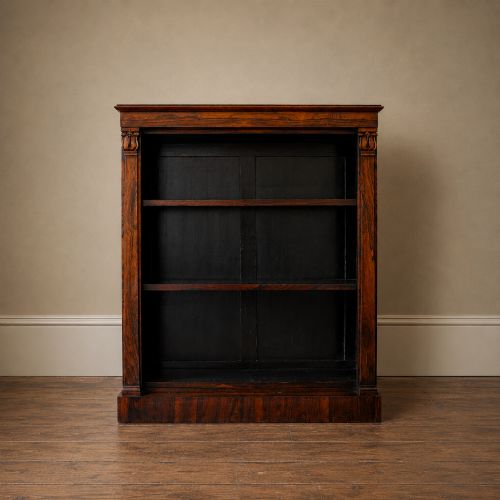
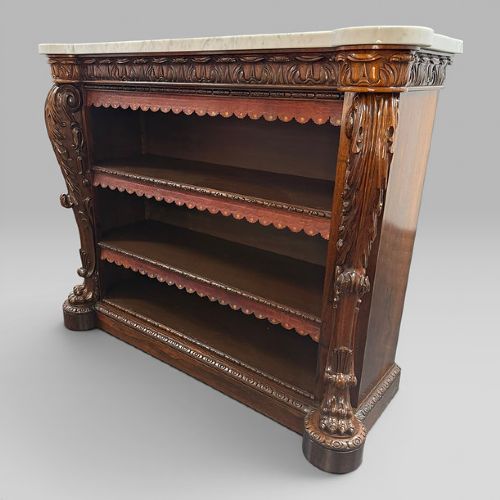
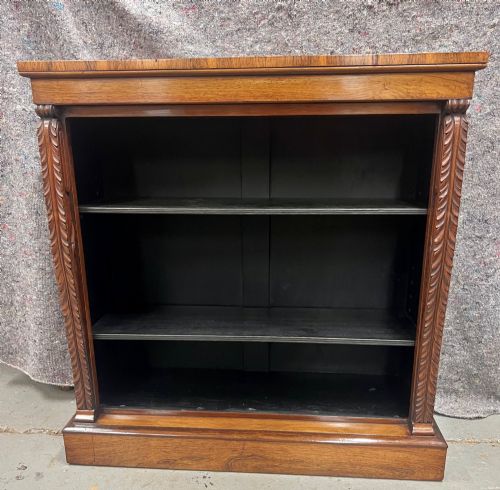
A william iv low cabinet brings together the solid proportions of nineteenth-century craftsmanship and the refined details of the Regency and Victorian eras. These pieces usually take the form of side cabinets, chiffoniers, or open bookcases designed to sit low against a wall. The version you meet most often on this page is constructed from rich rosewood or flame mahogany, sometimes topped with marble.
Makers and workshops of the period often incorporated adjustable shelves, brass inlay, and glass panel doors to suit both libraries and formal reception rooms. The selection ranges from compact concave side cabinets to substantial breakfront designs with multiple doors. Each piece reflects a transitional aesthetic bridging late Georgian gravity and early Victorian utility.
What varies in quality
The distinction between standard utility furniture and the finest workshop output lies in timber selection and secondary details. Grain matching across breakfront doors and the precision of brass marquetry separate ambitious commissions from routine production.
Subtle architectural elements, such as turned columns, concealed drawer construction, and heavy pink marble tops, elevate specific pieces. The integration of adjustable brass shelving tracks and solid oak framing further distinguishes superior examples.
Listings feature woods spanning rosewood, mahogany, pollard oak, walnut, satinwood, and goncalo alves.
Gillows·Richard Bridgens
The William IV Low Cabinet Glossary
- Breakfront
- A piece of furniture whose central section projects forward from the flanking wings. This format creates depth and visual rhythm in larger side cabinets.
- Chiffonier
- A low cabinet equipped with doors enclosing shelving, frequently surmounted by a small shelf or tier supported on pillars. It served as a versatile side table in dining and drawing rooms.
- Goncalo Alves
- A dense, exotic hardwood featuring striking dark brown and golden contrasting streaks. It provides an exceptionally durable and decorative surface for nineteenth-century shelving.
- Pollard oak
- Timber harvested from trees that have been pollarded, producing dense clusters of growth rings known as burrs. This wood yields a highly figured surface texture used for specialist cabinetry.
William IV Low Cabinet: Frequently Asked Questions
Where should I place a low cabinet?
A low cabinet functions well in a hallway, dining room, or living space where its surface can hold lamps or decorative objects without obstructing windows or artwork.
The low profile keeps sightlines open while providing enclosed storage for books or tableware beneath.
How do I identify a nineteenth-century piece?
Look for timber selection, hand-cut joinery, and specific hardware conventions characteristic of the period between late Georgian and early Victorian eras.
Rosewood, flame mahogany, and heavy brass details typically indicate workshop practices of the eighteen-thirties and forties.
Can I adjust the shelves?
Many open bookcases and side cabinets from this era feature adjustable wooden shelves supported on brass ratchets or peg systems.
This adaptability allows the interior to accommodate volumes of varying heights.
How do I care for marble tops?
Marble surfaces require gentle cleaning with a damp cloth and mild soap to avoid dulling the polished finish.
Acidic liquids should be kept away from the stone to prevent permanent etching.