



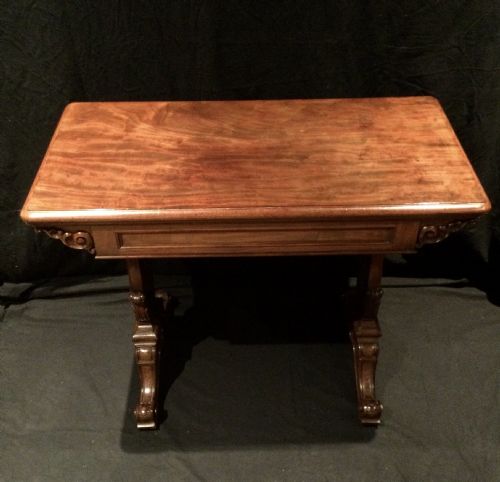


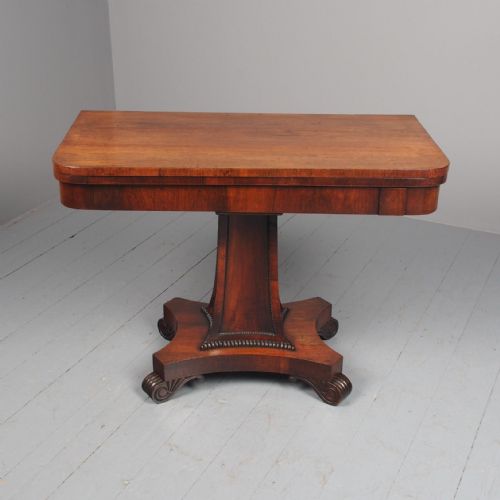


William IV Foldover Table
A William IV foldover table brings nineteenth-century ingenuity to your drawing room, offering an adaptable surface for cards, tea and conversation.
William IV Foldover Table
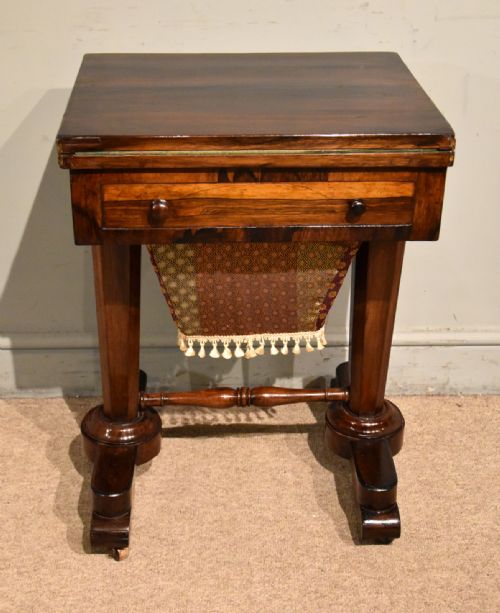
A William IV foldover table is a versatile piece designed to serve multiple functions in a traditional interior. When you search for a William IV foldover table, you encounter furniture configured as card tables, games tables, side tables, console tables and tea tables. These items date from the nineteenth century, including the Regency and Georgian eras.
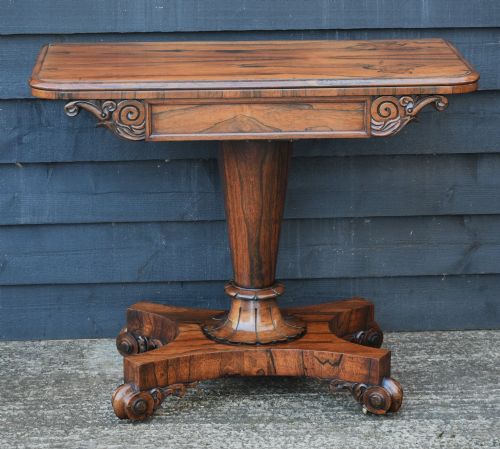
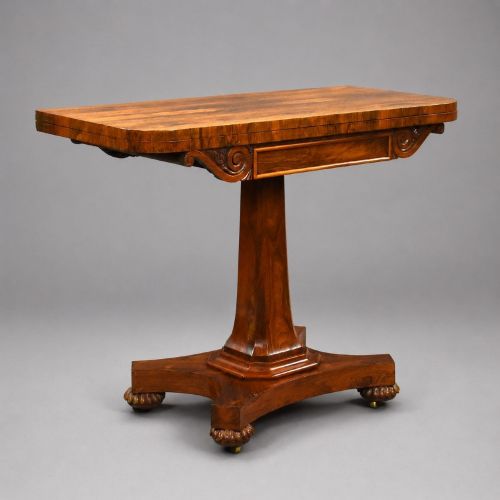
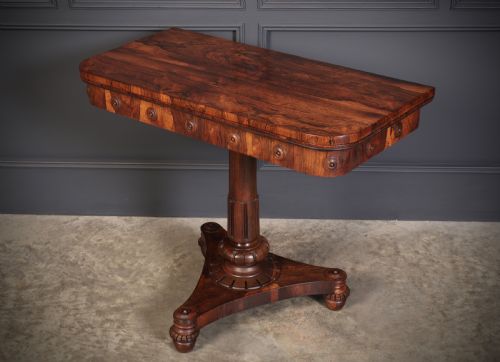
Rosewood and mahogany dominate the selection, often worked into pedestal bases or supported by carved motifs. Examples appear in rich timbers such as palisander and flame mahogany veneer, sometimes featuring satinwood or brass details. Many of these surfaces open on hinges to reveal baize or fabric-lined interiors intended for evening entertainment.
The most common form on this page is the rosewood card table, typically featuring a swivel top that reveals a concealed well beneath. Buyers regularly find variants spanning the early nineteenth century up to eighteen fifty, reflecting the heavy, robust proportions characteristic of the period.
How they were made
Cabinet makers utilised dense tropical hardwoods like rosewood and mahogany for structural integrity and visual depth. They frequently applied flame mahogany veneer to achieve striking grain patterns across the primary surfaces.
Listings feature items dated across the nineteenth century, including the Regency and Georgian eras, constructed primarily from rosewood and mahogany.
What varies in quality
The selection of timber dictates much of the visual merit, with finely figured flame veneers and rich rosewood grain marking out superior examples. Plain surfaces lack the depth and warmth found in pieces utilising carefully matched grain sections.
Carving execution defines the distinction between standard workshop production and exceptional craftsmanship. Crisp, deep relief work on pedestal bases and mounts elevates an object far beyond basic utilitarian joinery.
The William IV Foldover Table Glossary
- Foldover table
- A dual-purpose piece of furniture featuring a hinged top that doubles in surface area when opened.
- Palisander
- A dense, heavily figured exotic timber often utilised for high-status nineteenth-century cabinet work.
- Pedestal base
- A central upright support replacing traditional corner legs, carrying the weight of the table down to a platform or feet.
- Flame mahogany veneer
- A thin slice of timber cut from the fork of a mahogany tree to produce a dramatic, flame-like grain pattern.
- Card table
- A specialised folding table designed for evening gaming, frequently lined with fabric or baize.
William IV Foldover Table: Frequently Asked Questions
What is a William IV foldover table?
A William IV foldover table is a nineteenth-century furniture piece designed with a hinged top that opens to double the surface area. These items typically function as card, tea, or console tables.
Cabinets makers constructed them predominantly from rosewood and mahogany, often mounting them on robust pedestal bases suited for drawing room use.
How were these tables used?
These tables served multiple social functions in nineteenth-century homes, transitioning easily from daytime display to evening entertainment. The folded configuration acted as a side or console table against a wall.
Unfolding the top revealed a baize or fabric-lined surface intended for card games, or provided extra space for serving afternoon tea to guests.
How do I identify the wood?
Rosewood appears dark with deep purple or black grain markings, while mahogany ranges from pale reddish-brown to rich dark tones. Flame mahogany displays a characteristic flickering pattern created by careful veneer selection.
Palisander refers to specific dense exotic hardwoods with striking figures, and satinwood offers a contrasting pale, golden appearance used for inlay.
How do I care for rosewood?
Keep nineteenth-century rosewood surfaces away from direct sunlight and extreme temperature fluctuations to prevent timber movement. Regular dusting with a soft, dry cloth preserves the finish without requiring heavy polishes.
Avoid placing damp items directly onto the vulnerable polished wood or the interior fabric lining of the gaming surface.
What distinguishes the period?
The period spans the early nineteenth century, bridging Regency elegance and heavier Victorian proportions. Pieces from this era favour bold pedestals, substantial timber scantlings, and classical architectural influences.
Carved details on these tables often incorporate animal motifs or robust scrollwork rather than the lighter, slender legs found in earlier Georgian furniture.