




William IV Drawers
When exploring william iv drawers, collectors find robust timber construction paired with restrained classical proportions.
William IV Drawers
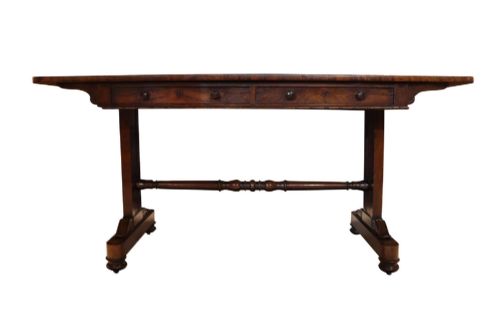
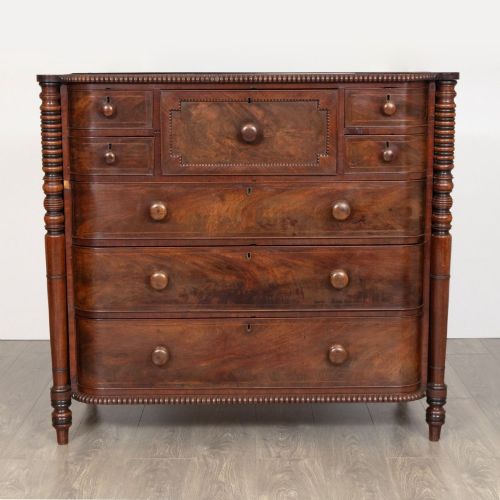
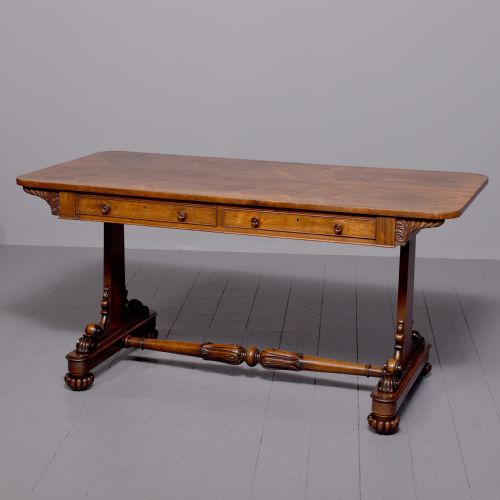
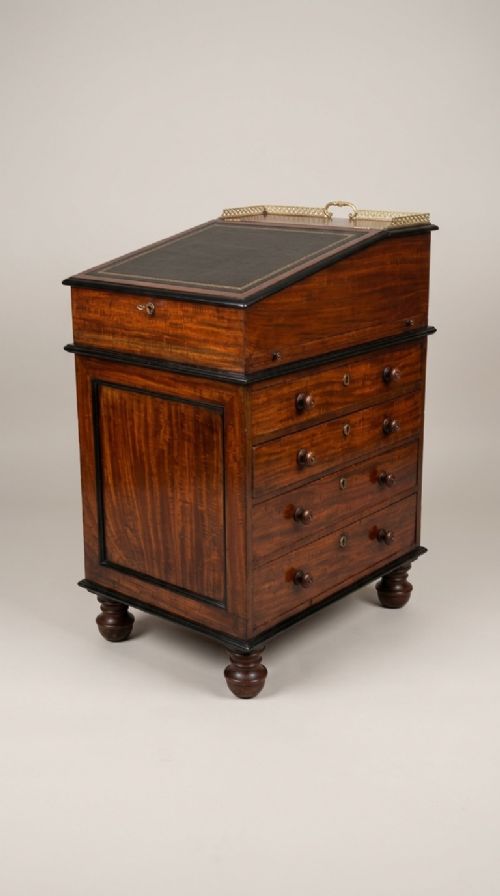
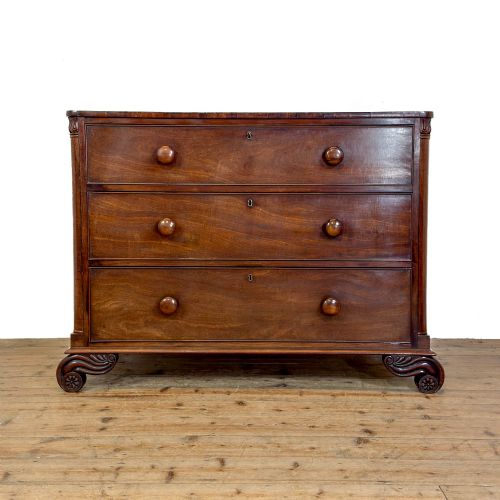
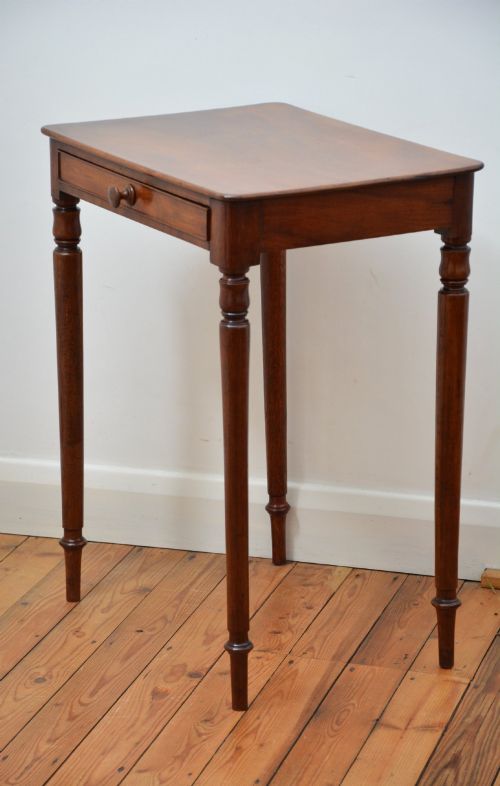
The search for william iv drawers centres primarily on substantial case pieces designed for storage, alongside smaller writing tables and writing desks fitted with functional compartments. Buyers most frequently encounter classic mahogany chests of drawers, often featuring bow fronts or low profiles suited to nineteenth-century domestic interiors.
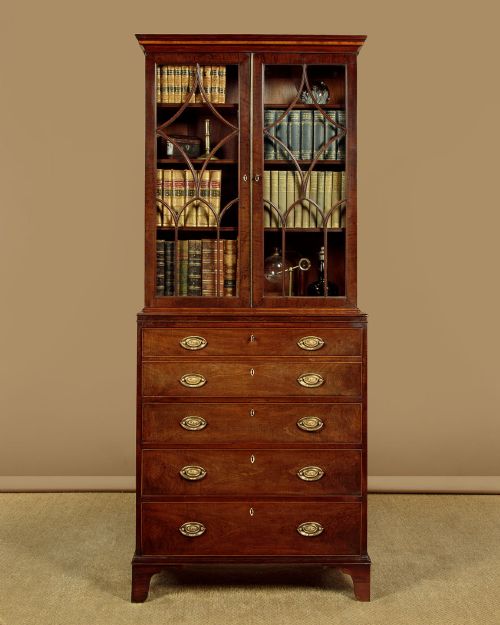
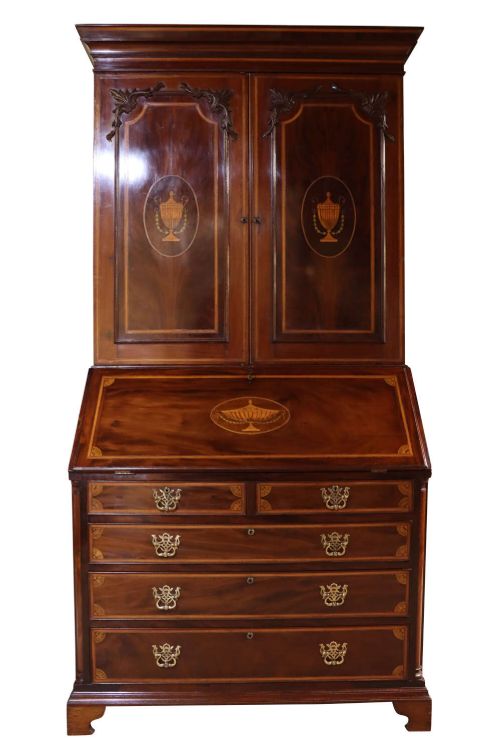
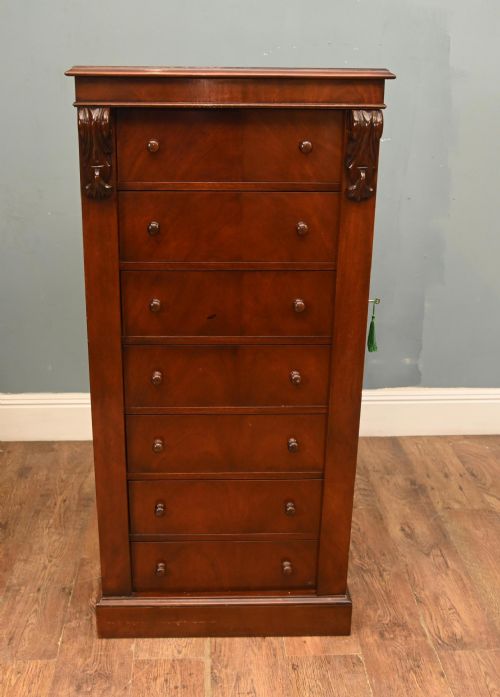
Beyond standard chests, inventory includes specialist forms such as Wellington chests, campaign chests in camphor wood, and bureau bookcases. These items reflect the heavy, solid proportions typical of the period, anchored by sturdy timber frames.
Origins span standard domestic production workshops as well as pieces bearing attribution to notable makers like Gillows. The selection balances utilitarian storage with the heavier decorative flourishes characteristic of the era.
Materials and Construction
Makers relied heavily on solid mahogany and flame mahogany veneer, often enhanced by contrasting rosewood, walnut, or delicate wood inlay. Grain selection played a major role in the visual impact of the timber surfaces.
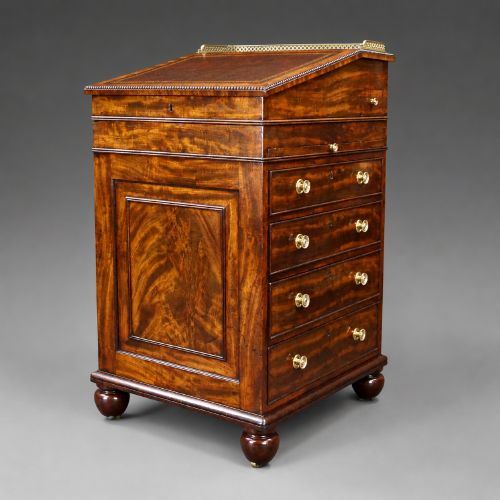
Structural integrity relied on dense hardwoods, whilst secondary timbers like oak lined the interior drawers. Brass hardware, leather writing inserts, and occasional glass elements completed the functional design of desks and tables.
Secret compartments occasionally wait inside, ready to guard small treasures left behind by nineteenth-century owners.
Evaluating Quality
Quality rests upon the selection of timber figures, particularly the vibrancy of flame mahogany veneers and the precision of any wood inlay. Superior examples display careful grain matching across drawer fronts and harmonious proportions throughout the piece.
Construction methods distinguish standard workshop output from exceptional cabinet work, seen in tight dovetail joints and original brass fittings. The integration of secondary elements, such as leather tops or hidden compartments, further elevates the standing of a piece.
Gillows·Mein of Kelso·C. Hindley·Charles William Schofield
The William IV Drawers Glossary
- Bow front
- A convex curved front cabinetry design popular during the Georgian and nineteenth-century periods. This shape softens the profile of large storage chests.
- Wellington chest
- A tall, narrow chest of drawers secured by a locking side flap hinged to one stile. It typically contains multiple shallow drawers.
- Campaign chest
- A modular chest made in sections with recessed brass handles for military transport. These pieces often utilise camphor wood for durability.
- Flame mahogany
- Timber cut from the fork of the mahogany tree to produce a dramatic, flickering grain pattern. Cabinet makers reserved this veneer for primary display surfaces.
- Secretaire
- A desk disguised as a chest of drawers featuring a pull-down writing flap. It encloses small pigeonholes and inner storage compartments.
William IV Drawers: Frequently Asked Questions
How do I identify a genuine piece?
Examine the timber selection and secondary woods used inside the drawer linings. Look for period construction methods such as hand-cut dovetails.
Check for consistent patination across the surfaces, which indicates age and proper handling over generations.
Where were these pieces used originally?
These items belonged primarily in the bedrooms, libraries, and studies of nineteenth-century homes. Chests provided essential clothing storage, while smaller tables served writing and parlour duties.
Campaign versions travelled with military officers on overseas postings, demanding robust build quality.
How do I care for mahogany furniture?
Keep timber surfaces away from direct sunlight and steady heat sources to prevent the wood from drying out. Apply traditional beeswax sparingly to maintain the natural lustre.
Avoid liquid polish containing silicone, which builds up a hazy film over the original polish.
What is a Wellington chest?
A tall, narrow storage unit featuring a vertical locking bar that secures all drawers simultaneously. This locking mechanism protected valuable papers and personal items.
The vertical format made efficient use of floor space in smaller nineteenth-century dressing rooms.