





William IV Dining Set
A william iv dining set brings solid timber and architectural proportion to the dining room.
William IV Dining Set
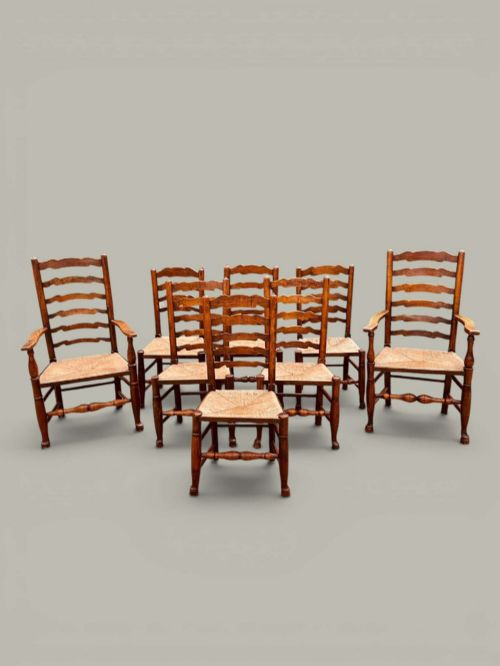
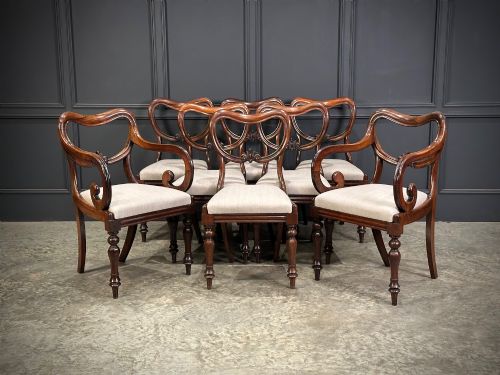
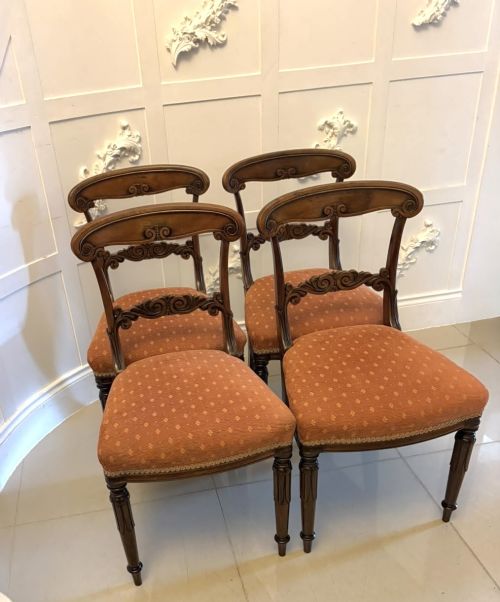
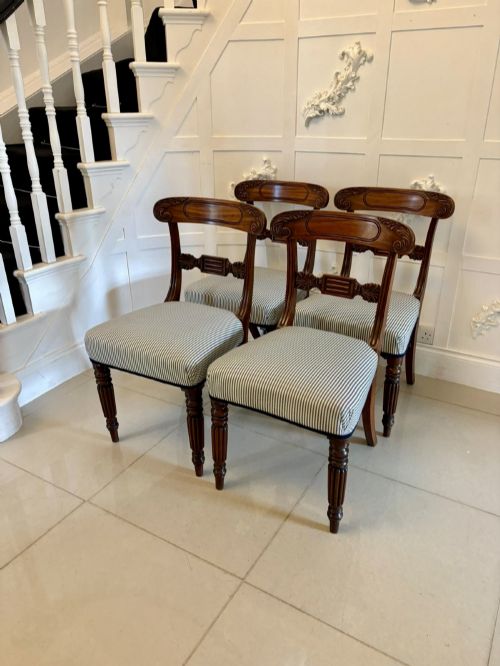
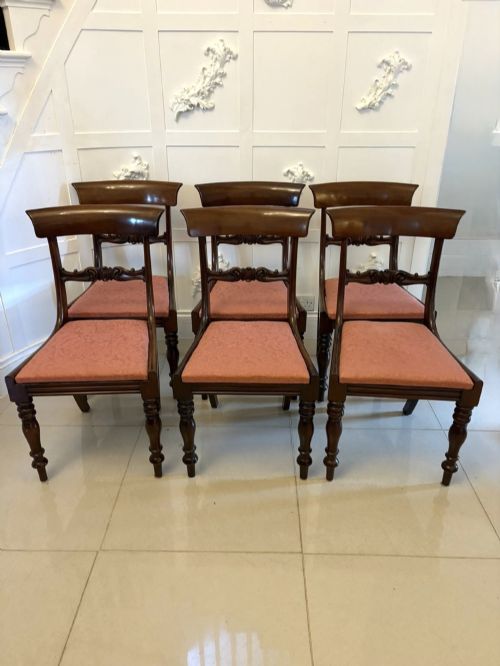
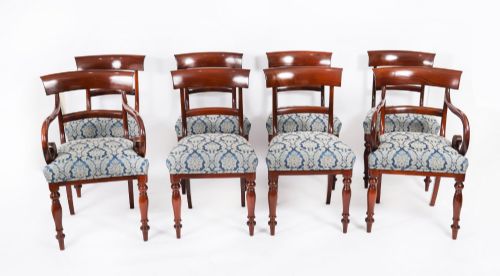
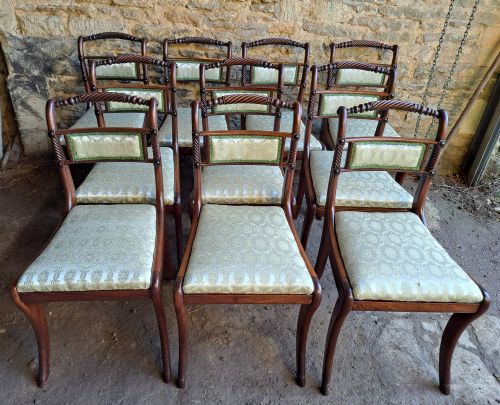
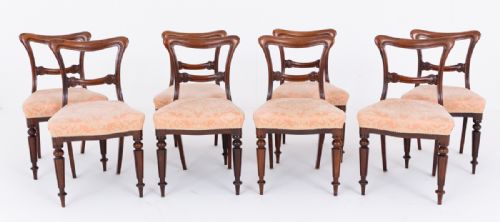
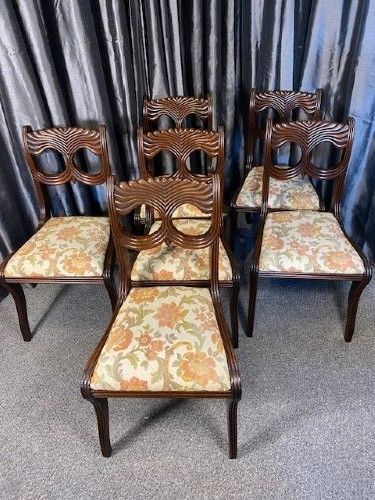
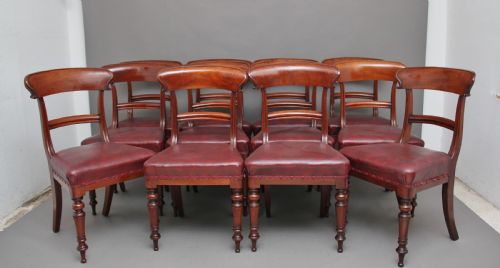
A william iv dining set primarily comprises matched groups of chairs fashioned in mahogany or rosewood, frequently numbering six, eight, or ten pieces. These suites reflect the transitional design period between Regency elegance and early Victorian mass, carrying substantial proportions and robust frames.
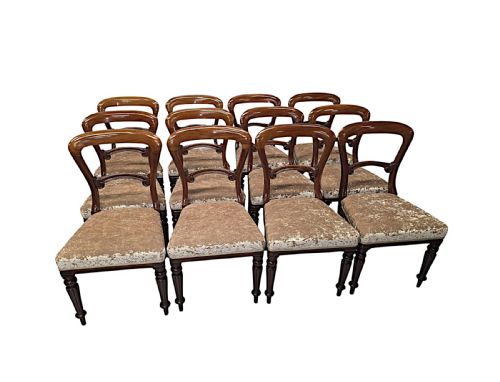
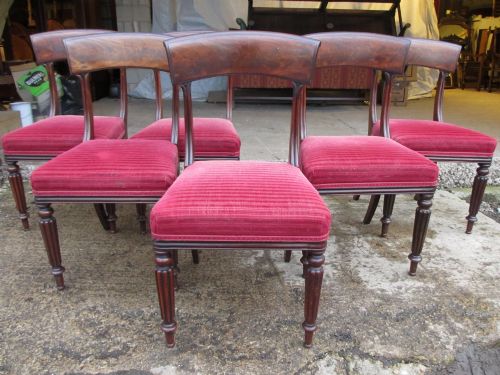
The most common configurations on this page are sets of dining chairs dating from the nineteenth century, often sharing barback or balloon-back forms. Alongside timber seating, the listings include occasional table salts in silver from the same era to complete a formal dining arrangement.
Materials and construction methods
Cabinetmakers utilised dense native hardwoods such as mahogany alongside imported rosewood, shaping timber with carved details and occasional brass inlay. Seats were constructed to receive upholstery in fabric, leather, or velvet, while specialised variants employed cane inserts for seating surfaces.
Joinery methods relied on sturdy mortise and tenon construction to support the heavy frames demanded by the period. Surface finishes were hand-polished to enhance the natural grain and deep colour of the timber.
William IV Dining Set Retail Price Guide 2026
Typical asking prices for william iv dining set among the pieces listed under this phrase on Sellingantiques today, from the lower quarter to the upper quarter. They describe what is for sale here now, not the wider market.
Factors determining quality
The distinction between standard examples and superior suites rests on the crispness of the timber carving and the consistency of the matching across the entire set. Workshop attribution, such as work linked to Gillows, elevates a suite through refined proportion and exceptional timber selection.
Larger sets comprising ten or twelve matching chairs demonstrate greater uniformity in grain and turning than smaller groups assembled later. The integrity of the original wood frames without excessive replacement timber dictates the standing of each suite.
Gillows·J Proctor
The William IV Dining Set Glossary
- Barback
- A chair design featuring a horizontal transverse splat across the backrest, often curved to fit the spine. This form is characteristic of dining seating from the Regency and William IV periods.
- Balloon-back
- A rounded, continuous chair back contouring outward like a balloon. This style gained popularity during the nineteenth century for dining and parlour seating.
- Rosewood
- A heavy, dark timber with distinct dark grain markings, utilised extensively for high-status furniture during the nineteenth century. It takes a high polish and provides a rich surface colour.
- Table salt
- A small open vessel or cellar placed on the dining table for loose salt. Silver examples from the 1830s accompany formal dining services of the period.
- Anglo-Indian
- Furniture made in India by native craftsmen using traditional British forms combined with local carving techniques and dense exotic timbers. These pieces reflect colonial trade patterns of the nineteenth century.
William IV Dining Set: Frequently Asked Questions
How many chairs come in a typical set?
Most suites on this page contain between four and twelve matching chairs, with sets of six and eight appearing most frequently in the listings.
Buyers select these groupings according to the dimensions of their dining table and room capacity.
What is the difference between Regency and William IV styles?
Regency designs lean toward neoclassical lightness with slender members and classical motifs, while William IV pieces introduce heavier proportions and bolder carved scrolls.
Both styles overlap during the early nineteenth century, leading to transitional forms that combine elements of each.
Are these chairs suitable for daily use?
The solid mahogany and rosewood frames provide robust structural integrity suitable for regular dining when the joinery remains sound.
Upholstered seat pads can be refreshed with new fabric or leather while preserving the antique wooden framework.
How do I identify mahogany versus rosewood?
Mahogany displays a reddish-brown hue with a straight or ribbon grain pattern that deepens with age and polishing.
Rosewood exhibits a significantly darker, heavier grain with distinct black streaks and a denser oily texture.