


William IV Chiffonier Cabinet
A William IV chiffonier cabinet offers a generous low storage surface and enclosed shelving, combining practical utility with rich timber figure.
William IV Chiffonier Cabinet
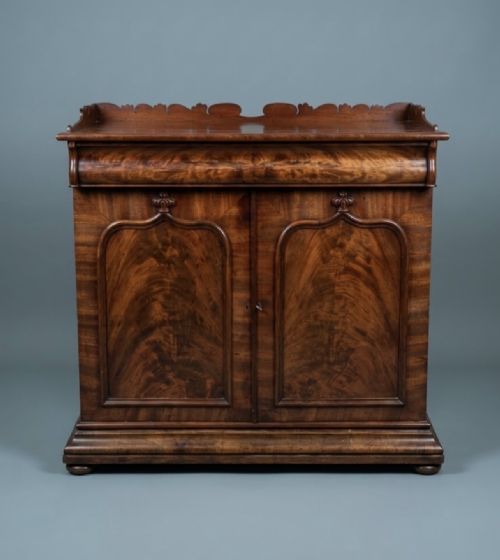
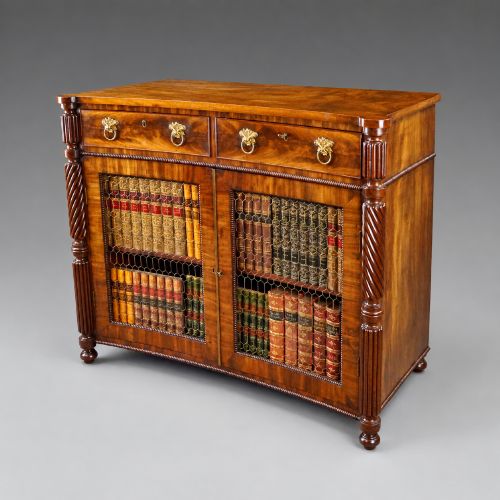
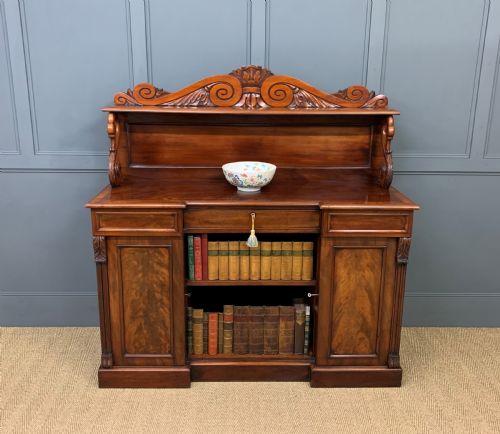
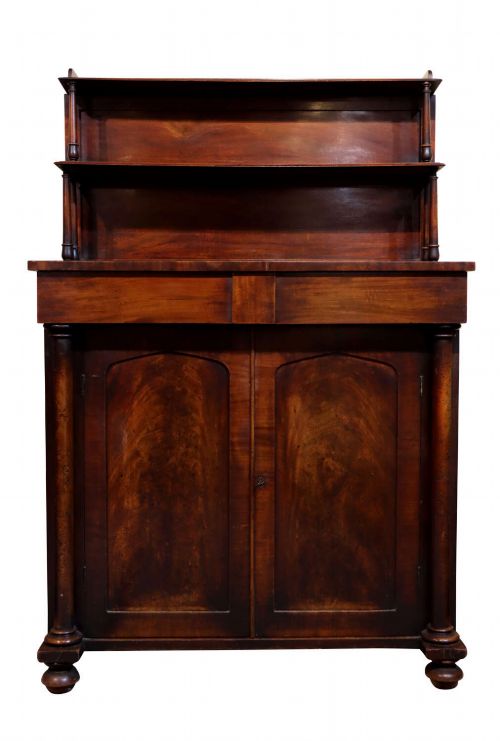
A William IV chiffonier cabinet provides substantial low storage for the living room or dining room, most commonly taking the form of a two-door mahogany or rosewood cupboard. These pieces often feature an enclosed base with panelled doors, sometimes surmounted by a shallow upper shelf or bookcase structure.
While the search phrase specifically targets the William IV style, the broader selections span the nineteenth century, including Georgian precursors and later Victorian adaptations. Side cabinets, sideboards, and secretaire desks frequently overlap with these forms in the historical record.
Materials and construction methods
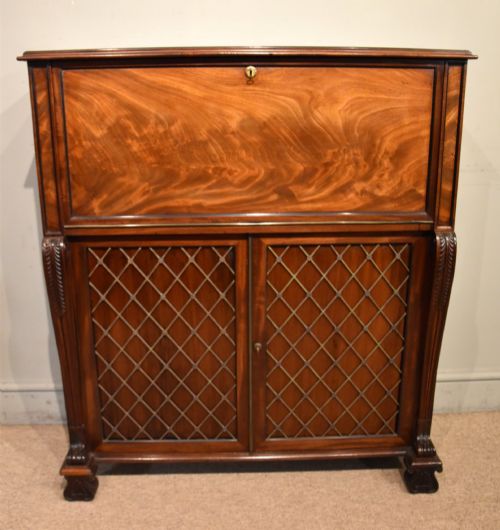
Cabinet makers utilised dense native and exotic timbers, predominantly mahogany and rosewood, frequently enhanced by flame mahogany veneer, pollard oak, burr walnut, or satinwood figure. These decorative veneers were applied carefully to primary carcases to create striking visual movement across the front doors and drawer fronts.
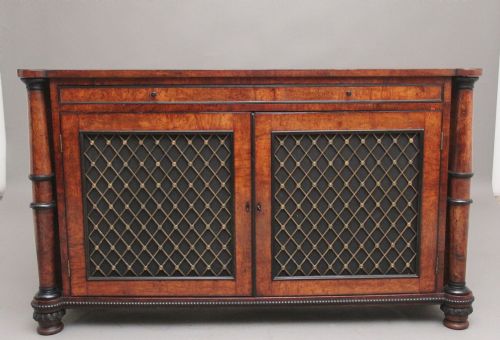
Metal and stone elements appear selectively to elevate the design, including brass inlay, brass grillwork on doors, and fitted marble tops. Structural fabric and glass panes also integrate into specific bookcase and cabinet variations.
Listings span the nineteenth century, capturing Georgian precedents, Regency classicism, William IV designs, and early Victorian cabinet making.
Assessing quality and craftsmanship
Quality rests heavily on the selection of timber veneers and the intricacy of carved details, such as pilasters, scrolling brackets, and applied mouldings. Pieces featuring highly figured flame mahogany or richly grained rosewood demonstrate superior material selection by the maker.
The integration of secondary functions, like fitted secretaire drawers with writing surfaces, alongside specialised hardware such as brass grilles and marble slabs, distinguishes finer cabinet work from simpler utilitarian cupboards.
Gillows·Holland and Sons
The William IV Chiffonier Cabinet Glossary
- Chiffonier
- A low sideboard or cabinet, typically featuring enclosed cupboards below and sometimes a shelf above. This form evolved during the Regency and William IV periods to hold dining silver or books.
- Flame mahogany
- A veneer cut from the fork of a mahogany tree where the grain pattern creates a flickering, flame-like appearance. Cabinet makers prized this figure for prominent door panels.
- Breakfront
- A piece of furniture where the central section projects forward from the flanking outer sections. This architectural arrangement adds depth and visual interest to larger cabinets.
- Secretaire
- A desk disguised as a drawer or cabinet section, pulling down to reveal a writing surface and small pigeonholes. It merges the functions of a writing desk and a storage cabinet.
William IV Chiffonier Cabinet: Frequently Asked Questions
What is a chiffonier cabinet?
A chiffonier cabinet is a low storage piece combining an enclosed cupboard base with upper display surfaces or shelves. These items were designed for nineteenth century reception rooms to store china, linens, or books.
They bridge the gap between a side table and a full sideboard, offering compact utility without dominating the room's proportions.
How do I identify William IV style?
William IV furniture is characterised by robust classical proportions, heavy scrollwork, and bold carved details. You will often see Egyptian or Grecian influences alongside substantial turned feet.
Timbers are dark and heavily figured, with rosewood and mahogany dominating the period's output.
Where were they used?
These cabinets served primarily in dining rooms and parlours as auxiliary storage for serving items, books, and household miscellany. The flat top surface allowed for lamps, clocks, or decorative ornaments.
In modern interiors, they function well as credenzas, media consoles, or hallway statement pieces.
Are marble tops original?
Some chiffoniers and side cabinets incorporated fitted marble tops to provide a durable, heat-resistant surface for serving food and drink. These slabs are typically inset into the wooden frame above the cupboard doors.
When present, the marble adds weight and a cooler neoclassical contrast to the warm timber carcase.