


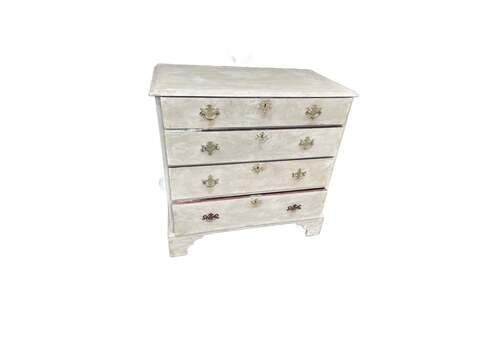


White Wooden Drawers
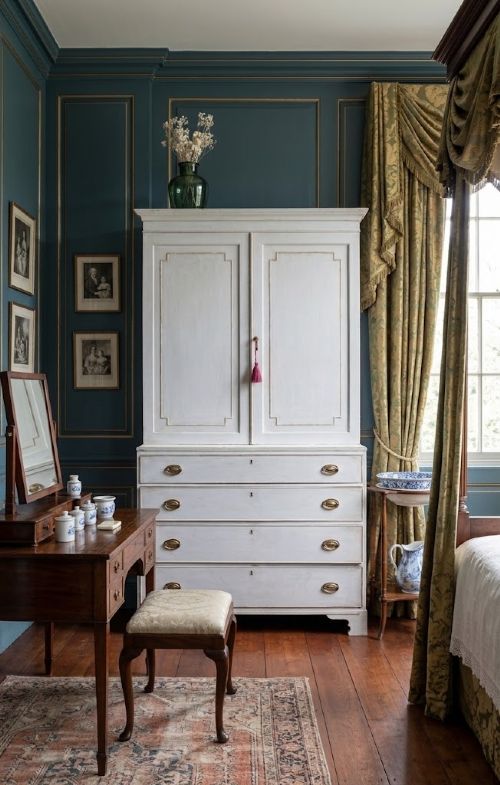
White wooden drawers bring utility and painted charm to a room, offering practical storage disguised in soft, historic tones.
White Wooden Drawers
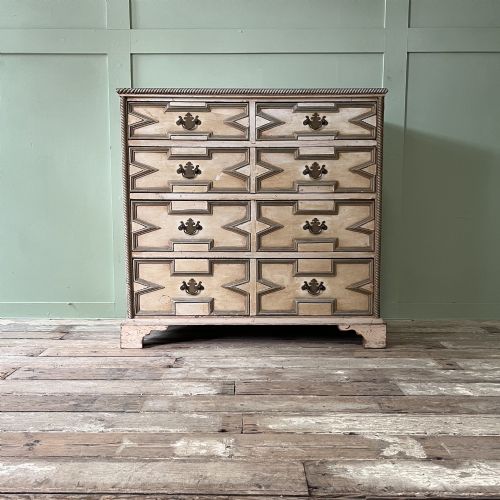
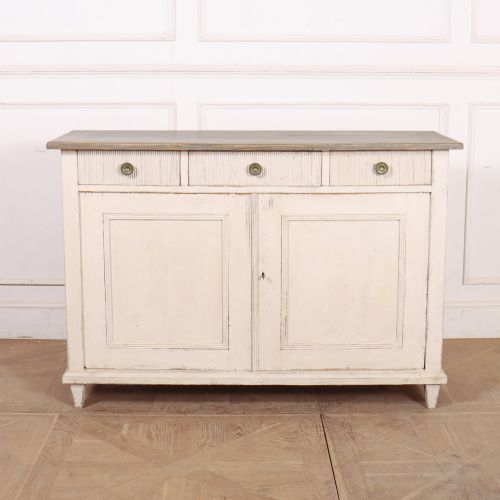
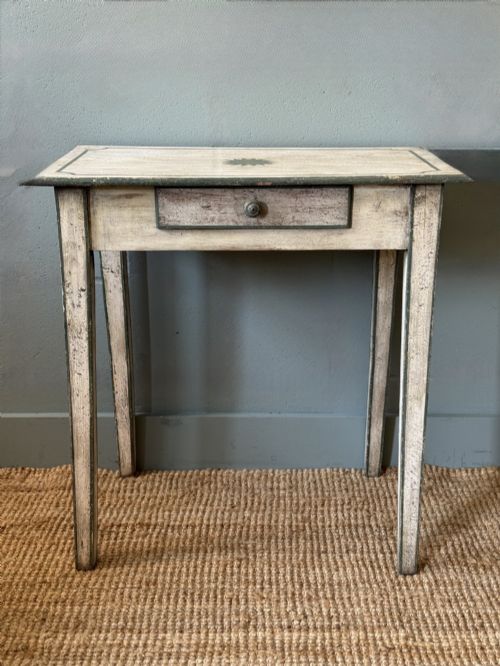
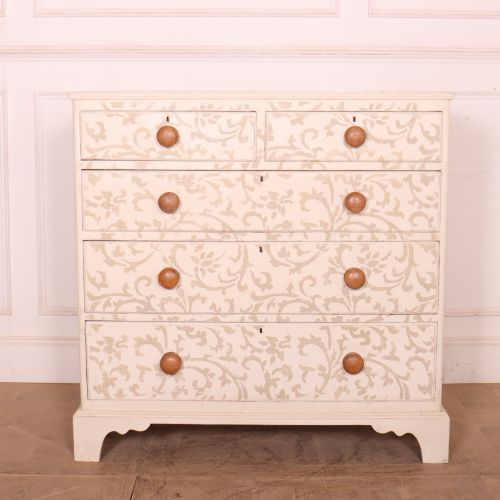
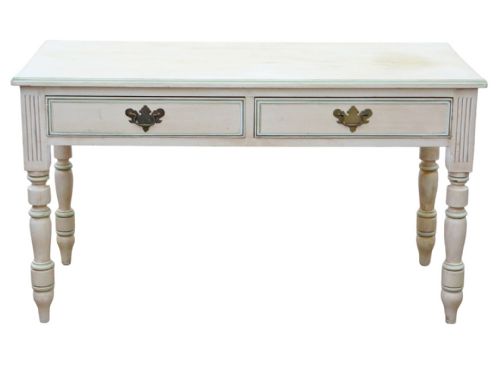
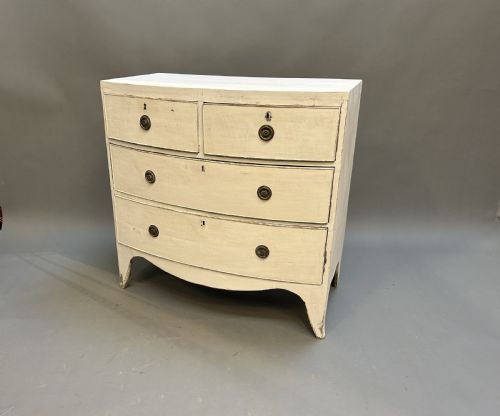
White wooden drawers encompass an array of storage forms, from nineteenth-century chests and commodes to painted dressers and side tables. Buyers seeking white wooden drawers will find country house prep tables, serpentine commodes, and bureau bookcases alongside simpler upright chests.
The pieces on this page lean heavily into regional country styles, including French provincial, Scandinavian, and English country traditions. Painted finishes dominate the selection, applied across pine, fruitwood, and walnut carcasses.
Construction and Materials
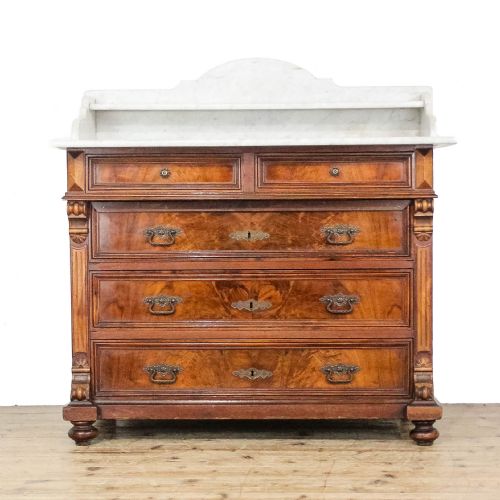
Pine and assorted timber form the structural foundation of these pieces, often paired with contrasting marble tops on continental commodes and washstands. Metal fittings, specifically brass handles and pulls, punctuate the painted drawer fronts.
Surfaces receive layers of paint, sometimes historic or renewed later, which softens the underlying wood grain. Carved details appear on select Italian and French provincial commodes, contrasting with the plain utility of drapers' drawers and prep tables.
White Wooden Drawers Retail Price Guide 2026
Typical asking prices for white wooden drawers among the pieces listed under this phrase on Sellingantiques today, from the lower quarter to the upper quarter. They describe what is for sale here now, not the wider market.
Periods represented span from the eighteenth century through the 1930s, encompassing Edwardian and Victorian eras.
Judging Quality
Quality rests in the integrity of the timber framework, the smoothness of the drawer action, and the harmony of the proportions. A piece retains its standing when the painted surface sits naturally with the age of the wood underneath.
Cabinetmaking distinction appears in serpentine fronts, hand-carved decorative flourishes, and fitted marble slabs. Simpler vernacular items rely on honest proportions and sturdy pine construction rather than elaborate ornamentation.
Edwards and Roberts·Sir Clough Williams-Ellis
The White Wooden Drawers Glossary
- Commode
- A low chest of drawers or cabinet, often associated with eighteenth and nineteenth-century French design. These pieces frequently feature serpentine fronts and decorative painted finishes.
- Serpentine front
- A furniture front curving outward in the centre and inward at the sides. This contour requires skilled carpentry and signals a higher grade of cabinetmaking.
- Dresser base
- The lower section of a traditional kitchen or dining room dresser, fitted with drawers and cupboards. They serve well as sideboards or prep surfaces.
- Washstand
- A small table or cabinet designed to hold a basin and jug for washing, frequently topped with marble. Many survive adapted for use as general bedroom storage.
White Wooden Drawers: Frequently Asked Questions
How do I clean a painted wooden chest?
Dust the surface regularly with a soft, dry cloth to prevent dirt accumulation. Avoid harsh chemical cleaners that can strip or discolour historic paint layers.
For stubborn marks, use a damp cloth with mild soap, drying the wood immediately afterwards to protect the finish.
Can I use a commode as a bedside table?
Many smaller commodes and side tables fit well beside a bed, offering concealed storage for nighttime essentials. Measure the height of your mattress to ensure comfortable access to the top surface.
Marble-topped versions provide a durable surface for lamps and glasses, resisting accidental spills.
What is the difference between a commode and a chest of drawers?
A commode typically refers to continental European low chests, often possessing decorative curves or fine paintwork. Standard chests of drawers are usually taller upright units built for utilitarian storage.
Both serve similar storage roles, but commodes lean towards decorative reception rooms while chests suit bedrooms.
How do I identify a nineteenth-century pine piece?
Examine the drawer construction for hand-cut dovetails and timber movement appropriate to older forestry methods. The weight and density of the pine often feel heavier than modern equivalents.
Look for tool marks on the unpainted interior surfaces, which reveal the manual labour involved in shaping the boards.