

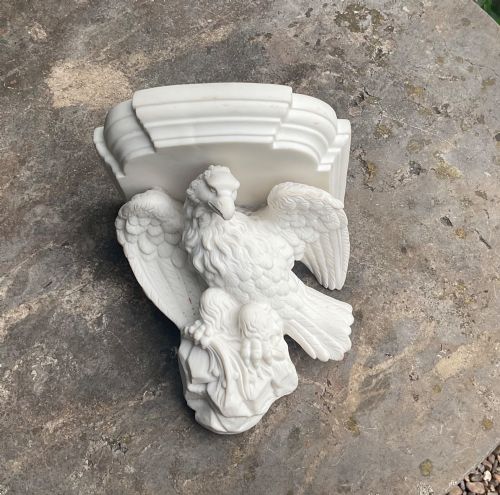


White Wall Sconces
White wall sconces bring sculptural form and ambient illumination to a room, ranging from delicate porcelain to robust iron.
White Wall Sconces
White wall sconces encompass various lighting fixtures and brackets designed to mount directly onto vertical surfaces, providing functional illumination paired with decorative presence. When searching for white wall sconces, buyers encounter a diverse selection of periods spanning from the eighteenth century through the Art Deco era.
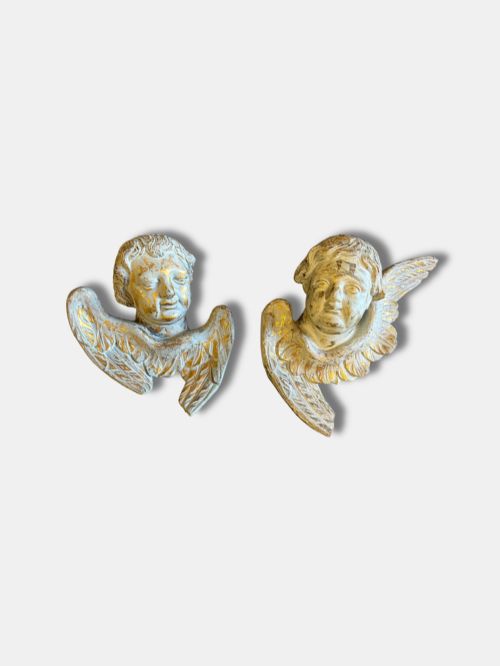
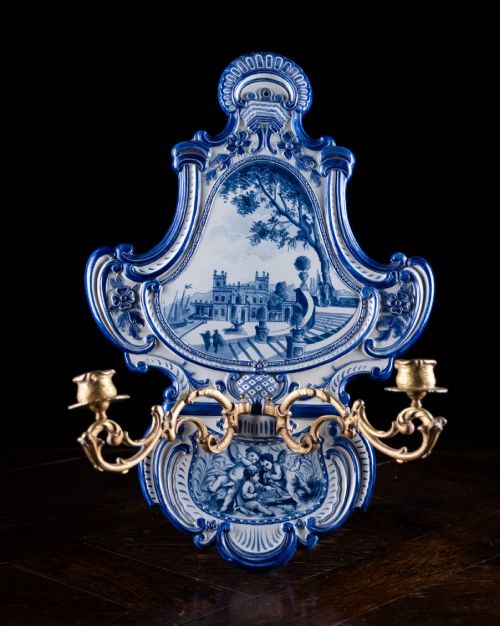
The assortment includes single candleholders, multi-branch fittings, mirrors with integrated brackets, and exterior lamps. Porcelain, enamel, and white-painted surfaces dominate the selection, often accented with gilt bronze, ormolu, or gold leaf.
Continental European workshops contribute heavily to the available inventory, particularly nineteenth-century French and German pieces. Buyers frequently meet items displaying Rococo Revival curves, Neoclassical symmetry, and geometric Art Deco lines.
Materials and construction methods
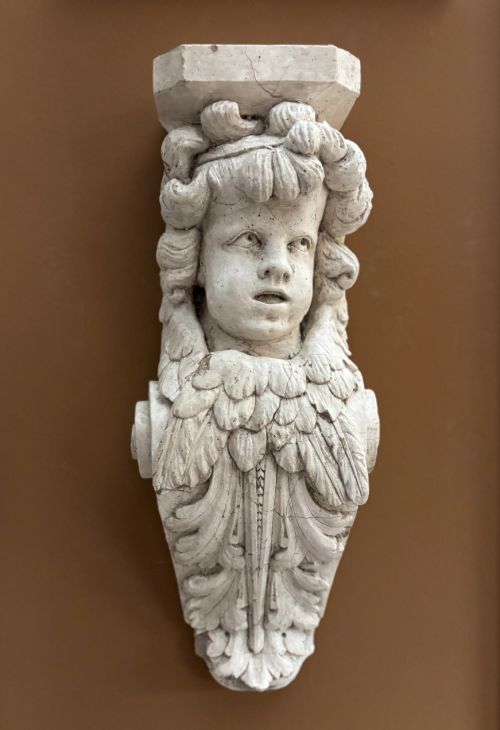
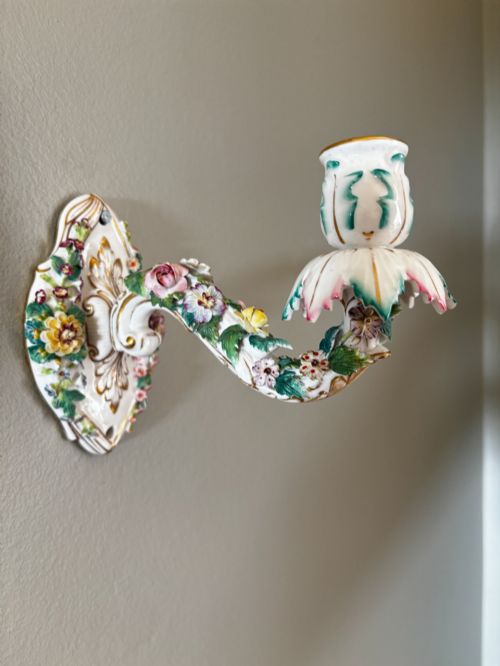
Ceramic components such as porcelain and earthenware are shaped, glazed, and fired to create durable bodies, frequently paired with hand-carved wooden or gesso backplates. Artisans applied white paint, polychrome details, and gold leaf directly onto wood and metal surfaces to achieve sophisticated tonal contrasts.
Metalwork involves cast gilt bronze, ormolu, and wrought iron, requiring skilled foundry techniques to produce intricate arms, drip pans, and mounting plates. Glass elements and tubular components are mouth-blown or moulded to fit specific twentieth-century frames.
White Wall Sconces Retail Price Guide 2026
Typical asking prices for white wall sconces among the pieces listed under this phrase on Sellingantiques today, from the lower quarter to the upper quarter. They describe what is for sale here now, not the wider market.
Listings feature white wall sconces spanning the eighteenth, nineteenth, and twentieth centuries, incorporating porcelain, gilt bronze, and wrought iron.
Evaluating craftsmanship and condition
Quality separates through the crispness of hand-carved details on wooden brackets and the fineness of the modelling in porcelain figures and floral motifs. Superior items maintain original gilding, paintwork, and patination without excessive modern restoration.
The integration of mixed materials dictates overall standard, where securely fitted ormolu mounts and heavy, well-cast bronze elements outclass lighter, mass-produced alternatives. Structural integrity in multi-branch arms and secure backplates marks the division between ordinary production and master craftsmanship.
Villeroy & Boch·Meissen·Von Schierholz
The White Wall Sconces Glossary
- Ormolu
- Gilded bronze, typically mercury-gilded, used for decorative mounts and accents on furniture and lighting fixtures. This technique creates a rich, metallic lustre that resists tarnishing over decades.
- Gesso
- A plaster-like mixture applied to wood surfaces to create a smooth base for painting or gilding. It allows carvers to achieve sharp relief details before the finishing layers are applied.
- Parian
- A fine-grained white porcelain resembling marble, developed in the nineteenth century for statuettes and decorative brackets. It captures intricate sculptural details without requiring a shiny glaze.
- Polychrome
- Decorated in multiple colours, often applied by hand over a white or neutral base. This technique brings pictorial depth to floral motifs and figural scenes.
- Rococo Revival
- A nineteenth-century design style emulating the asymmetrical scrolls, C-curves, and naturalistic shell motifs of the eighteenth-century French Rococo movement. It appears frequently on ornate wall brackets and sconces.
White Wall Sconces: Frequently Asked Questions
How do I clean white porcelain sconces?
Dust porcelain surfaces gently with a soft, dry brush to prevent dirt accumulation in crevices and delicate painted details. Avoid harsh chemical cleaners that might strip original polychrome decoration or damage older ceramic glazes.
For stubborn marks, use a damp cloth with mild soap, drying the piece immediately. Metal mounts require separate attention, keeping moisture away from vulnerable painted or gilt areas.
Where should I mount wall sconces?
Wall sconces perform best when positioned at eye level, roughly sixty inches from the floor, to provide flattering ambient light without glare. They work effectively flanking mirrors, framing doorways, or adding balanced illumination to hallways and living rooms.
Consider the weight of the fixture and the wall material before installation, as heavier pieces with bronze or ceramic components require secure wall anchors.
How do I identify Art Deco sconces?
Art Deco sconces typically feature geometric shapes, clean lines, and symmetrical tubular forms characteristic of the nineteen-thirties. Materials often include simplified metal frames paired with frosted or moulded glass elements.
Unlike ornate Victorian or Rococo Revival pieces, Art Deco designs emphasise streamlined modernity and functional elegance over elaborate ornamentation.