


White Umbrella Stand Hallway
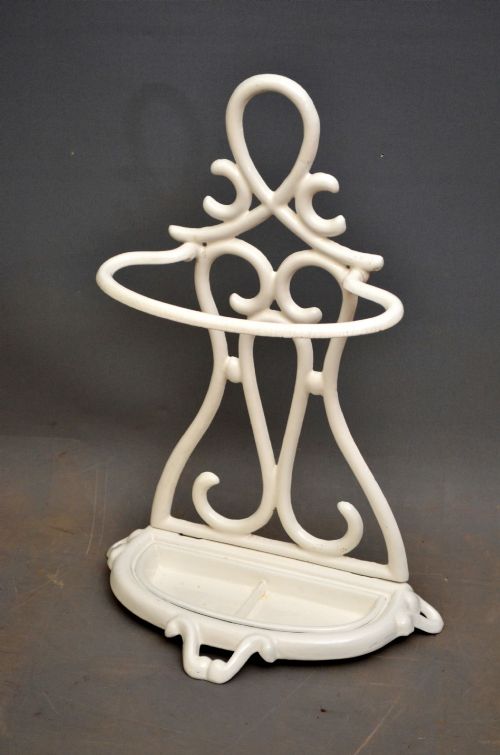
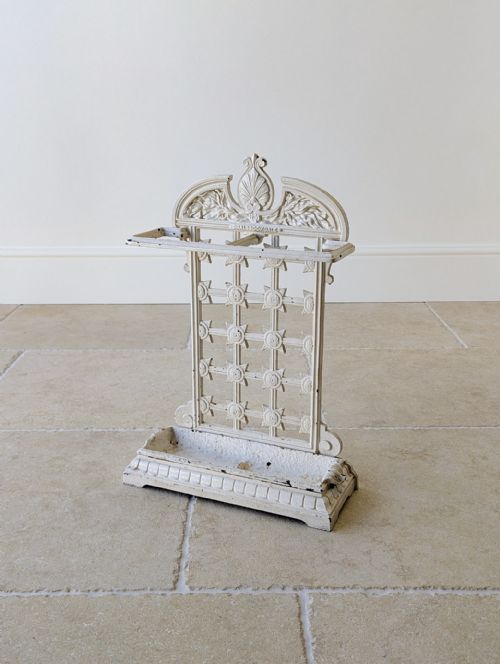
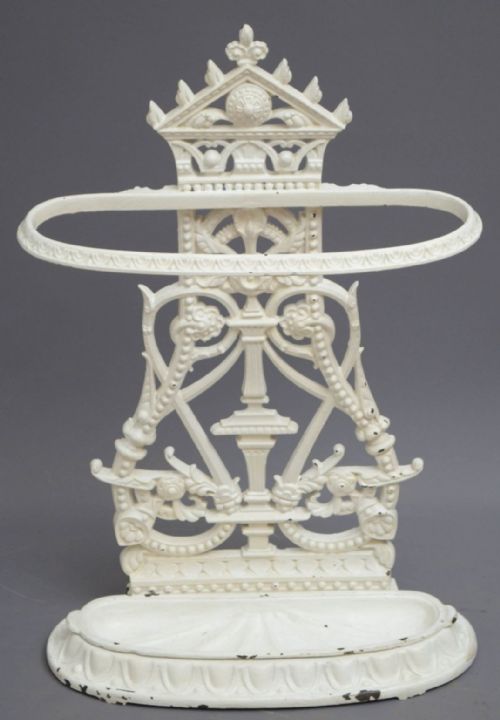
A white umbrella stand hallway piece organises walking sticks and wet canes with the heft of cast iron and porcelain.
White Umbrella Stand Hallway
A white umbrella stand hallway piece brings functional order to entryways, most frequently taking the form of a heavy cast iron stick stand from the Victorian period. These items appear in formats ranging from dedicated umbrella loops to combined hall stands incorporating mahogany and marble shelves.
The selection on this page centres primarily on Victorian cast iron designs, alongside late Victorian and Art Nouveau examples. Makers and origins span English foundries, French workshops, and Japanese Meiji period porcelain productions.
How they were made
Foundries cast molten iron into intricate structural frames designed to catch water drips from wet umbrellas while maintaining stability. Surfaces often received a white enamel finish or painted treatments to brighten the hallway context.
Cabinetmakers combined dense timbers like mahogany with polished marble shelves for larger hall stands, integrating brass hardware and glass elements to complete the furniture piece.
Materials recorded across the available pieces include cast iron, enamel, mahogany, marble, glass, brass, and porcelain.
What varies in quality
The distinction between ordinary and superior examples lies in the crispness of the iron casting and the complexity of the decorative framework. Foundry-marked pieces demonstrate superior artistry compared to unmarked utilitarian items.
Material integration also dictates standing, where secondary elements such as marble inserts and brass umbrella loops exhibit refined detailing and heavier structural gauge.
Coalbrookdale·Fukagawa
The White Umbrella Stand Hallway Glossary
- Cast iron
- A strong, hard alloy of iron and carbon poured into moulds to create rigid decorative frames. This material forms the primary structure of most umbrella and stick stands.
- Enamel finish
- A vitreous or painted coating applied to metal surfaces to provide a smooth, wipeable barrier against moisture. It creates the characteristic white appearance on many hall stands.
- Hall stand
- A large piece of hallway furniture combining coat hooks, a mirror, umbrella storage, and sometimes a glove drawer. It serves as a central entranceway organiser.
- Meiji period
- The era of Japanese history lasting from 1868 to 1912, known for distinct ceramic production. Fukagawa stands from this era utilise porcelain construction.
White Umbrella Stand Hallway: Frequently Asked Questions
What materials are these stands made from?
The evidence shows these stands use cast iron with enamel and paint finishes. Other examples incorporate mahogany, marble, brass, glass, and porcelain.
Iron provides heavy structural support, whilst porcelain and enamel offer finished surfaces designed to handle wet umbrellas.
Which periods do these hallway pieces date from?
These items date predominantly from the Victorian era, including late Victorian productions around 1890. Other pieces date to 1880 and the year 1900.
French Art Nouveau and Japanese Meiji period examples also appear within the listed items.
How were these stands used in hallways?
These stands functioned as designated storage points for walking sticks, umbrellas, and coats in entrance halls. Larger hall stands combined umbrella loops with coat hooks and marble shelves.
They kept wet accessories contained near the door to protect interior rooms and flooring.
What styles influence these umbrella stands?
Styles include Victorian Gothic Revival, Art Nouveau, and general Victorian designs. English portico styles and Japanese ceramic traditions also shape the aesthetic.
Foundry work from makers like Coalbrookdale defines the heavy industrial aesthetic of the iron pieces.