



White Saltwater Pearls
White saltwater pearls bring a quiet, steady lustre to jewellery, spanning periods from the Georgian era through to the mid-twentieth century.
White Saltwater Pearls
White saltwater pearls are organic gems harvested from marine molluscs, appearing in necklaces, rings, pendants, and bracelets across this page. The listings showcase pieces shaped by decades of style, from the detailed work of the Victorian and Edwardian eras to the geometric lines of Art Deco and the mid-century period.
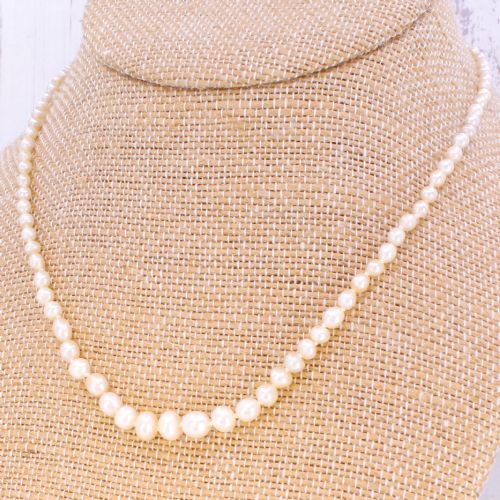
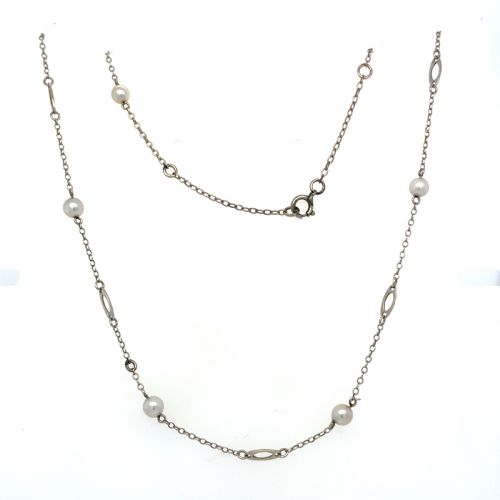
Necklaces form the core of what you encounter here, ranging from simple graduated strands to long rope lengths and multi-strand designs. Alongside these necklaces sit rings, bracelets, and pendants, frequently paired with precious metals and gemstones.
The origins stretch from Georgian craftsmanship to the 1960s, reflecting changing tastes in jewellery design while maintaining the central appeal of marine pearls. Buyers find both natural saltwater pearls and cultured varieties among the selections.
How they were made
Makers set white saltwater pearls into platinum, 18ct white gold, 9ct white gold, 15ct yellow gold, and occasionally silk threads for stringing. These durable metals provide the structure for clasps, settings, and delicate chains.
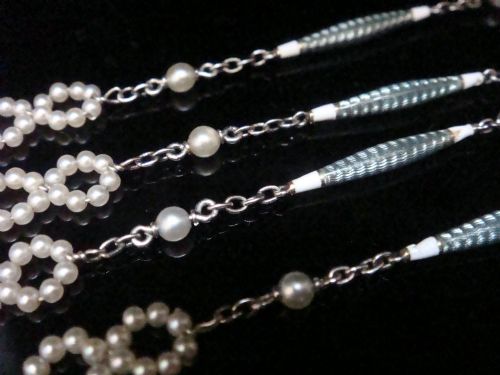
Diamonds and occasionally Columbian emeralds or enamel are integrated alongside the pearls, mounted using period techniques such as platinum cluster settings and detailed goldwork. Jewelers balanced the organic lustre of the pearls with faceted stones and precious metal frameworks.
White Saltwater Pearls Retail Price Guide 2026
Typical asking prices for white saltwater pearls among the pieces listed under this phrase on Sellingantiques today, from the lower quarter to the upper quarter. They describe what is for sale here now, not the wider market.
Some pearls require an anchorcert report just to prove they are well-anchored in history.
What varies in quality
Quality rests in the uniformity of the pearls, the depth of their nacre, and the precision of the accompanying metalwork and diamond settings. Higher tiers demonstrate careful matching of size and lustre across a full strand or cluster.
The craftsmanship of the clasp, whether platinum, gold, or set with diamonds, distinguishes finer pieces from simpler utilitarian designs. The integrity of the stringing materials and the secure mounting of accent stones further separate the range.
The White Saltwater Pearls Glossary
- Saltwater pearl
- A pearl formed within a marine oyster, known for a deep orient and lustre compared to freshwater varieties.
- Natural saltwater pearl
- A pearl formed entirely by wild molluscs without human intervention, prized for its scarcity and organic origin.
- Cultured saltwater pearl
- A pearl grown with human assistance by inserting a nucleus into a marine oyster, common in twentieth-century pieces.
- Platinum
- A dense, white precious metal frequently utilised in Edwardian and Art Deco mountings to hold delicate diamonds and pearls securely.
- Rope necklace
- An extra-long length of pearls, typically exceeding forty-five inches, designed to be worn doubled or knotted.
White Saltwater Pearls: Frequently Asked Questions
How do I care for pearl jewellery?
Pearls are organic and soft, requiring protection from perfumes, cosmetics, and harsh household chemicals. Wipe them gently with a soft cloth after wearing and store them separately to prevent scratching.
Stringing threads stretch and weaken over time, particularly with long necklaces. Periodic re-stringing by a specialist ensures the safety of multi-pearl strands.
What is the difference between natural and cultured pearls?
Natural pearls developed in the wild without human assistance, making older antique examples particularly scarce. Cultured pearls involve human intervention to start the nacre formation inside the oyster.
Both types appear across various historical periods in these listings, bringing distinct historical contexts to each piece.
How do I date an antique pearl necklace?
Dating relies on the style of the clasp, the mounting techniques, and the metal purity marks. Edwardian pieces often feature intricate platinum work, while Art Deco items lean towards geometric precision.
Accompanying laboratory reports and certificates sometimes provide specific confirmation of origin and era.
Can pearl rings be worn every day?
Pearl rings require more care than solid metal bands because pearls have a lower rating on the hardness scale. Wearing them with caution prevents knocks that might damage the surface or loosen the setting.
Bezel or cluster settings from the Victorian and Art Deco eras often offer better protection for the stone than high solitaire mountings.