





White Rococo Mirror
A white rococo mirror brings flowing asymmetric curves and pale painted charm to a room, channelling eighteenth-century French taste through nineteenth-century revivals.
White Rococo Mirror
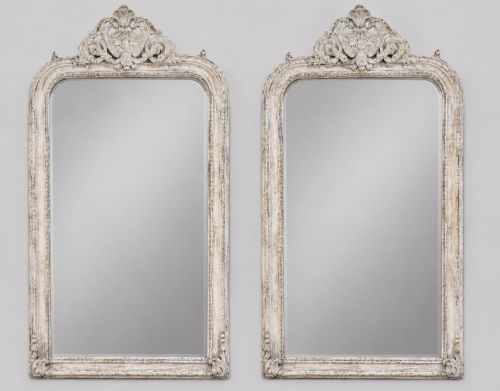
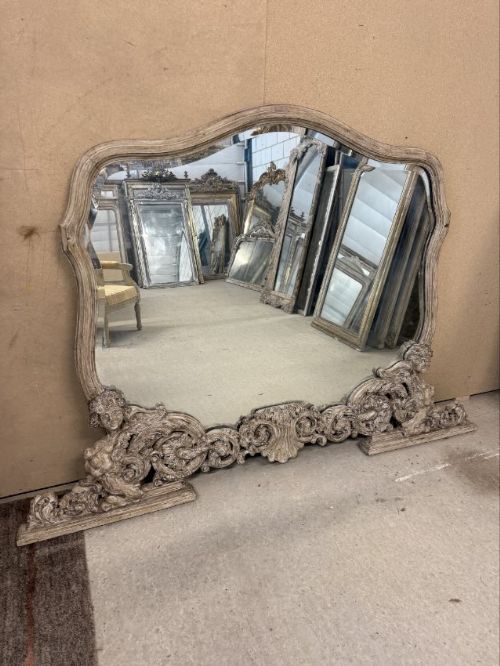
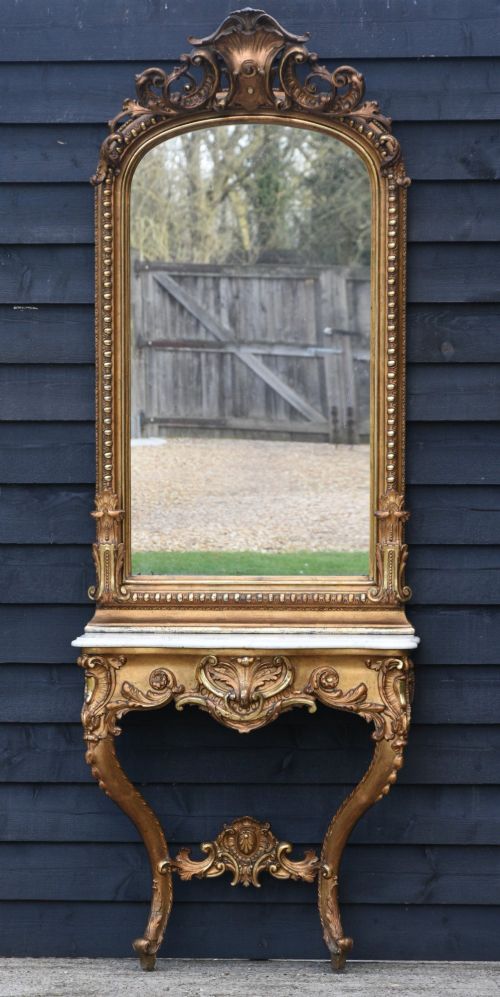
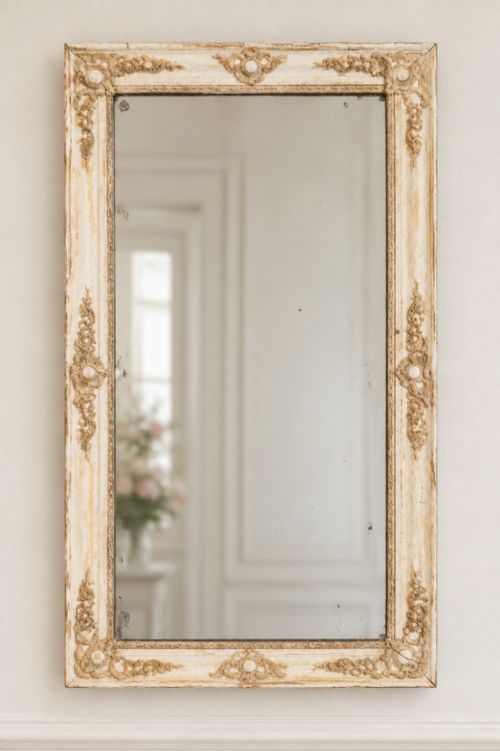
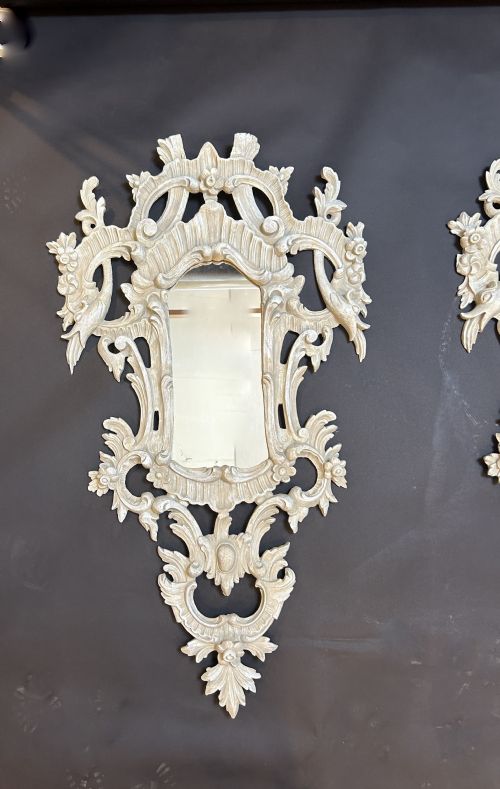
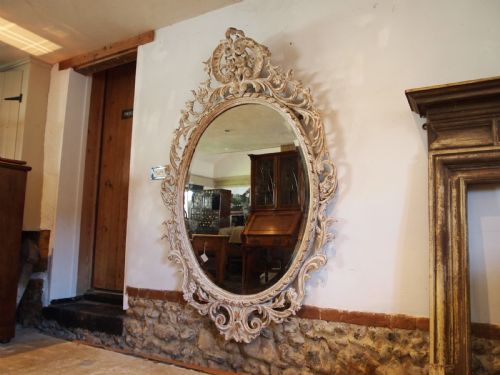
A white rococo mirror brings the ornate, scrolling aesthetic of the eighteenth century into interiors, most commonly through nineteenth-century revival pieces. Buyers seeking this phrase encounter wall mirrors, arched top overmantles, and shaped frames with distinct serpentine contours.
The selections span English, French, and Italian workshops, predominantly dating from the nineteenth century alongside eighteenth-century originals and early twentieth-century interpretations. Overmantle variants dominate the offerings, providing substantial architectural presence above fireplaces.
Materials and construction methods
Makers shaped solid timber foundations, layering gesso over carved wood to build up the intricate shell and C-scroll motifs characteristic of the style. This plaster mixture provided a smooth, responsive ground for the application of paint and occasional gilding.
Surfaces received layers of white or cream paint, often finished with distressing to accentuate the carved relief work. Original glass plates are held within these frames, reflecting the craftsmanship of period mirror makers.
White Rococo Mirror Retail Price Guide 2026
Typical asking prices for white rococo mirror among the pieces listed under this phrase on Sellingantiques today, from the lower quarter to the upper quarter. They describe what is for sale here now, not the wider market.
Nineteenth-century makers loved asymmetry so much they deliberately made left and right frame curves unequal, keeping the eye dancing across the plaster scrolls.
Assessing craftsmanship and condition
Quality rests in the depth and sharpness of the hand-carved wood and gesso ornamentation, where crisp scrolls distinguish superior items from softer, later castings. The proportion of the frame to the glass plate dictates the visual balance of the piece.
Surface integrity also separates examples, with original painted finishes showing authentic wear rather than modern intervention. The preservation of the original mirror plate adds considerable merit to the object.
The White Rococo Mirror Glossary
- Gesso
- A plaster mix applied to carved wood to create a smooth surface for painting or gilding. This mixture allows artisans to model delicate scrolls and relief details.
- Overmantle Mirror
- A large mirror designed to hang directly above a fireplace mantel. These pieces often feature wide frames to anchor the domestic hearth.
- Rococo Revival
- A nineteenth-century design movement that revived the ornate, asymmetrical styles of the eighteenth-century French court. It embraces natural forms like shells, leaves, and scrolls.
- Cushion Mirror
- A looking glass featuring a convex frame profile that slopes outwards towards the edges. This geometric treatment creates multi-directional reflections.
- Fretwork
- Thin wood intricately cut with piercing patterns to form decorative borders. It appears on lighter wall mirrors from the period.
White Rococo Mirror: Frequently Asked Questions
How do I style an overmantle mirror?
Position the piece centrally above a fireplace to reflect light and expand the visual proportions of the room. Keep surrounding mantel objects simple to let the ornate carved frame remain the focal point.
Ensure secure wall fixings support the considerable weight of timber and gesso frames. Pairing the mirror with period seating or a credenza balances the interior composition.
Are these mirrors genuinely eighteenth century?
Most items bearing this aesthetic date from nineteenth-century revival periods rather than the original eighteenth-century movement. Artisans of the 1800s eagerly copied earlier French and Italian designs.
True eighteenth-century examples feature distinct timber ageing and hand-beveled glass plates. Documentation and construction analysis help confirm the exact period of manufacture.
How should I clean a painted gesso frame?
Dust the intricate carved surfaces gently using a soft, dry brush to prevent damage to the delicate gesso relief. Avoid liquid cleaners and chemical solvents that might strip the historic paint finish.
Glass plates can be wiped with a mild glass cleaner applied to a cloth rather than sprayed directly. This protects the surrounding painted wood from moisture.
What defines the rococo style?
The aesthetic relies on asymmetry, serpentine lines, and motifs drawn from nature such as C-scrolls, acanthus leaves, and shells. It abandons strict symmetry in favour of fluid, organic movement.
In mirrors, this translates into frames that appear to grow organically around the glass. Painted white finishes soften the dramatic carving for domestic settings.