

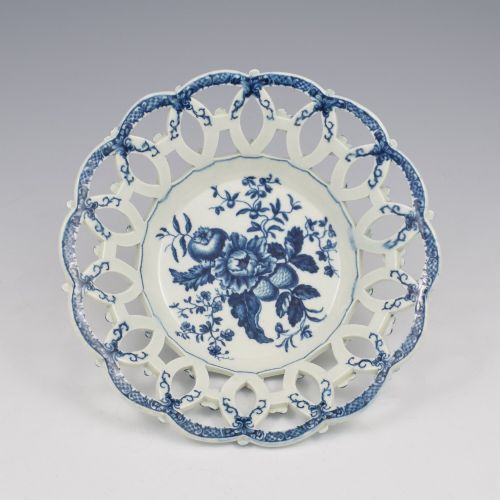


White Porcelain Reticulated Basket
These white porcelain reticulated baskets combine pierced openwork with delicate ceramic craftsmanship, bringing refined elegance to table settings and displays.
White Porcelain Reticulated Basket
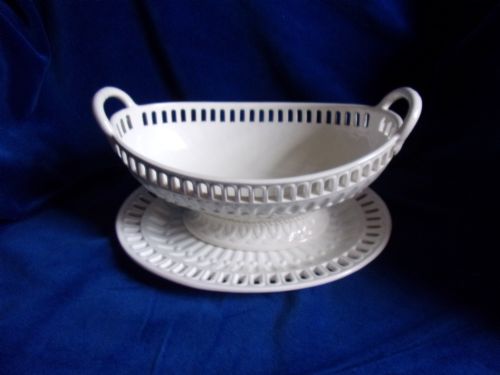
A white porcelain reticulated basket is a decorative vessel featuring intricate openwork lattice or pierced walls, designed for serving fruit, chestnuts, or sweetmeats during formal dining. These pieces frequently appear from the eighteenth and nineteenth centuries, spanning Georgian, Victorian, and Edwardian periods.
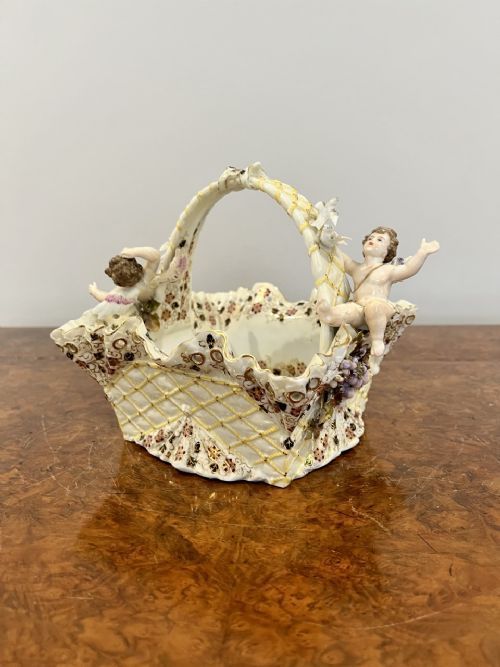
Makers utilised soft-paste porcelain, hard-paste porcelain, and pearlware to shape these decorative baskets, centrepieces, and sweetmeat dishes. The forms range from circular and oval bowls with matching lids and stands to elaborate figural centrepieces supported by cherubs.
Collectors encounter English factories such as Worcester and Spode alongside continental European producers including Meissen, Sevres, and Schierholz. The stylistic influences draw heavily upon Rococo, Regency, and Chinese Export traditions.
How they were made
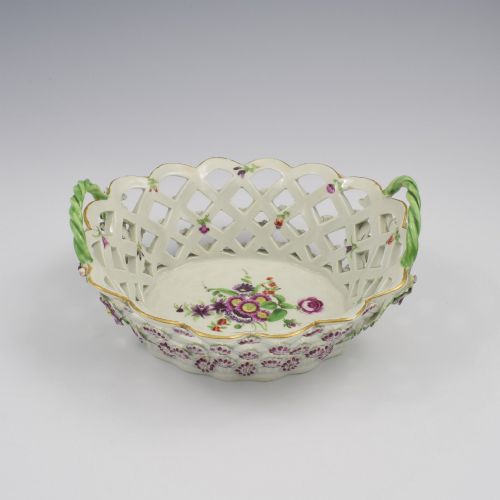
Artisans formed white porcelain reticulated baskets by piercing wet clay bodies with specialised tools to create geometric or floral latticework patterns before firing. Many examples incorporate applied ceramic flowers, known as florrels, painstakingly modelled by hand and attached prior to glazing.
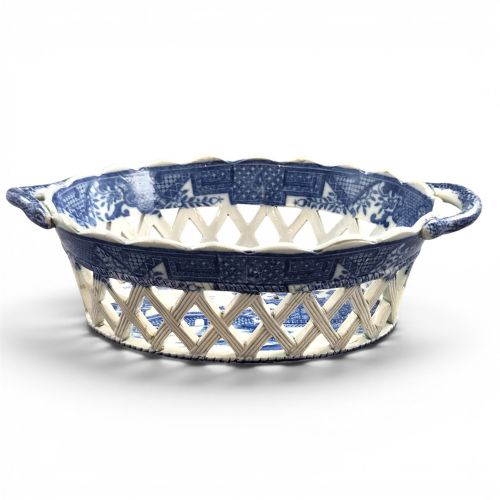
Decoration often involved hand-painted polychrome enamels, blue and white transfer printing in patterns such as the Willow design, and careful applications of gold leaf and gilding. High-temperature kiln firings set the hard glaze over the ceramic body, producing the lustrous white surface characteristic of these wares.
White Porcelain Reticulated Basket Retail Price Guide 2026
Typical asking prices for white porcelain reticulated basket among the pieces listed under this phrase on Sellingantiques today, from the lower quarter to the upper quarter. They describe what is for sale here now, not the wider market.
Listings feature white porcelain reticulated baskets spanning the eighteenth, nineteenth, and early twentieth centuries, including Georgian and Edwardian examples.
What varies in quality
The fineness of the pierced reticulation dictates much of the visual success, where crisply cut openings and uniform wall thickness separate superior pieces from heavier, coarser iterations. The delicacy and survival rate of applied three-dimensional floral elements also mark the distinction between standard production and exceptional studio output.
Painting execution defines the upper tier, with hand-painted polychrome enamel details and precise gilding showing artistic control compared to simpler transfer-printed decoration. The presence of matching original stands, covers, or associated figural supports elevates the historical completeness of the piece.
Spode·Dr Wall Worcester·Meissen·C.G. Schierholz & Sohn·Sevres
The White Porcelain Reticulated Basket Glossary
- Reticulated
- Pierced or patterned in a net-like openwork design. This technique creates the distinctive latticework walls seen on decorative baskets.
- Chestnut basket
- A specialised ceramic vessel equipped with a lid and often a matching tray, used originally for serving roasted chestnuts at the table.
- Soft-paste porcelain
- An artificial ceramic compound made from clay, glass, and ground minerals rather than true kaolin and petuntse. It yields a warm, creamy body common in eighteenth-century English manufacture.
- Sweetmeat dish
- A small decorative vessel intended for holding confectionery, nuts, or delicate preserves during formal dining courses.
- Pearlware
- An refined earthenware developed in the late eighteenth century featuring a subtle blue-tinted glaze over a white body, designed to imitate Chinese porcelain.
White Porcelain Reticulated Basket: Frequently Asked Questions
What were white porcelain reticulated baskets used for?
These vessels served primarily as decorative table pieces for presenting fruits, chestnuts, or sweetmeats during dessert courses in formal dining rooms.
Wealthy households utilised them as centrepieces to demonstrate taste and status, often pairing the baskets with matching ceramic trays and lids.
How do I date an antique porcelain basket?
Dating relies upon examining the ceramic paste, glaze characteristics, and factory marks stamped or painted on the underside. Stylistic clues such as Rococo scrollwork or Regency forms also help narrow the period of manufacture.
Comparison with documented examples from factories like Worcester or Meissen provides more precise chronological placement.
How should I display and care for these baskets?
Display these fragile ceramic pieces in stable cabinets away from direct sunlight and heavy foot traffic to prevent accidental impact.
Dust them gently with a soft dry brush and avoid washing them in water, particularly if they feature delicate applied flowers or delicate gilding.
How can I tell English and continental baskets apart?
English pieces often utilise soft-paste porcelain or pearlware with specific transfer-printed patterns, whereas continental factories like Meissen and Schierholz frequently employed hard-paste porcelain and intricate figural supports.
Examining the foot ring, paste texture, and any underglaze blue factory marks reveals the likely geographical origin.