



White Porcelain Dog Sculpture
White porcelain dog sculpture pieces capture domestic loyalty through modelled ceramic figures from the nineteenth and early twentieth centuries.
White Porcelain Dog Sculpture
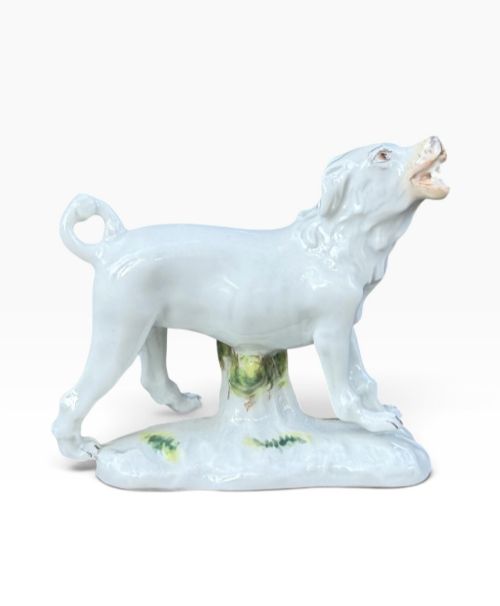
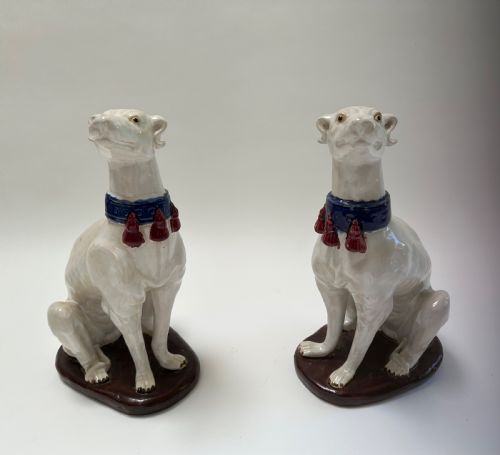
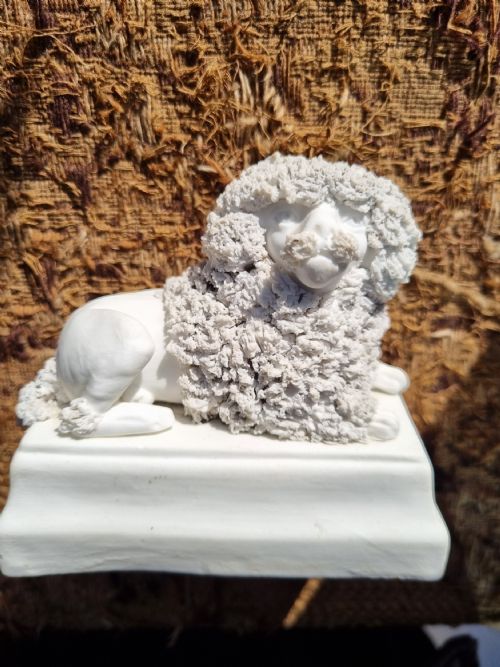
A white porcelain dog sculpture brings sculptural animal forms into the home, ranging from Staffordshire poodles and greyhounds to Japanese Hirado guardian lions and European gundogs. These decorative figurines appear across periods including the Victorian era, the nineteenth century, and around nineteen twenty.
Buyers encounter various interpretations of canine subjects, from English pottery poodles with pups to Italian majolica dogs and German porcelain figures. The selection spans ornamental groupings and single statues produced by notable manufacturers.
The form encompasses both British Staffordshire earthenware and continental porcelain traditions, reflecting diverse cultural approaches to modelling canine anatomy and posture. Each white porcelain dog sculpture offers a glimpse into historical interior display and animal portraiture.
How they were made
Makers utilised porcelain, Parian ware, earthenware, and tin-glazed earthenware to shape these figures, often finishing surfaces with lead glaze, enamel, or leaving them in an unglazed bisque state. Parian ware provided a fine-grained, marble-like texture favoured for nineteenth-century statuary.
Potters employed moulding and hand-modelling techniques to capture the fine details of fur, expression, and musculature. Firing temperatures and glaze application determined the final surface sheen and whiteness of the ceramic body.
Several poodles arrive accompanied by diminutive pups, proving that canine family portraits were as popular in clay as they were on canvas.
What varies in quality
The choice of medium also influences the piece, as finely potted porcelain or smooth Parian ware demands greater technical skill than thick earthenware bodies. Glaze uniformity and the preservation of delicate raised details contribute to the overall character of the sculpture.
Thomas Parr·John Durham
The White Porcelain Dog Sculpture Glossary
- Parian ware
- A fine-grained, unglazed porcelain biscuit developed in the nineteenth century to imitate carved marble. It was widely utilised for portrait busts and animal statuary.
- Bisque pottery
- Ceramic fired once without a glassy glaze, leaving a matte, porous white surface. It highlights the crisp lines of the modeller's work.
- Majolica
- Tin-glazed earthenware decorated with opaque coloured glazes, noted for its bright palette and glossy finish. Italian examples often display rich sculptural relief.
- Blanc de Chine
- White porcelain originating from Dehua in China, celebrated for its creamy ivory glaze. European factories later sought to emulate its pure white appearance.
- Karashishi
- A Japanese guardian lion dog rooted in Buddhist tradition. These mythical beasts are frequently rendered in porcelain alongside figures or as standalone sculptures.
White Porcelain Dog Sculpture: Frequently Asked Questions
How do I date a white porcelain dog sculpture?
Dating relies on stylistic markers, ceramic bodies, and manufacturing marks where present. Nineteenth-century pieces often utilise Parian ware or heavy earthenware, while later twentieth-century examples show different firing techniques.
Comparing the modelling style to documented factory production helps narrow down the decade of creation.
Where were these dog sculptures displayed historically?
These figures sat upon mantelpieces, sideboards, and occasional tables within nineteenth-century parlours and drawing rooms. Pairs were often arranged symmetrically to adorn interior spaces.
Smaller groups and single statues served as decorative ornaments reflecting domestic interests and the owner's taste in animals.
How should I clean my ceramic dog sculpture?
Dusting gently with a soft, dry brush prevents the accumulation of grime in recessed crevices and modelled fur. Avoid harsh chemical cleaners that might damage unglazed bisque or enamel surfaces.
Water and mild soap should be used sparingly and only on fully glazed porcelain pieces to protect the ceramic body.