
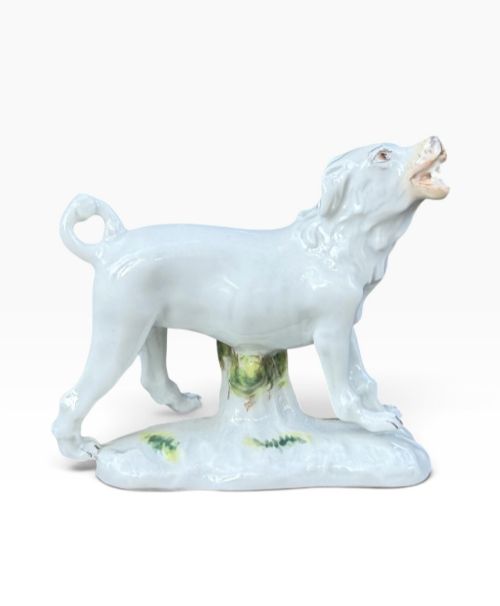
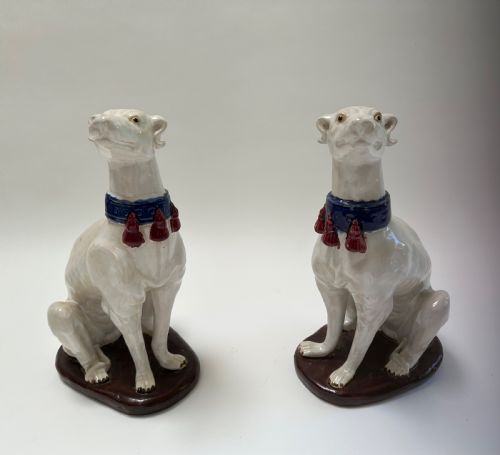


White Glazed Porcelain Dog
These white glazed porcelain dog figures range from Victorian spaniels to German porcelain examples, offering collectors a charming glimpse into historical animal sculpture.
White Glazed Porcelain Dog
When you search for a white glazed porcelain dog, you encounter a variety of decorative figures, lamps, and ornaments spanning the nineteenth and early twentieth centuries. The selection includes Staffordshire pottery greyhounds and spaniels, German porcelain Spitz dogs, and blanc de chine Shi Lion lamps.
Makers and origins stretch across England, Germany, Italy, China, and Japan, showcasing styles from the Victorian era to the Art Deco period. Most pieces function as decorative ornaments or figural table lamps, shaped as single animals or symmetrical pairs.
Materials and construction methods
The objects are constructed primarily from ceramic, porcelain, and earthenware bodies, finished with a smooth white glaze, ceramic glaze, or enamel surface. Some items incorporate additional brass fittings, particularly those adapted as table lamps.
Potters and sculptors employed traditional moulding and hand-painting techniques, applying underglaze colours or copper lustre details to ceramic figures. Japanese pieces utilise regional styles such as Hirado and Kutani traditions.
Some attentive ceramic hounds double as illumination, quietly standing guard on tables while holding lamp fittings.
Assessing quality and craftsmanship
Pairs show greater uniformity in scale and posture, reflecting more disciplined studio output. The depth of the modelling and the finesse of the ceramic body distinguish standard production items from superior works.
Thomas Parr·Beswick
The White Glazed Porcelain Dog Glossary
- Blanc de Chine
- A type of white porcelain originating from China, known for its milk-white glaze and smooth texture. It is frequently seen on figures and lamp bases.
- Spitz
- A type of northern dog breed characterised by pointed muzzles and prick ears, often depicted in German porcelain sculptures. These figures typically date to the late nineteenth century.
- Shi Lion
- Also known as a Dog of Fo, this traditional guardian lion is commonly rendered in ceramic and porcelain. These mythical beasts serve as protective ornaments or lamp bases.
- Staffordshire pottery
- Earthenware figures produced in the Staffordshire potteries of England, famous for pairs of seated spaniels and greyhounds. They often feature hand-painted details and lustre accents.
- Majolica
- A type of earthenware decorated with opaque coloured glazes over a tin enamel. Italian majolica dogs exhibit vibrant surface decoration.
White Glazed Porcelain Dog: Frequently Asked Questions
What are white glazed porcelain dog figures?
These pieces are ceramic sculptures and decorative ornaments shaped as dogs, including spaniels, greyhounds, and Spitz dogs. They span the nineteenth and early twentieth centuries from various European and Asian workshops.
Many function as display items or were later converted into table lamps with brass fittings.
Where were blanc de chine dog lamps made?
Blanc de chine items utilise a smooth white glaze over porcelain, traditionally associated with Chinese kilns. Pieces taking the form of Shi Lions or dogs of Fo often date from the early twentieth century.
They are frequently mounted as lamps while retaining their original moulded ceramic bodies.
How should I clean my porcelain dog ornament?
Dust the surface regularly with a soft, dry brush to prevent dirt accumulation in the crevices of the glaze. Avoid harsh chemical cleaners that might damage enamel details or lustre finishes.
If washing is necessary, use lukewarm water with mild soap and dry immediately with a lint-free cloth.