



White Plaster Relief
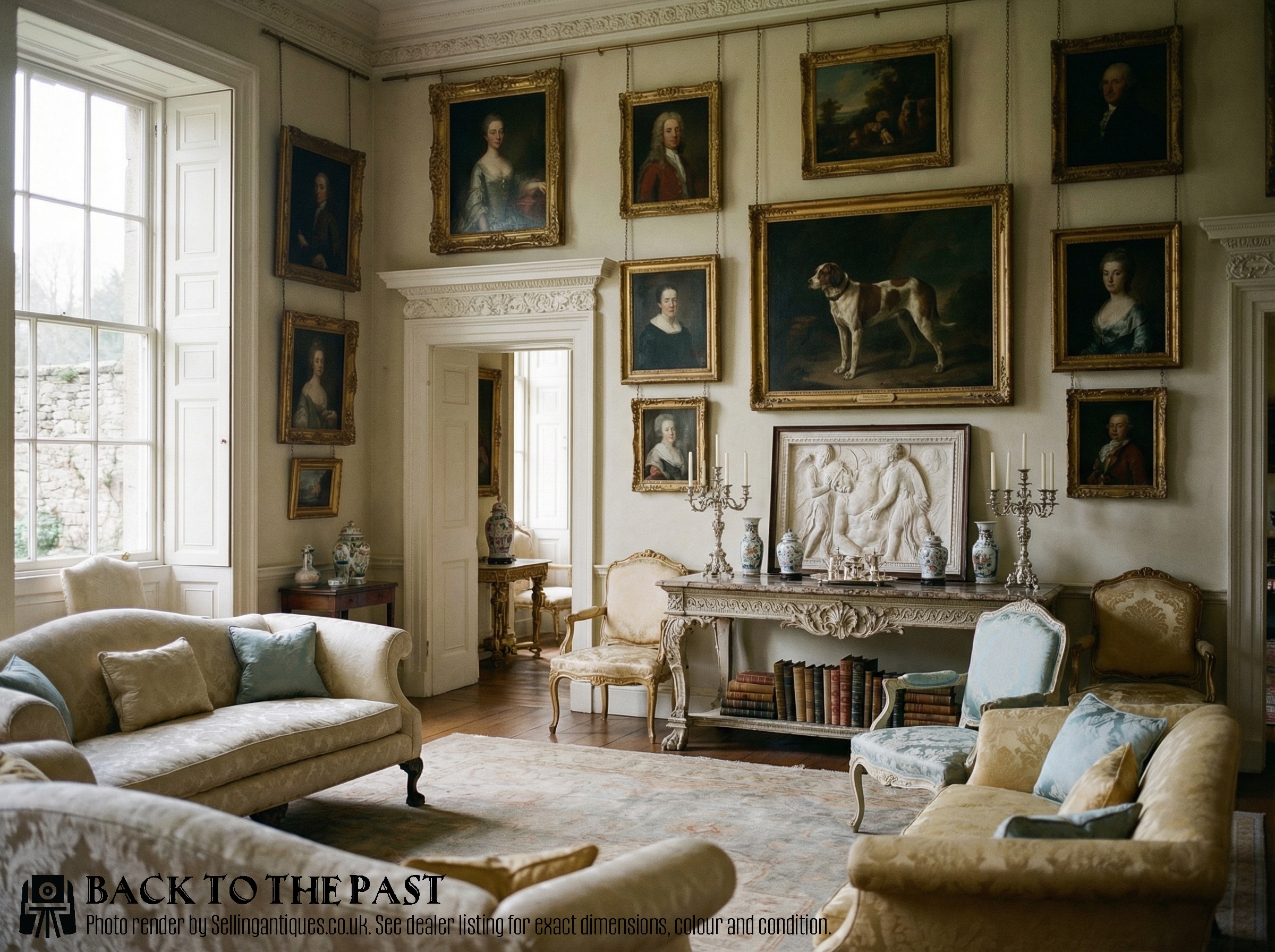
White plaster relief works bring neoclassical depth and classical mythology into a room through crisp, tactile wall art.
White Plaster Relief
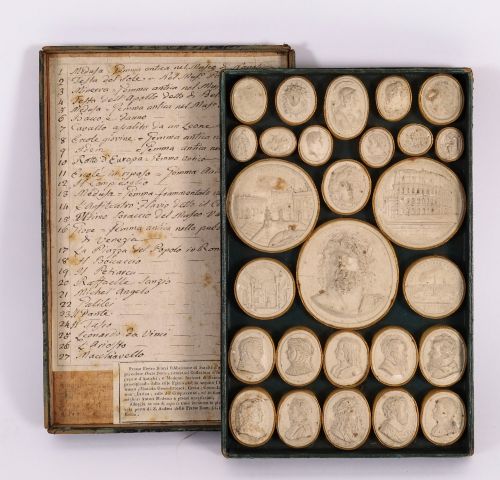
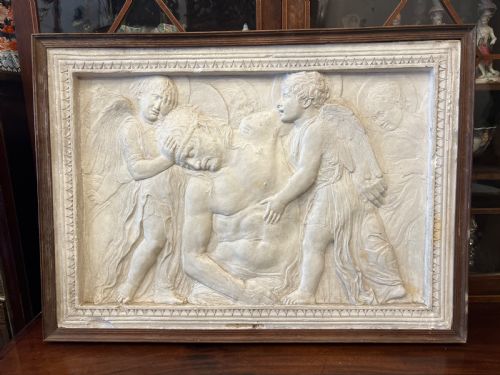
White plaster relief pieces encompass framed wall art, grand tour intaglios, wall plaques and relief sculptures spanning the eighteenth and nineteenth centuries, alongside twentieth century marble dust compositions and lamps. These decorative objects capture classical mythology, historical scenes and religious subjects derived from Italian workshops and French schools.
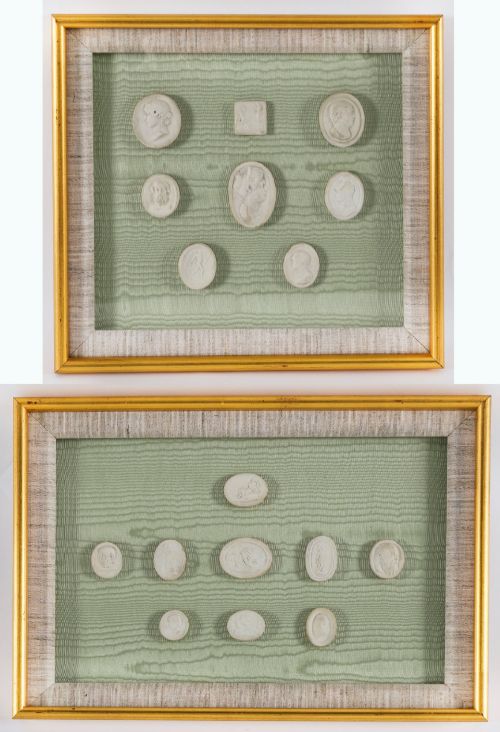
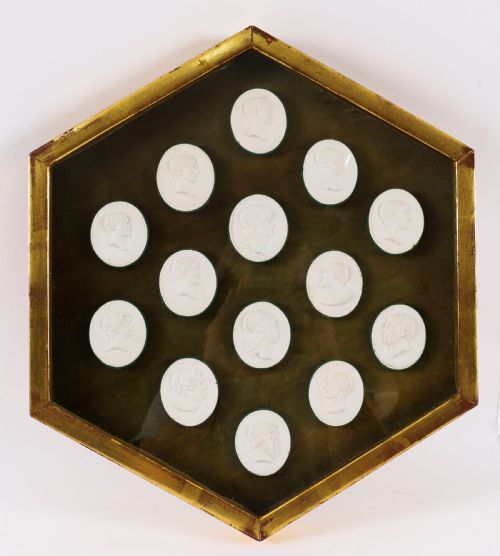
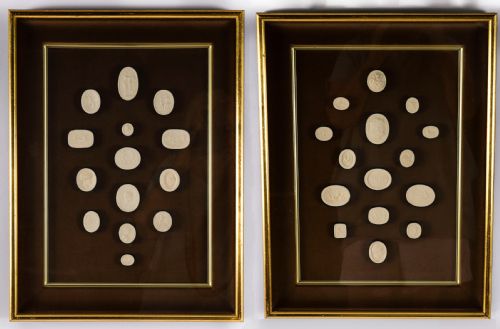
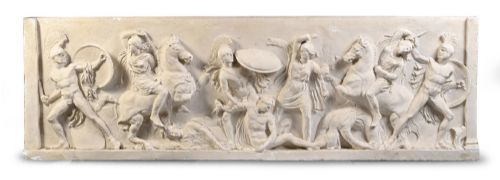
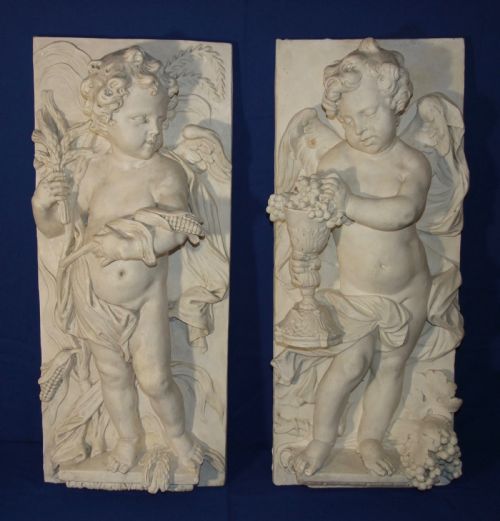
Grand tour intaglios dominate the available selections, presented either as single framed studies or arranged in extensive sets within box frames. Larger sculptural friezes and carved wall plaques also appear, depicting winged cherubs or mythological battles with distinct neoclassical and renaissance revival aesthetics.
The materials recorded in these listings extend beyond simple plaster to incorporate gypsum, marble dust, glass, wood and fabric backings, frequently framed in gilt wood or gold leaf with velvet lining. Originating from periods such as the Victorian and Edwardian eras as well as the seventeen-eighties, these works serve as sophisticated focal points for interior display.
Materials and Technique
Makers utilised fine plaster, gypsum and marble dust to cast intricate relief sculptures and miniature intaglios, capturing microscopic details from classical prototypes. These white compositions were poured into moulds and occasionally finished with deep hand carving.
Mounting and framing involved seasoned wood, glass protection, and rich fabrics such as velvet to provide a contrasting background for the crisp white casts. Gilt wood and gold leaf frames frequently enclose the groupings, completing the presentation of the wall plaques.
Assessing Quality
Quality rests in the crispness of the cast and the depth of the carving, distinguishing sharp mythological contours from softened or obscured details. The complexity of the composition, particularly in multi-figure battles or intricate medallic sets, dictates the standing of the piece.
The integrity of the framing materials, from original gilt wood surrounds to the careful arrangement of velvet backings within box frames, determines the overall execution. Signed works associated with named makers like Giovanni Liberotti or Pietro Bracci elevate the historical significance of the object.
Giovanni Liberotti·Pietro Bracci·Donatello
The White Plaster Relief Glossary
- Intaglio
- A design carved into the material so that the impression sinks below the surface, contrasting with cameo work. These miniature plaster casts record classical gems and antiquities.
- Grand Tour
- A cultural trip undertaken by wealthy young Europeans in the eighteenth and nineteenth centuries to study classical art. Travellers collected boxed sets of plaster intaglios as portable souvenirs.
- Neoclassical
- A style originating in the mid-eighteenth century inspired by the art and culture of ancient Greece and Rome. This aesthetic governs the subject matter and balance of the relief panels.
- Gypsum
- A soft sulphate mineral used to create plaster of Paris for casting sculptural reliefs. It provides the smooth, fine-grained white surface characteristic of these plaques.
- Frieze
- A broad horizontal band sculpted or painted in relief, often adorning walls or architectural structures. Large plaster friezes depict figural groups such as cherubs or mythological riders.
White Plaster Relief: Frequently Asked Questions
What is a grand tour plaster intaglio?
Grand tour plaster intaglios are miniature casts of classical engraved gems and antique sculptures collected by travellers during their European education tours in the eighteenth and nineteenth centuries.
Artists and workshops pressed fine plaster into moulds taken from ancient originals, mounting the resulting white reliefs in custom wood boxes or frames for display.
How should I hang heavy plaster wall reliefs?
Heavy plaster wall reliefs and friezes require secure fixings into structural wall studs or appropriate masonry anchors to support their substantial weight safely.
Because many pieces are housed in wooden frames with glass, ensuring a stable and level mount protects both the delicate plaster casting and its structural surround.
How do I clean antique plaster reliefs?
Antique plaster reliefs require gentle dusting with a soft, dry brush to prevent abrasive particles from scratching the delicate matte surface.
Water and liquid cleaning agents must be avoided entirely, as unsealed plaster absorbs moisture and risks permanent discolouration or structural damage.
How can I tell nineteenth century pieces apart?
Nineteenth-century plaster works display specific material traits, such as aged timber frames, original velvet backings, and distinct casting textures associated with Victorian or Edwardian production methods.
Signed inscriptions or maker stamps on the reverse or within the framing further clarify the origin and historical period of the object.