



White Painted Pine Dresser
A white painted pine dresser brings practical storage and regional character to a room, spanning 18th century, Regency and Victorian periods.
White Painted Pine Dresser
A white painted pine dresser search reveals a diverse selection of storage furniture rooted in English, Welsh, Scottish, Scandinavian, Swedish and Danish traditions. These items range from kitchen dressers and potboard dresser bases to housekeepers cupboards, chests of drawers, commodes and open bookcases.
You are most likely to encounter 19th century examples finished in paint, alongside pieces attributed to the Victorian and Regency eras. Regional forms such as English country, Welsh country and Swedish country dominate the available selection.
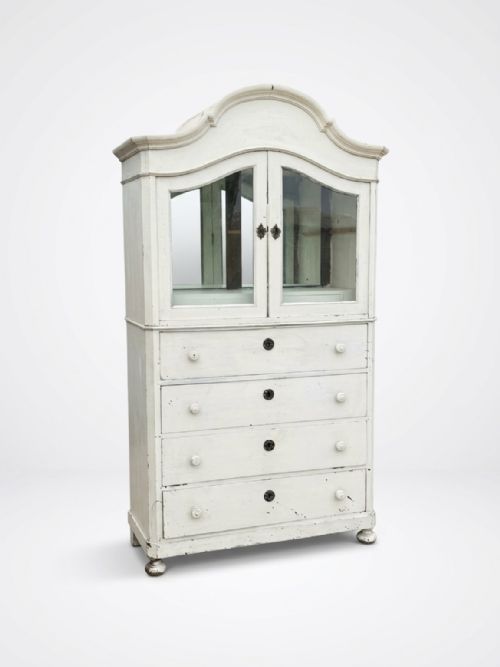
The assortment includes breakfront kitchen dressers and bonnet top cabinets, demonstrating how utilitarian storage evolved into decorative furniture for country houses and sculleries. Each piece combines functional shelving or cupboard space with historical painted surfaces.
What varies in quality
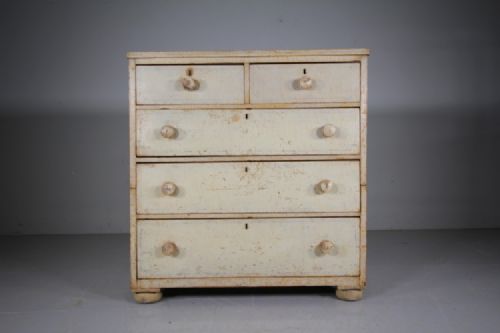
Quality differences stem from the integrity of the original construction, whether a piece was made in two parts like certain Regency chests of drawers, and the survival of its early painted finish. Proportion and regional detailing, from Gustavian styling to English country craftsmanship, dictate the refinement of the form.
The handling of the pine timber, the presence of original brass or iron hardware and the character of the painted surface separate standard utility items from more decorative country house furniture.
Scullery cupboards occasionally retain traces of old flour dust wedged deep inside their dovetail joints.
The White Painted Pine Dresser Glossary
- Dresser base
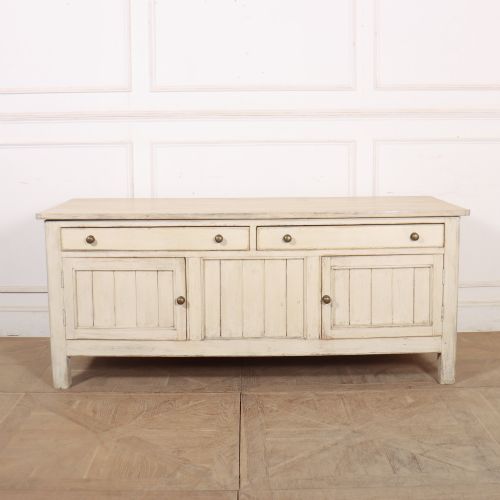
- The lower section of a kitchen dresser featuring cupboards and drawers without the upper plate rack. This form provides robust surface space and enclosed storage.
- Potboard dresser
- A traditional dresser featuring an open lower shelf beneath the baseboards designed for storing heavy pots and pans. This style is particularly associated with English country furniture.
- Housekeeper's cupboard
- A large tall storage cupboard utilised in country houses for linens, dry goods and provisions. These pieces typically feature panelled doors and substantial timber carcases.
- Commode
- A decorative chest of drawers, often influenced by Swedish or continental design traditions. These items combine practical drawer storage with refined painted surfaces.
- Bonnet top
- An arched or hooded upper pediment found on select cabinets and bookcases. This architectural feature adds height and visual elegance to the piece.
White Painted Pine Dresser: Frequently Asked Questions
What is a white painted pine dresser?
A white painted pine dresser is a functional storage item made from softwood timber and finished with a painted surface. These pieces encompass kitchen dressers, dresser bases and cupboards originating from various 18th, 19th and Victorian country traditions.
They serve as practical storage for tableware and provisions while introducing rustic decorative character to interiors through their painted finishes and traditional forms.
How do I date a painted pine piece?
Dating relies on examining construction methods, timber thickness, hardware types and the characteristics of the painted surface. Pieces range from 18th century examples to Regency and Victorian items.
Comparing regional styles, such as Swedish Gustavian design or English country proportions, helps place a piece within its historical period.
Where were these dressers used?
These items were primarily utilised in domestic kitchens, sculleries and country house dining rooms for storing household provisions and displaying kitchenware. Housekeeper's cupboards were kept in service areas for linens and dry goods.
Today, they transition easily into modern living spaces, serving as display and storage furniture in kitchens, dining rooms and hallways.
Are these pieces made in two parts?
Certain larger items, such as specific Regency chests of drawers and tall dressers, were originally constructed in two distinct sections to facilitate transport and placement. This construction method allows easier movement of heavy timber furniture.
Examining the joining points and internal carcase structure reveals how multi-part items were assembled by historical makers.