
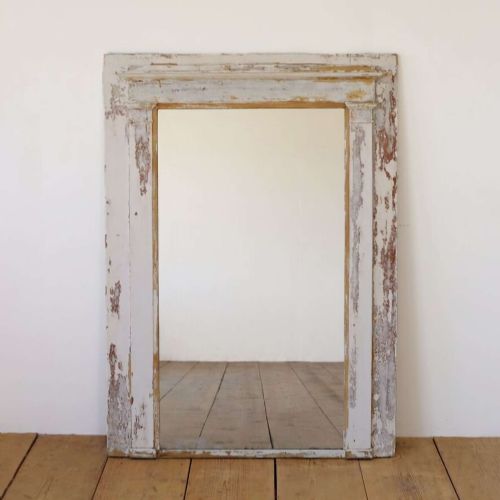
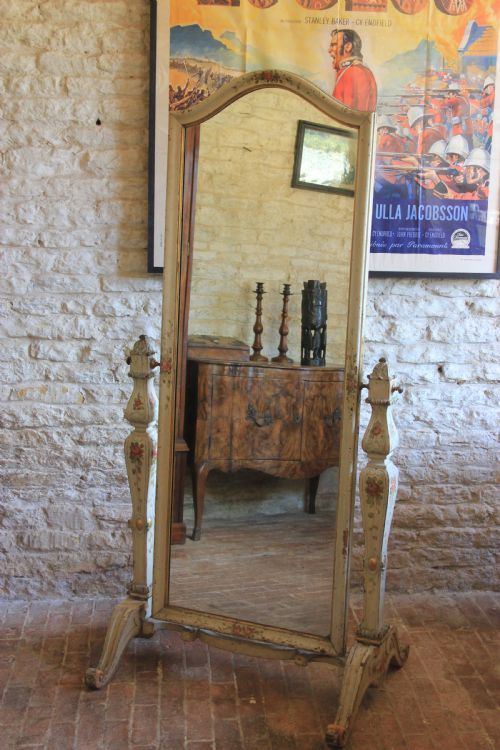


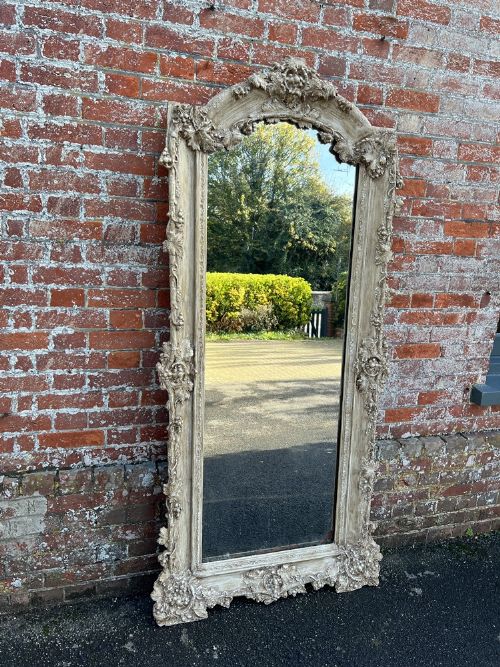

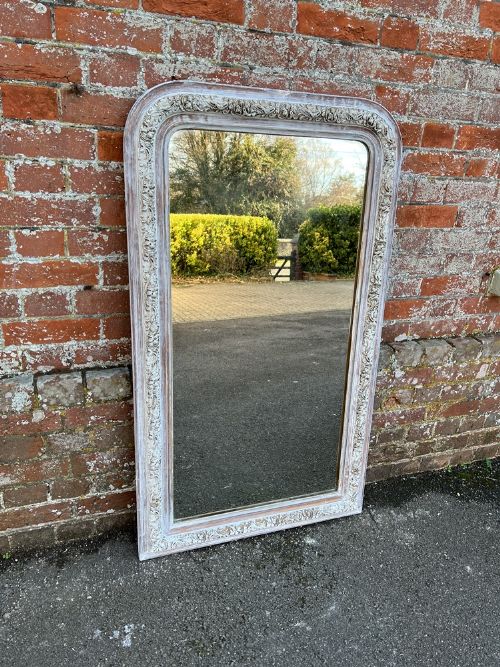


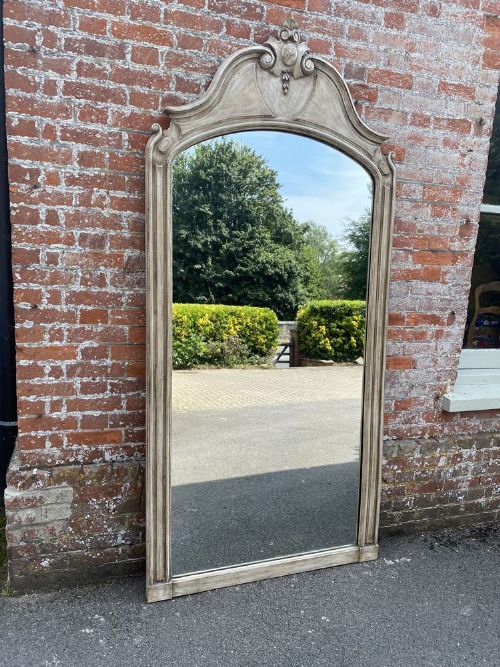
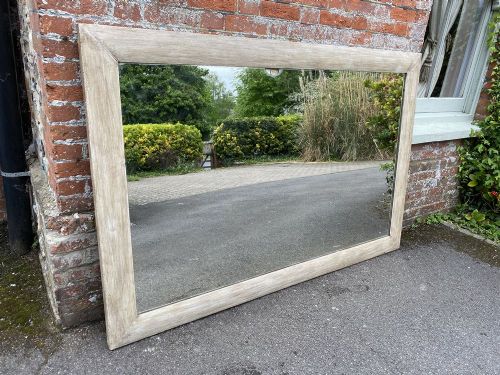
White Painted Floor Mirror
A white painted floor mirror brings architectural light and scale into a room through carved wood and time-softened gesso.
White Painted Floor Mirror
A white painted floor mirror is typically a large nineteenth-century standing or cheval glass designed to reflect interior space and daylight. These pieces emerge predominantly from French provincial workshops, alongside select English and Italian examples.
The inventory on this page consists entirely of nineteenth-century and early twentieth-century formats, including arched tops, shaped frames, and plain rectangular mirrors. Most items combine carved wood and gesso under layered paint surfaces that show the character of their age.
Materials and construction
Frames rely on solid wood shaped by hand and enriched with gesso to build up intricate relief ornament, particularly around arched and shaped crests. Artisans then applied paint over these wooden substrates, creating matte or subtle sheen finishes that mellow over decades.
Glazing relies on heavy, silvered mirror plates set securely within substantial timber rebates, occasionally accompanied by brass fittings on adjustable cheval stands.
Many of these mirrors spent generations reflecting French chateau drawing rooms before finding their way onto modern floors.
Assessing quality and craftsmanship
Quality rests in the depth and crispness of the hand-carved wooden ornament and the finesse of the gesso mouldings beneath the paint layer. Superior examples demonstrate harmonious proportions where the weight of the frame balances the scale of the glass.
The integrity of the original timber structure and the sympathetic handling of historic paint surfaces dictate the distinction between ordinary utility pieces and masterworks of regional furniture design.
The White Painted Floor Mirror Glossary
- Gesso
- A plaster-like mixture applied to wood frames to create a smooth base for intricate carved detail and paint. It provides the crisp relief work seen on many nineteenth-century frames.
- Cheval mirror
- A freestanding full-length mirror hung on a frame with pivots, allowing the glass to tilt. This form enables the user to adjust the angle of reflection.
- Overmantle mirror
- A large horizontal mirror designed to sit directly above a fireplace mantel. These pieces often feature arched tops and substantial carved wooden frames.
- Rococo Revival
- A nineteenth-century design style drawing on eighteenth-century French motifs like C-scrolls, asymmetric curves, and organic plant forms. It accounts for many of the shaped top mirrors in this collection.
White Painted Floor Mirror: Frequently Asked Questions
How do I secure a heavy floor mirror?
Large nineteenth-century mirrors possess substantial weight and require secure anchoring to wall studs or sturdy floor brackets to prevent accidental tipping.
Professional installation ensures the frame remains stable while protecting both the woodwork and the surrounding wall surface.
Can these mirrors stand directly on the floor?
Cheval mirrors feature built-in stands designed for freestanding placement directly on floor surfaces. Other tall formats typically rest against a wall with supplemental lower support.
Evaluating the base construction helps determine whether a particular piece requires wall anchoring or functions safely upright.
How do I care for antique gesso frames?
Dust frames gently using a soft, dry cloth without applying modern liquid cleaning products that might soften historic gesso. Keeping the mirror away from direct heat sources protects the underlying wood and paint layers.
Gentle handling preserves the fragile plaster details and the integrity of the original surface.
How do I date a painted mirror?
Dating relies on examining the construction of the wooden frame, the composition of the gesso, and the characteristics of the mirror glass. Nineteenth-century pieces display distinct joinery methods and hand-carved details absent in modern reproductions.
Comparing stylistic cues like arched tops and French provincial motifs helps narrow the period of origin.