
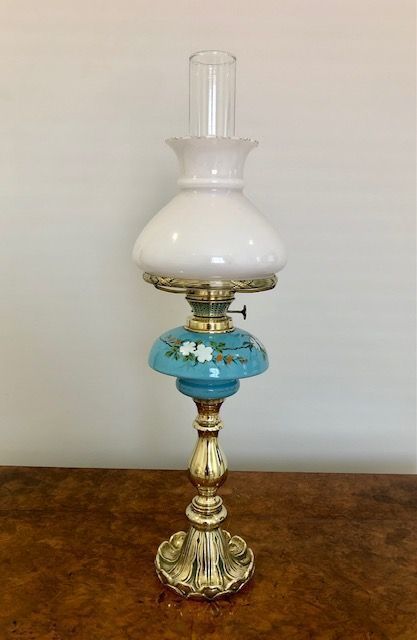


White Opal Shade Lamp
These white opal shade lamp pieces combine milk glass with brass and copper to bring practical task lighting and period character into your interior.
White Opal Shade Lamp
When you search for a white opal shade lamp, you encounter pendant lights, ceiling lights, and table lamps spanning from the Victorian era through the mid-twentieth century. The selection includes individual shades, hanging pendants, and complete oil lamps fitted with metal bases and glass reservoirs.
You are most likely to meet early twentieth-century opaline glass pendants and Victorian brass oil lamps featuring opaque glass shades. Industrial ceiling lights and French frill lampshades also appear regularly across the inventory.
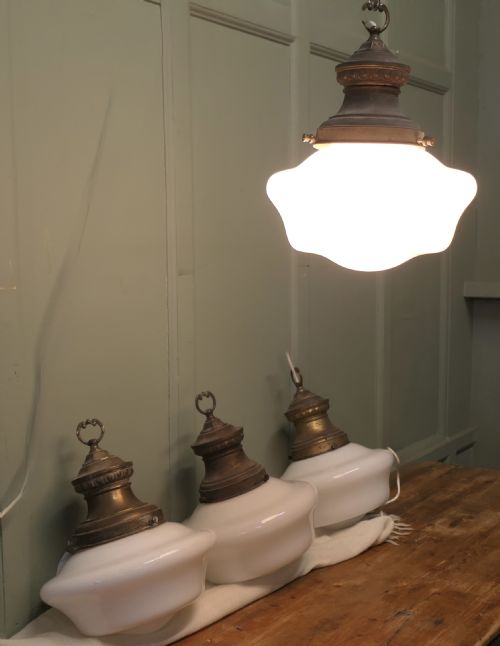
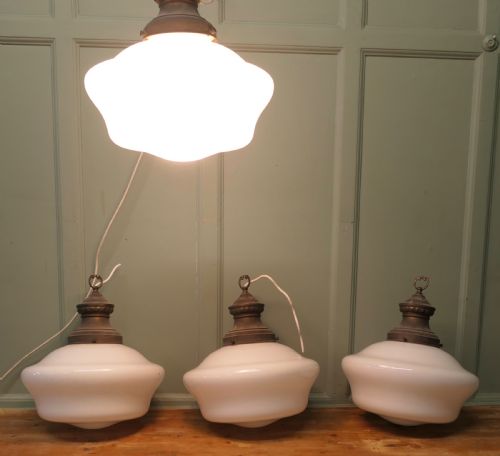
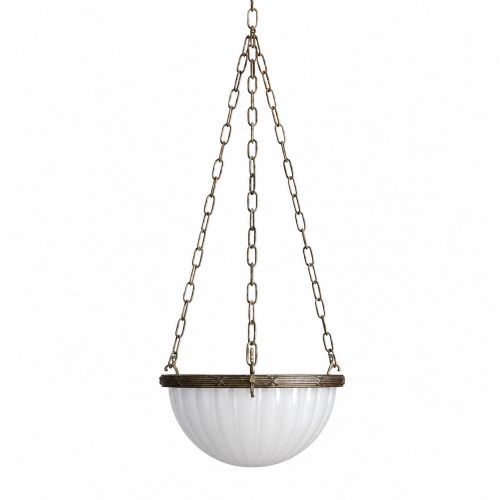
The forms range from diminutive English light shades and conical hanging pendants to large pharmacy moonstone glass pendants and trade sign lights. These objects served utilitarian and domestic roles in workshops, shops, and homes.
How they were made
The construction relies on opaline, opal, and milk glass shaped into shades and bowls, paired with structural elements in brass and copper. Glassmakers achieved the characteristic milky, translucent white appearance through specific mineral additions during production.
Metal components such as brass rings, oil lamp bases, and ceiling fixtures were cast or spun to support the glass bodies. Hand-finished details appear on items like frilly-edged French lampshades and enamelled ceiling lamps.
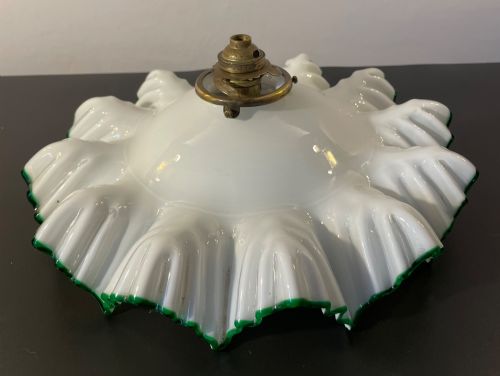
French makers occasionally added frilled edges to milk glass shades, giving utilitarian lighting a distinctly playful silhouette.
What varies in quality
The distinction between items rests in the weight and consistency of the glass, alongside the finish of the metal components. Heavier opaline and moonstone glass demonstrates greater substance, while finer examples show careful attention to edge shaping and surface enamel.
Mountings in solid brass or copper with patinated surfaces elevate the overall manufacture compared to standard utility hardware. The integration between the glass shade and its original brass ring or gallery indicates the initial grade of production.
The White Opal Shade Lamp Glossary
- Opaline glass
- A type of semi-translucent glass that diffuses light softly, often appearing milky white with subtle fire. This material forms the primary shade component in many period light fittings.
- Pendant light
- A hanging luminaire suspended from the ceiling by a cord, chain, or metal rod. These fixtures distribute direct or diffused light downwards into a room.
- Oil lamp
- A lighting device that burns liquid fuel via a wick, typically comprising a glass reservoir and a burner mechanism. Many surviving examples later undergo conversion to electricity.
- Milk glass
- An opaque or translucent glassware that can be white, pink, or blue, blown or pressed into various shapes. It provides a durable and decorative surface for nineteenth and twentieth-century lighting.
- Frill lampshade
- A shade featuring a ruffled or crimped edge, commonly produced in France during the vintage period. This decorative flourish adds texture to the silhouette.
White Opal Shade Lamp: Frequently Asked Questions
How do I date a white opal shade lamp?
Dating relies on examining the manufacturing techniques of the glass and the composition of the metal fittings. Victorian and Edwardian examples often feature heavy brass oil lamp bases, whereas 1930s pieces lean towards industrial pendant forms.
Changes in screw threads, gallery fittings, and wiring channels also help establish the decade of production. Comparing the specific shade profile against known design periods refines the timeline further.
Can these lamps be wired for modern ceilings?
Most antique and vintage pendant lights and table lamps accommodate modern electrical wiring with standard components. Electricians can easily adapt older brass galleries and holders to meet current safety standards.
Retaining original brass rings and fittings preserves the historic character during the rewiring process. Careful installation ensures the weight of the glass shade is properly supported.
What is the difference between opaline and milk glass?
Opaline glass typically possesses a finer, semi-translucent quality with a subtle fire or inner glow when lit. Milk glass tends to be denser and completely opaque, lacking the soft light diffusion characteristic of high-grade opaline.
Both materials appear frequently across nineteenth and twentieth-century lighting fixtures. Their visual effect depends heavily on the thickness of the glass wall.
Where were these lamps originally used?
These lamps served diverse roles in domestic, commercial, and industrial settings across Britain and France. Pharmacy interiors, trade shops, and factories utilised pendant and sign lights for functional task illumination.
Domestic spaces favoured brass oil lamps and ceiling pendants for living rooms and hallways. Over time, many commercial fixtures transitioned into residential decorative lighting.