





White Milk Glass Pendant
White milk glass pendant lights bring a clean, diffuse glow to a room, offering functional illumination shaped by early twentieth century design.
White Milk Glass Pendant
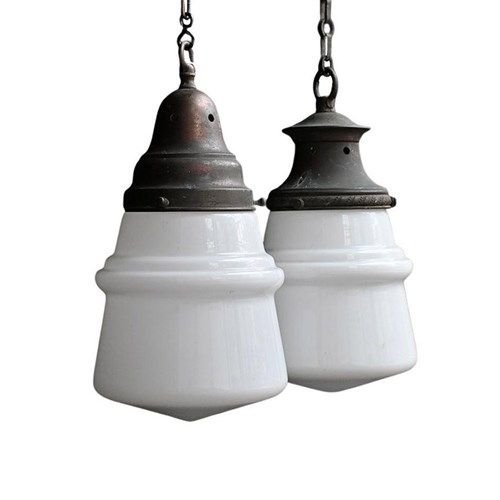
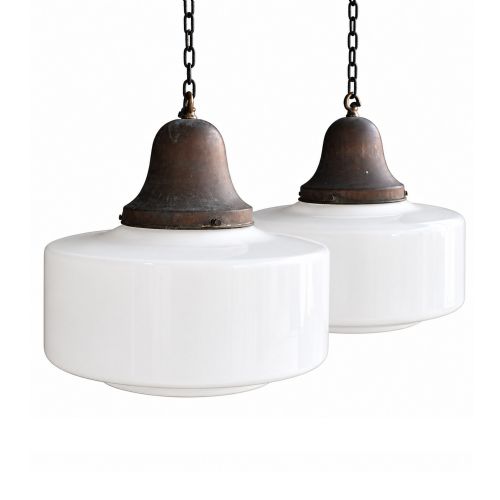
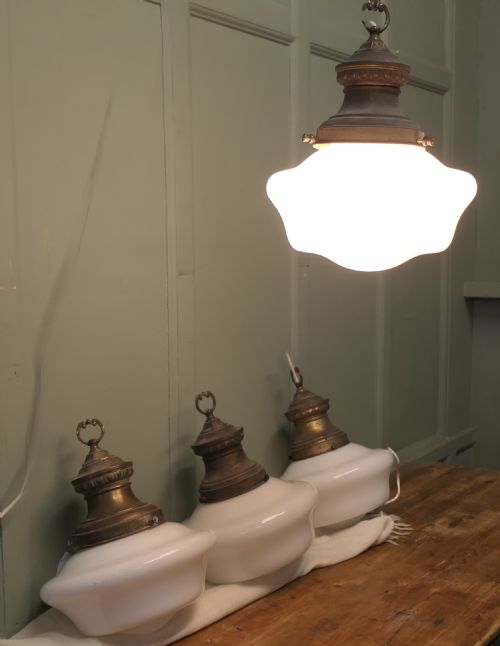
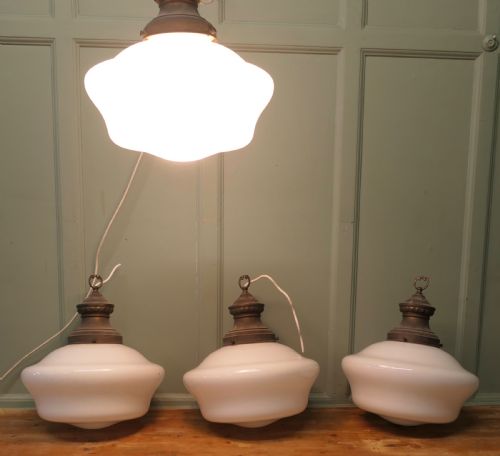
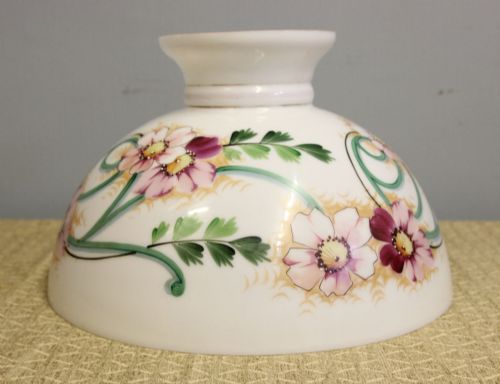
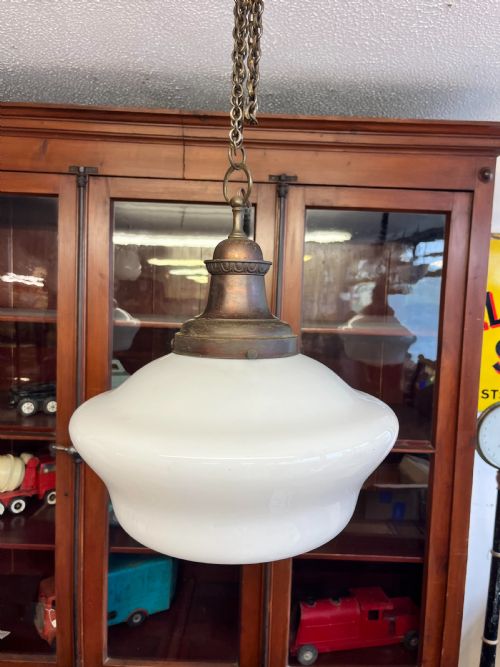
When you search for white milk glass pendant fixtures, you encounter ceiling hung lighting fixtures that utilise translucent glass shades to soften electric illumination. The listings on this page span the Edwardian, Art Deco, and mid-century modern periods, alongside robust industrial designs from the early twentieth century. You will find forms ranging from simple conical shades and pear shaped bodies to reeded designs and fish scale patterns.
Most examples date from the 1910s, 1920s, and 1930s, often produced as English pharmacy, chapel, or hallway lights. These pieces frequently incorporate brass, chrome, steel, or painted metal hardware to suspend the glass bowls from the ceiling. Whether you choose a diminutive shade or a huge pharmacy pendant, each object serves as a direct example of period interior lighting.
How they were made
Industrial and domestic fixtures relied on straightforward mechanical assemblies to connect the glass shade to the suspension hardware. Metal galleries and fixings held the heavy glass securely, while fitted burners or early electrical holders completed the lamp. The combination of dense white glass and durable metal hardware ensured both longevity and an even distribution of light.
White Milk Glass Pendant Retail Price Guide 2026
Typical asking prices for white milk glass pendant among the pieces listed under this phrase on Sellingantiques today, from the lower quarter to the upper quarter. They describe what is for sale here now, not the wider market.
Ceiling lighting forms in this category include pear shaped bodies, conical shades, fish scale patterns, and reeded designs dating from the 1910s to the 1930s.
What varies in quality
Quality in these pendant lights rests upon the density and consistency of the glass used in the shade. Finer examples display a smooth, even opalescence with balanced light diffusion, whereas simpler utilitarian versions prioritise robust thickness over refined finish. The choice of material also distinguishes the tier of the piece, with polished brass and intricate reeded mouldings appearing on higher grade domestic fittings.
The sophistication of the metal hardware and suspension components marks another distinction between standard and superior pieces. Art Deco and Edwardian examples often feature carefully shaped galleries and matched metal fitments that complement the contour of the glass. In contrast, heavy industrial ceiling lights focus on utilitarian strength through plain steel and chrome elements.
The White Milk Glass Pendant Glossary
- Opaline glass
- A type of semi translucent white glass that diffuses light softly without glaring. It gained widespread popularity in nineteenth and early twentieth century lighting fixtures.
- Moonstone glass
- A milky, highly translucent glass variety prized for its luminous depth. It resembles the soft sheen of a natural moonstone when illuminated from within.
- Reeded design
- A surface pattern consisting of parallel, raised rounded ridges running along the body of the glass shade. This technique adds texture and catches the light effectively.
- Gallery
- The metal ring or collar that grips the top of a glass lampshade to suspend it from a ceiling chain or rod. Galleries are often cast or pressed from brass and steel.
- Pendant light
- A solitary light fixture suspended from the ceiling by a cord, chain, or metal rod. These fixtures direct illumination downwards into a specific area of a room.
White Milk Glass Pendant: Frequently Asked Questions
What periods do these lights come from?
The lighting fixtures on this page originate from the early twentieth century, spanning Edwardian, Art Deco, and industrial eras. Most examples date specifically from the 1910s, 1920s, and 1930s.
These decades saw a shift towards practical electric lighting in homes, public buildings, and industrial spaces. The designs reflect the transition from gas and oil illumination to electric power.
How were milk glass pendants originally used?
These pendant lights served functional roles in pharmacies, chapels, hallways, and domestic rooms. Their primary purpose was to provide bright, ambient illumination without harsh glare.
The translucent quality of the glass allowed light to spread evenly across a workspace or living area. Industrial versions hung in workshops and factories to illuminate large floor spaces effectively.
What metals are found on the fittings?
The suspension hardware incorporates brass, chrome, steel, and painted metal components. These materials formed the galleries, chains, and ceiling roses that support the glass shades.
Domestic styles often utilised polished brass or painted finishes, while industrial fixtures favoured sturdy steel and chrome. Each metal was chosen for its durability and ability to bear the weight of the glass.
Are these pendant lights suitable for modern homes?
These vintage pendant lights adapt easily to contemporary interiors due to their clean white aesthetic and simple geometric forms. They fit well above kitchen islands, dining tables, and hallways.
The neutral tone of milk glass complements both modern minimalist spaces and traditional room schemes. Their historical character adds an authentic architectural detail to a modern setting.