


White Gold Line Bracelet
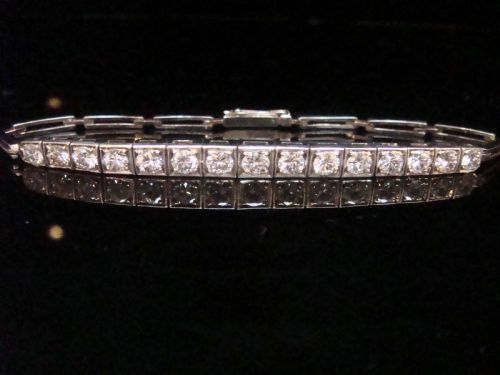
A white gold line bracelet is an articulated stream of precious stones set in a luminous pale metal, offering understated wrist elegance.
White Gold Line Bracelet
A white gold line bracelet is an articulated row of matched gemstones, most frequently diamonds, linked to drape fluidly around the wrist. The pieces gathered under this phrase span from the Edwardian era through the Art Deco period and into the mid-twentieth century.
Most examples encountered here are fashioned in various carats of white gold or platinum, often paired with yellow gold accents in earlier pieces. The stones are secured in settings that emphasise continuity, creating an unbroken band of brilliance.
How they were made
Makers utilised precious metals including 18ct white gold, 14ct white gold, and platinum to fabricate the flexible links of each bracelet. These metals provide the necessary strength to hold small stones securely while maintaining a bright, neutral backdrop for diamonds and sapphires.
Stones are typically secured using techniques such as collet settings or delicate claw arrangements, allowing maximum light to enter the gems. Artisans linked these individual sections meticulously to ensure the finished band moves smoothly without catching on fabric.
Early twentieth-century makers ensured these flexible bands draped so smoothly they behaved more like ribbons of light than metal.
What varies in quality
The distinction between standard and exceptional pieces rests upon the uniformity of the gemstones and the precision of the articulation. Superior examples feature stones meticulously matched in colour, cut, and clarity across the entire length of the band.
Construction quality shows in the durability of the hinges and the seamless integration of the clasp. A finer bracelet maintains its structural integrity and flexibility over decades of wear, whereas lesser pieces suffer from stiff joints or uneven stone spacing.
The White Gold Line Bracelet Glossary
- Line bracelet
- A flexible bracelet featuring a continuous line of gemstones, traditionally diamonds of uniform size and cut. This form sits close to the wrist and prioritises continuous sparkle.
- Collet set
- A method of securing a gemstone where a low metal collar encircles the stone edge. This technique holds the gem firmly while presenting a clean, rounded profile.
- Art Deco
- A design style spanning the 1920s and 1930s characterised by geometric symmetry and clean lines. Pieces from this period often incorporate angular settings and contrasting stone shapes.
- Edwardian
- A period of fine jewellery design dating from the early twentieth century known for delicate openwork and platinum or white gold fabrication. Items from this era frequently employ millegrain detailing.
- Brilliant cut
- A diamond cut specifically with numerous facets designed to maximise light return. This cut is standard in many twentieth-century gemstone bracelets.
White Gold Line Bracelet: Frequently Asked Questions
How do I wear a line bracelet daily?
These bracelets pair easily with casual attire or evening wear due to their low profile and flexible construction. Their understated design allows them to sit comfortably alongside wristwatches or other bands.
Care should be taken during heavy manual tasks to prevent scratching the white gold or loosening the stone settings over time.
What is the difference between Edwardian and Art Deco bracelets?
Edwardian pieces generally feature lighter, lace-like platinum or white gold frameworks with softer floral or garland motifs. They often emphasise delicate openwork and subtle sparkle.
Art Deco items shift toward bold geometric shapes, sharp angles, and structured patterns that reflect the architecture of the 1920s and 1930s.
Are these bracelets made of solid white gold?
The listings include pieces fashioned from various purities of white gold, such as 14ct and 18ct, alongside platinum examples. These metals run throughout the links and the clasp mechanism.
White gold alloys provide a durable foundation that resists daily wear while maintaining a bright, silvery appearance.
How can I tell the age of a bracelet?
Dating relies on stylistic clues such as the geometry of the settings, the cut of the diamonds, and the construction of the clasp. Edwardian examples show organic openwork, while 1950s and 1960s pieces often display heavier, cleaner links.
Hallmarks stamped on the metal tongue or clasp can also provide specific metallurgical and regional origin markers.