

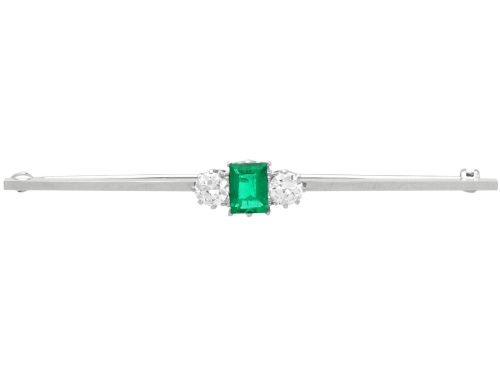
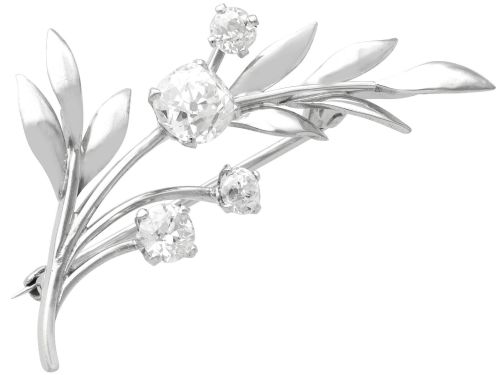

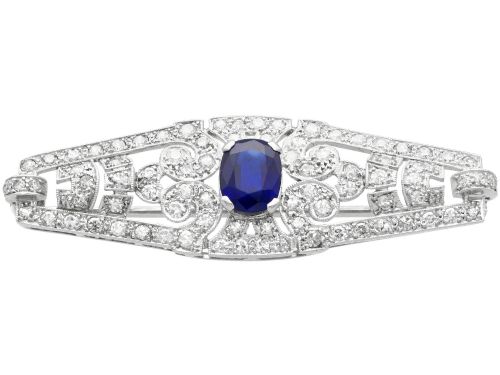
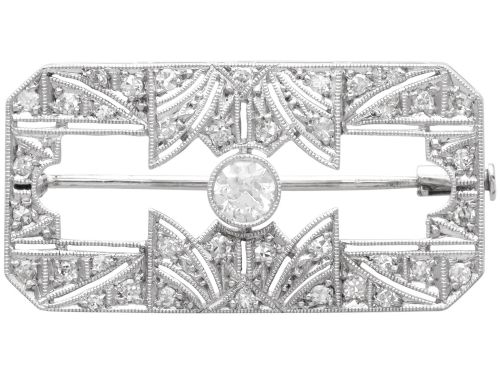


White Gold Lapel Brooch
These white gold lapel brooch examples combine clean precious metalwork with bright stones, making them versatile dress ornaments.
White Gold Lapel Brooch
A white gold lapel brooch is a fastening ornament pinned to clothing, appearing in forms such as bar brooches, stickpins, floral pieces, and shaped designs like butterflies and hearts. The pieces found here span the Victorian, Edwardian, Art Deco, and mid-century periods, showcasing the evolving tastes in personal ornamentation over more than a century.
Buyers most frequently encounter the Art Deco style from the nineteen-twenties alongside Edwardian and mid-century fine jewellery examples. These designs utilise pin fastenings suited for securing to lapels, collars, and coats.
How they were made
The construction relies on white gold in nine-carat, eighteen-carat, and eighteen-karat purity, frequently paired with platinum settings for secure stone retention. Jewellers combined these white metals with diamonds, sapphires, rubies, onyx, and natural pearls.
Techniques from the Victorian and Edwardian eras through to the mid-century period involved precision stone-setting, including old cut and brilliant cut diamond configurations. Artisans shaped the metal into geometric Art Deco motifs, floral sprays, and figurative subjects.
White Gold Lapel Brooch Retail Price Guide 2026
Typical asking prices for white gold lapel brooch among the pieces listed under this phrase on Sellingantiques today, from the lower quarter to the upper quarter. They describe what is for sale here now, not the wider market.
Materials recorded across these listings include platinum, nine-carat, eighteen-carat, and eighteen-karat white gold, paired with diamonds, rubies, sapphires, onyx, and natural pearls.
What varies in quality
Quality in a white gold lapel brooch depends on the harmony between the metalwork and the integrated gemstones, such as diamond carat weight and gemstone pairing like basaltic sapphire and ruby. Superior examples demonstrate refined gemstone selection and precise metal shaping.
The finesse of the period style, whether Edwardian lace-like platinum work or geometric Art Deco lines, distinguishes the execution. The integration of materials like onyx and natural pearls further shapes the character of each piece.
The White Gold Lapel Brooch Glossary
- White gold
- An alloy of gold combined with white metals such as palladium, nickel, or silver to produce a silvery appearance. It serves as the primary structural metal for these pieces.
- Platinum
- A dense, strong, and ductile precious metal used extensively in Edwardian and later settings to hold gemstones securely with minimal visible metal. It offers high durability for fine jewellery.
- Art Deco
- A design style prominent in the nineteen-twenties characterised by sleek geometric shapes, clean lines, and stylised motifs. This aesthetic heavily influences the brooches from that era.
- Old cut diamond
- A traditional diamond cutting style predating modern brilliant cuts, featuring a smaller table, higher crown, and open culet. These stones catch candlelight and softer illumination distinctively.
- Stickpin
- A slender pin with a decorative head used to secure garments or ties. Examples incorporate diamonds and white gold construction.
White Gold Lapel Brooch: Frequently Asked Questions
How do I wear a lapel brooch?
Pin the brooch securely through the lapel fabric of a jacket, coat, or blazer, ensuring the weight of the piece is adequately supported by the garment material.
For lighter fabrics, place the pin through a reinforced seam or layer to keep the brooch sitting straight throughout the day.
What periods do these brooches cover?
The available selection spans the Victorian, Edwardian, and Art Deco periods, extending into mid-century fine jewellery designs from the nineteen-fifties and sixties.
Each period brings distinct manufacturing techniques and aesthetic choices, from early diamond stickpins to geometric nineteen-twenties motifs.
Are these pieces made of solid white gold?
Yes, the metal components consist of solid white gold, graded at nine, eighteen, or eighteen karats, often combined with platinum settings.
These precious metals provide a durable foundation for securing diamonds, sapphires, rubies, and natural pearls.
How do I tell Art Deco from Edwardian pieces?
Edwardian pieces often feature intricate platinum work resembling lace and floral or garland motifs, whilst Art Deco items favour bold geometric shapes and symmetrical lines.
Both styles utilise white gold and platinum backgrounds to highlight the brilliance of old cut and diamond stones.