


White Gold Bracelet
A white gold bracelet offers a cool metallic lustre that elevates diamonds, pearls, and coloured stones across multiple historical periods.
White Gold Bracelet
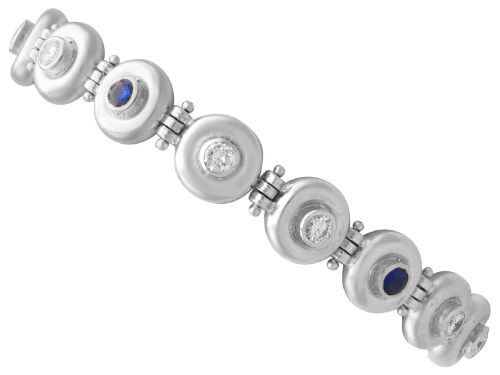
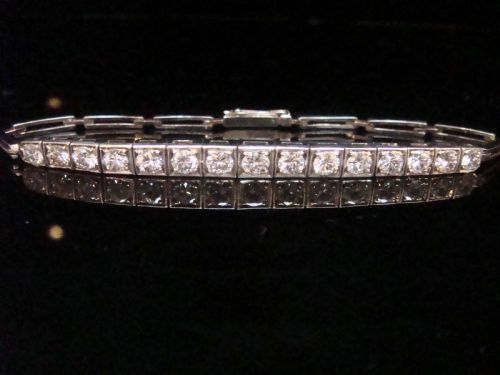
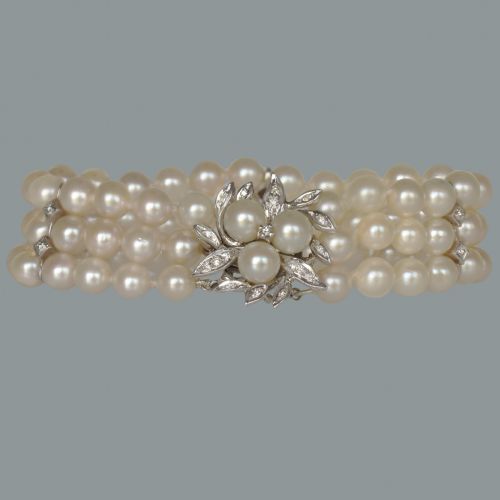
When searching for a white gold bracelet, buyers encounter wristwear spanning from the Victorian era through the mid-twentieth century. The selection ranges from delicate Edwardian pearl line pieces to substantial Art Deco geometric gemstone designs and 1960s cocktail watches.
Pieces frequently combine white gold with platinum, diamonds, sapphires, rubies, and cultured pearls. The offerings include traditional tennis lines, mesh watch straps, and jewelled bangles originating from British, French, and Italian makers.
How They Were Made
Items are constructed predominantly from 14ct and 18ct white gold, frequently paired with platinum to secure fine stones securely in delicate settings. Artisans utilised intricate piercing, millegrain edging, and collet setting techniques particularly evident in Edwardian and Art Deco examples.
Stones such as brilliant-cut and old-cut diamonds, sapphires, opals, and pearls are hand-set into articulated links or rigid bangles. Mesh construction provides flexibility for cocktail watches while maintaining structural integrity in precious metal.
Listings feature white gold items spanning from Victorian and Edwardian origins through the Art Deco period into the 1960s.
What Varies In Quality
Quality rests upon the precision of the metalwork, the uniformity of stone sizing, and the integrity of the articulating hinges or clasps. Superior examples display meticulous hand-finishing, well-matched gemstone clarity and colour, and robust clasp mechanisms that withstand decades of wear.
The distinction between standard commercial pieces and finer creations involves the originality of the design, the weight of the precious metal used in the links, and the certification or provenance of significant diamonds and coloured gemstones.
Bucherer·Vertex·Omega·Chopard·Baraka
The White Gold Bracelet Glossary
- Art Deco
- A design style spanning the 1920s and 1930s characterised by geometric symmetry, stylised motifs, and strong linear patterns. Pieces from this era often feature calibre-cut stones and platinum-topped white gold.
- Millegrain
- A decorative jewellery technique involving a border of tiny raised metal beads along the edges of a setting. This method softens the metallic profile and adds a refined textured finish.
- Tennis Bracelet
- A flexible line bracelet composed of a symmetrical sequence of closely set diamonds or gemstones. The designation originated from a famous sports incident in the late twentieth century.
- Collet Setting
- A metal collar that encircles the girdle of a gemstone to hold it securely in place. It represents a traditional method used extensively in antique jewellery before modern prong configurations dominated.
- Cocktail Watch
- A ladies timepiece designed primarily as formal jewellery rather than a purely functional instrument. These items typically conceal the dial beneath a jewelled cover or integrate the watch face into a decorative bracelet.
White Gold Bracelet: Frequently Asked Questions
How do I date a white gold bracelet?
Dating relies upon stylistic hallmarks, gemstone cuts, and manufacturing techniques characteristic of specific decades. Art Deco pieces display geometric lines and old-cut stones, while mid-century examples often utilise textured gold finishes and distinct clasp designs.
Examining maker marks and metal purity stamps provides additional chronological clues. Comparing the piece against documented historical periods helps narrow the production window.
What is the difference between white gold and platinum?
White gold is an alloy of yellow gold mixed with white metals such as palladium or nickel, whereas platinum is a naturally white, denser precious metal. Platinum maintains its colour naturally over time.
White gold is often plated with rhodium to enhance its bright finish. Over years of wear, this plating may wear thin and require professional re-plating.
Are pearls durable enough for daily bracelet wear?
Cultured and natural pearls possess a lower hardness rating than diamonds or precious metals, making them susceptible to scratching and chemical exposure. Regular wear requires careful handling away from cosmetics and perfumes.
Vintage pearl bracelets often feature multiple strands secured with intricate diamond clasps. Restringing the silk cord periodically ensures the safety of the pearls.
How should I clean my antique white gold bracelet?
Cleaning requires warm water, mild dish soap, and a very soft brush to remove accumulated oils from behind gemstone settings. Harsh chemical dips should be avoided, particularly on items containing pearls or emeralds.
Professional ultrasonic cleaning is suitable for solid diamond and gold pieces but can damage fragile antique settings or treated stones. Periodic inspection by a jeweller ensures prongs remain secure.