



Edwardian Line Bracelet
An edwardian line bracelet brings together delicate precious metal settings and continuous rows of brilliant diamonds, sapphires, or emeralds for understated wrist adornment.
Edwardian Line Bracelet
The edwardian line bracelet is a continuous stream of gemstones linked together to encircle the wrist with uniform brilliance and grace. These delicate ornaments span periods from the late Victorian era through the Edwardian years and into the Art Deco period, capturing changing tastes in fine jewellery.
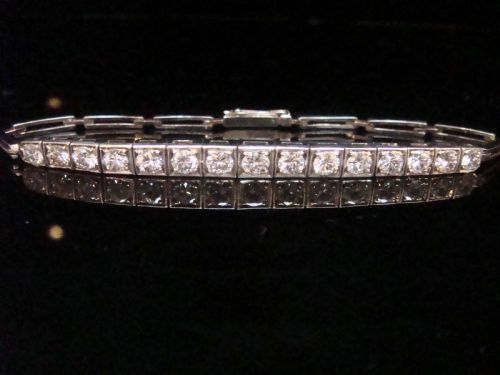
Most examples encountered here feature platinum or white gold mounts set with diamonds alongside sapphires, emeralds, or pearls. Makers arranged stones in repeating geometric patterns or clean linear sequences that sit low against the skin.
Alongside pieces explicitly from the Edwardian period, the selection includes related works from the nineteenth century up to nineteen thirty. The overarching style prioritises light, refined metalwork and balanced gemstone proportions.
Materials and construction
Platinum and white gold emerged as defining metals for these bracelets, offering exceptional strength that allowed workshops to use minimal metal in settings. This rigidity supported intricate pierced galleries and secure claw or bezel mounts for stones.
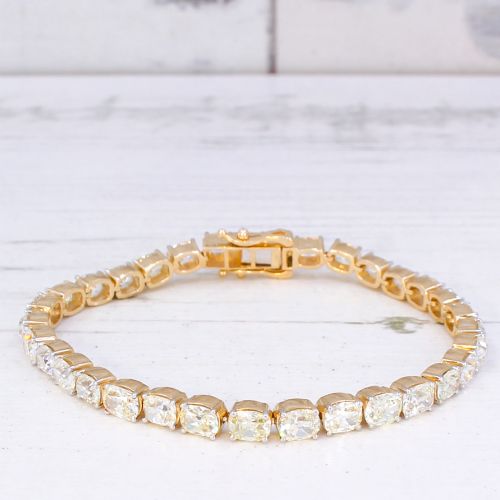
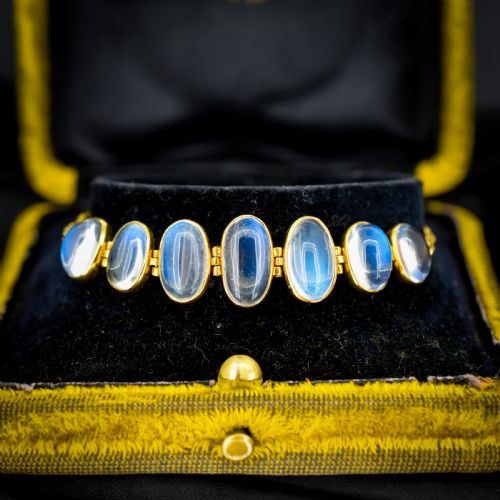
Yellow gold and rose gold also appear in earlier nineteenth-century and Edwardian pieces, paired with old mine cut diamonds, moonstones, or coloured gems. Metal components were joined by flexible hinges or links to ensure smooth movement around the wrist.
Gemstones including old mine cut and brilliant cut diamonds, alongside natural green zircons, sapphires, and emeralds, were hand-cut and individually secured within their metal housings. Saltwater pearls also feature in specific French variants, threaded or mounted alongside primary stones.
Listings feature periods spanning from the nineteenth century through the Victorian, Edwardian, and Art Deco eras.
Distinctions in quality
The standard of an edwardian line bracelet depends heavily on the precision of the metalwork and the matching of the stones. Finer examples display symmetrical gemstone sizing, consistent colour grading, and meticulous hand-piercing in the platinum framework.
The integrity of the articulation points between individual links dictates how fluidly the piece drapes. Superior construction ensures flexibility without looseness, maintaining alignment of the gemstones during wear.
Provenance and origin add dimension, with French workshops often demonstrating exceptional skill in millegrain detailing and delicate gallery construction. The weight and purity of the gold or platinum chassis further separate standard production from master craftsmanship.
The Edwardian Line Bracelet Glossary
- Old mine cut
- An early diamond cut characterised by a cushion shape, high crown, small table, and deep pavilion. This cut captures candlelight warmly and appears frequently in nineteenth-century and early Edwardian pieces.
- Millegrain
- A decorative technique involving a row of tiny raised metal beads along the edges of a setting. It softens the transition between metal and stone, adding a textured border typical of Edwardian fine jewellery.
- Platinum
- A dense, durable, and naturally white precious metal favoured for Edwardian and Art Deco mountings. Its high tensile strength permitted the creation of delicate, wire-like settings that maximised stone visibility.
- Collet set
- A method of securing a gemstone within a tight collar of metal that encircles the girdle. This technique provides a clean, continuous outline around each stone in a line setting.
- Brilliant cut
- A modern diamond cut featuring facets designed to maximise light return and sparkle. It succeeds earlier cuts in pieces transitioning toward the Art Deco period.
Edwardian Line Bracelet: Frequently Asked Questions
How should I wear and care for my bracelet?
These delicate antique bracelets suit evening wear and special occasions, though sturdy platinum examples can handle careful regular use. Avoid exposing them to harsh chemicals, ultrasonic cleaners, or heavy impact that might stress the old linkages.
Store the bracelet flat in a lined jewellery box to prevent tangling or scratching against other pieces. Periodic inspection by a specialist ensures the tiny settings and hinges remain secure.
How can I tell an Edwardian piece from an Art Deco one?
Edwardian pieces generally lean towards organic motifs, millegrain detailing, and softer platinum wirework framing diamonds, pearls, or softer coloured stones like moonstones. They often employ yellow gold alongside platinum.
Art Deco examples transition towards rigid geometric symmetry, bolder emerald or sapphire contrasts, and streamlined platinum mountings. The lines become sharper and more architectural as the design moves into the nineteen twenties and thirties.
What metals were used in these bracelets?
Platinum became the dominant metal for fine line bracelets during the Edwardian and Art Deco eras due to its strength and bright white finish. White gold also appears as a contemporary alternative in various mountings.
Earlier Victorian and Edwardian examples frequently utilise fifteen carat or eighteen carat yellow gold, rose gold, or silver-topped gold. These traditional metals provide a warmer backdrop for old mine cut diamonds and coloured gemstones.