



White Glazed Earthenware Dogs
White glazed earthenware dogs are enduring nineteenth-century ornaments that bring character to a mantelpiece, and collectors seek them for their charm and regional pottery heritage.
White Glazed Earthenware Dogs
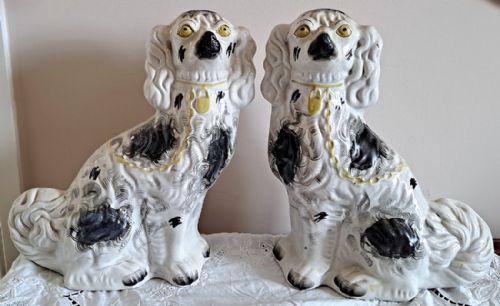
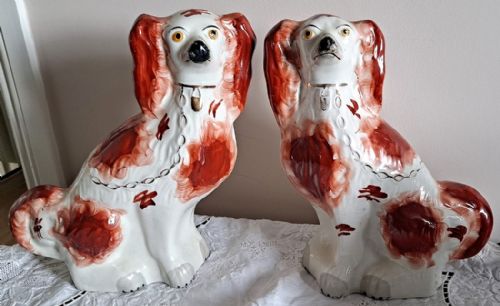
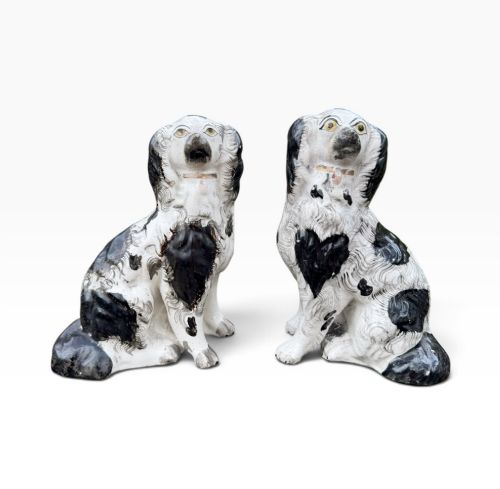
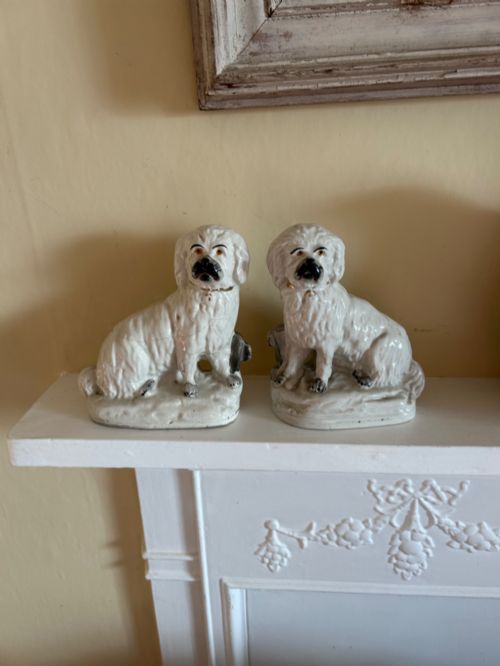
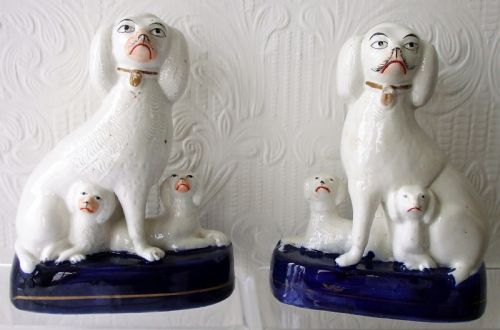
White glazed earthenware dogs represent traditional Victorian mantle ornaments created across the nineteenth century, with pairs of spaniels and poodles forming the majority of encounters on this page. These decorative figures take various forms, including seated spaniels, greyhounds, Maltese terriers, and quill holders, often shaped as groups or pairs.
The pieces span specific periods from the 1850s through to 1900, reflecting the Victorian era's taste for domestic animal ceramics. Makers produced these decorative figurines and ornaments using earthenware bodies, dressing them in white glazes alongside enamel or gilt details.
How they were made
The underlying ceramic material consists of earthenware, which received a lead glaze or general glaze coating to achieve a smooth surface. Workshops utilised these standard ceramic techniques to produce durable decorative ornaments for Victorian homes.
White Glazed Earthenware Dogs Retail Price Guide 2026
Typical asking prices for white glazed earthenware dogs among the pieces listed under this phrase on Sellingantiques today, from the lower quarter to the upper quarter. They describe what is for sale here now, not the wider market.
Listings feature Victorian earthenware dogs spanning the nineteenth century up to 1900, incorporating lead glaze, enamel, and gilt materials.
What varies in quality
The presence of secondary elements, such as pups accompanying poodles or functional additions like quill holder openings, distinguishes more elaborate models from standard pairs. Artisans who maintained strict control over the glazing process produced smoother finishes without distracting surface pooling.
Thomas Parr
The White Glazed Earthenware Dogs Glossary
- Earthenware
- A porous type of pottery fired at lower temperatures, commonly used for nineteenth-century figures before being covered in a glaze. It forms the structural base for the majority of these ornaments.
- Glaze
- A glassy coating fused to the ceramic body through firing to seal the porous earthenware beneath. This layer provides the characteristic glossy white surface seen on the dogs.
- Enamel
- Opaque vitreous material applied over the fired glaze to add colour and detail to the figures. Painters used enamel to render eyes, patches, and collars.
- Staffordshire
- A regional description for pottery manufactured in the English county famous for producing domestic figures. Most nineteenth-century ceramic dogs originate from these kilns.
- Quill Holder
- A utilitarian ceramic form designed with apertures to hold writing quills or pens on a desk. Certain dog figures incorporate this dual function into their seated designs.
White Glazed Earthenware Dogs: Frequently Asked Questions
How were these dogs displayed?
Victorian households traditionally placed these ceramic dogs symmetrically on mantelpieces, often facing inward toward the centre of the fireplace. Pairs of spaniels or poodles sat guarding the hearth in parlours across Britain.
Beyond the fireplace, collectors positioned smaller decorative figures on side tables, dressers, or within glass display cabinets to showcase their Staffordshire pottery collections.
Are all white dogs Staffordshire?
The vast majority of nineteenth-century earthenware dog figures originate from the Staffordshire potteries, where numerous kilns produced these popular domestic ornaments. Their characteristic forms and materials align closely with documented regional production.
Other British potteries occasionally created similar ceramic animals, but Staffordshire remains the predominant origin associated with these Victorian figures.
What breeds were modelled?
Spaniels form the most common breed represented among these nineteenth-century ceramic figures, typically shown seated in attentive pairs. Potters also modelled poodles, sometimes accompanied by smaller pups, alongside greyhounds and Maltese terriers.
These varied breeds reflect Victorian pet ownership trends and the public appetite for domestic animal ornaments during the nineteenth century.
How do I date these figures?
Dating relies on stylistic markers, base characteristics, and the specific application of glazes and enamels across the nineteenth century. Pieces attributed to the Victorian period often exhibit distinct modelling styles associated with mid to late nineteenth-century production.
Documentation linking specific makers like Thomas Parr to the mid-nineteenth century helps establish chronological benchmarks for similar Staffordshire pottery figures.