
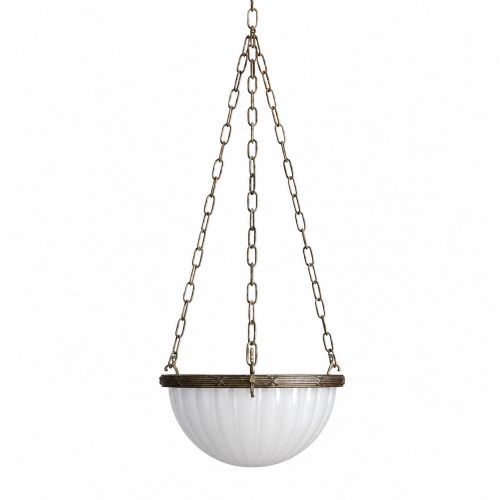
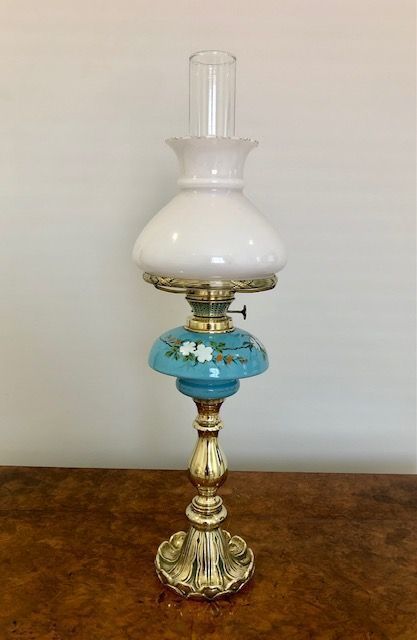
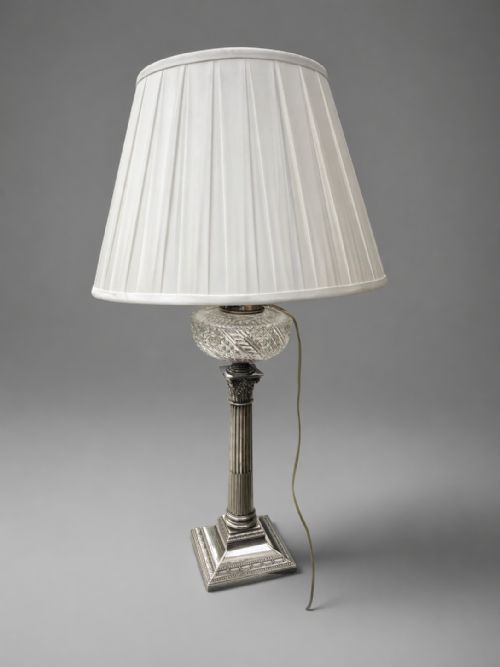

White Glass Shade Light
These white glass shade light designs range from Victorian oil lamps to Art Deco pendants, bringing authentic period illumination to any room.
White Glass Shade Light
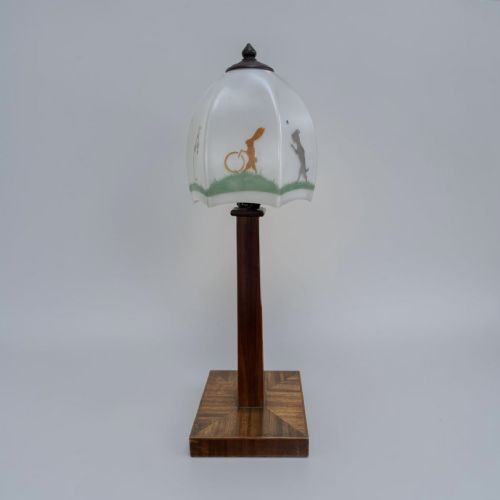
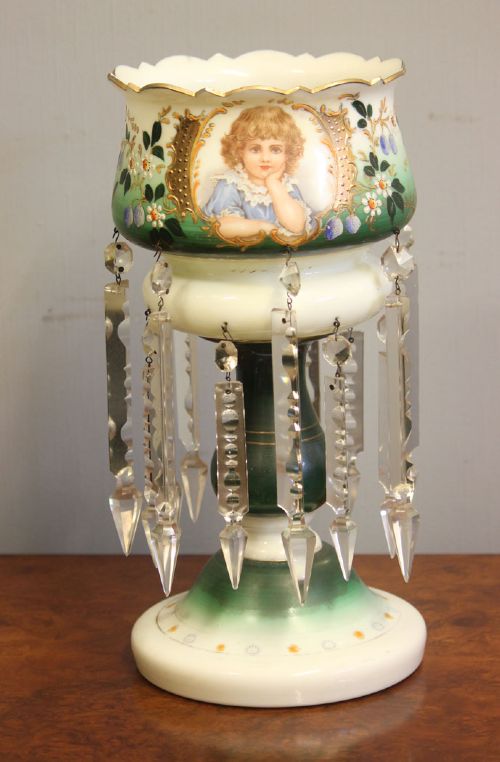
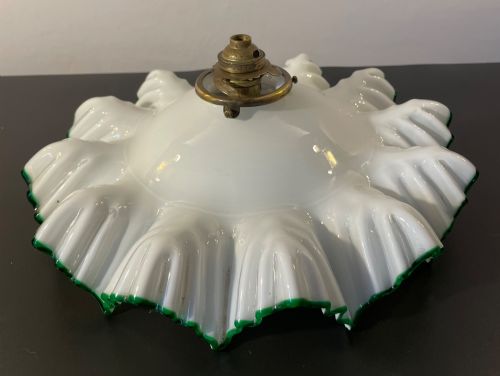
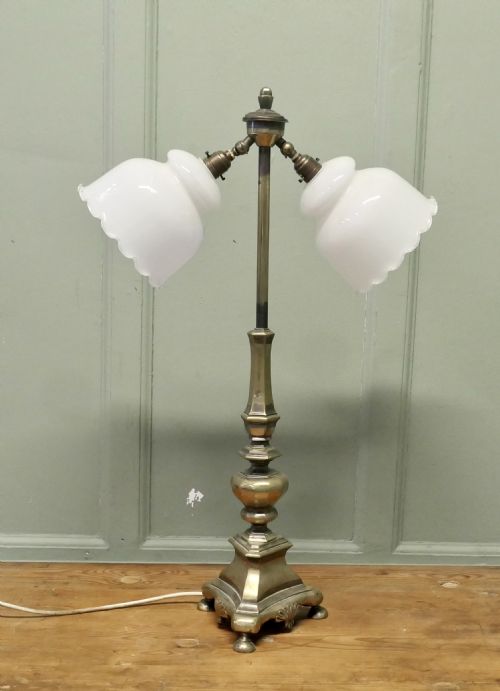
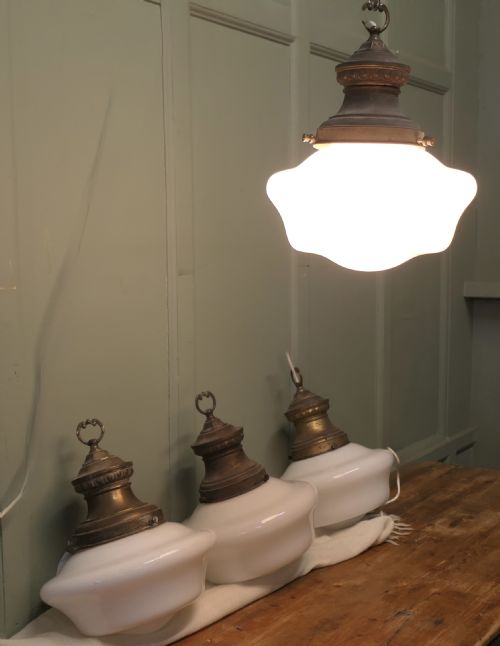
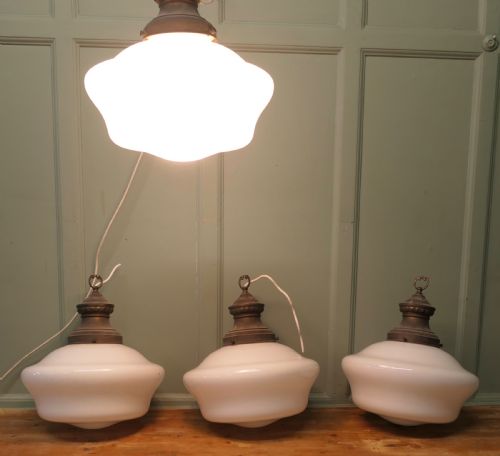
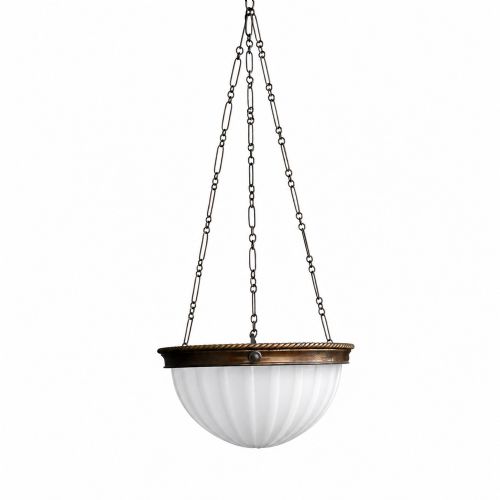
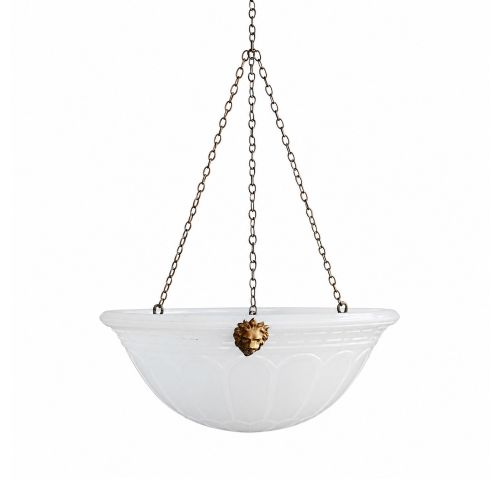
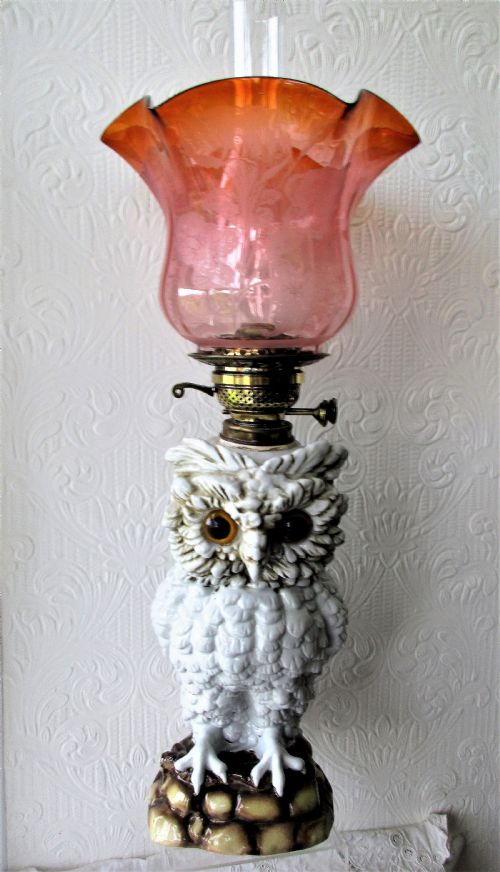
When you search for a white glass shade light, you encounter a diverse collection spanning the Victorian era through the 1930s. The selection includes oil lamps, pendant lights, ceiling lights, table lamps, and individual lamp shades.
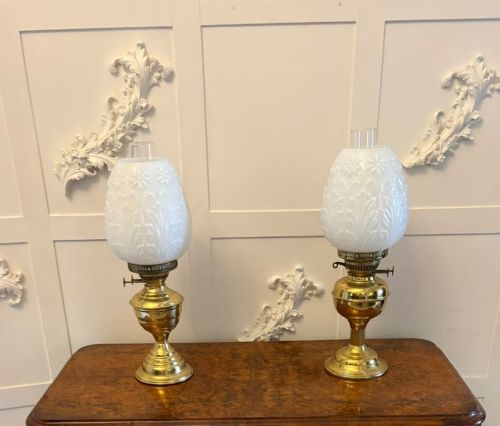
The most common versions on this page are Edwardian and Victorian brass oil lamps fitted with opaline or opal glass shades, alongside early 20th century industrial and Art Deco pendants. Originating from English, French, and German workshops, these items serve both functional lighting and decorative roles.
Materials and Construction
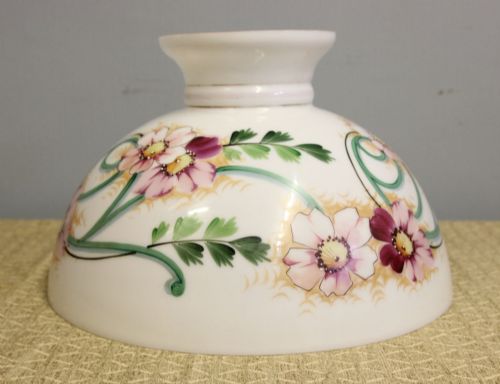
Makers combined blown or moulded white glass - such as opaline, opal, and moonstone glass - with structural elements of brass, metal, or ceramic. Many shades received hand-painted details or decorative frills during production.
Mountings frequently utilise cast brass columns, bronze, or ormolu, while bases often incorporate black glass or ceramic elements to provide stability for oil lamps and heavy pendants.
Materials recorded across the inventory include brass, opaline glass, cut glass, ceramic, porcelain, and ormolu.
Distinctions in Quality
Quality depends upon the weight and clarity of the glass, the crispness of moulded or cut crystal details, and the substance of the metal mounts. Heavier cast brass and refined porcelain figures indicate superior craftsmanship.
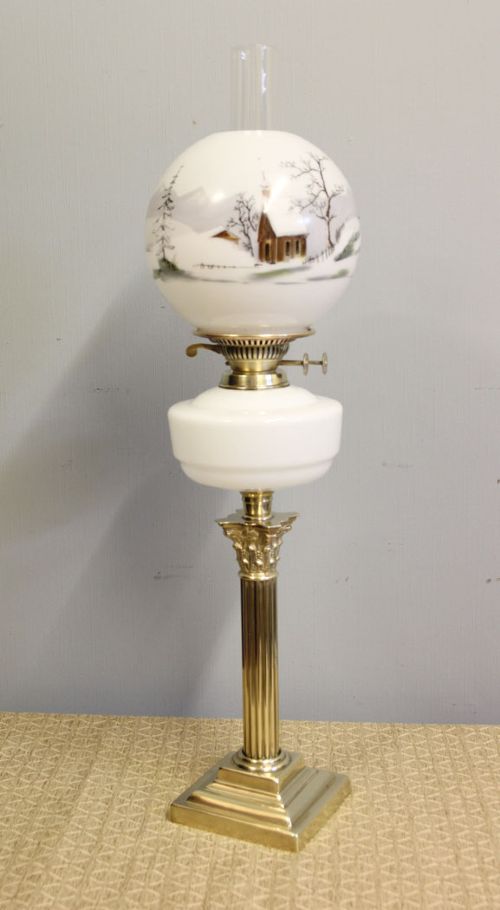
The sophistication of the metalwork, such as Corinthian column details or intricate ormolu framing, separates standard utility lighting from high-status parlor pieces.
Sitzendorf·Wild & Wessel·Farraday & Son·Jefferson
The White Glass Shade Light Glossary
- Opaline glass
- A semi-translucent white glass developed to diffuse light softly. It appears widely across Victorian and Edwardian shade designs.
- Plafonnier
- A ceiling-mounted bowl light shade, often glass, sitting close to the ceiling. Neo-classical examples feature painted glass designs.
- Mantel lustre
- A decorative Victorian mantelpiece ornament featuring glass prisms hanging from a central body. They often match the aesthetic of period oil lamps.
- Moonstone glass
- A type of milky, translucent art glass popular in early 20th century pendant lights. It creates a smooth, even glow.
- Oil lamp
- A lighting device fueled by oil, commonly adapted to electricity later. Period versions feature brass reservoirs and decorative glass shades.
White Glass Shade Light: Frequently Asked Questions
What is a white glass shade light?
A white glass shade light is a vintage or antique lighting fixture featuring a diffuser made from opaque, opaline, or moonstone glass.
These pieces encompass pendant lights, oil lamps, and ceiling fixtures spanning from the Victorian period to the 1930s.
How do I identify a Victorian oil lamp?
Victorian oil lamps typically combine heavy brass or ceramic bases with dedicated glass fonts and matching chimneys or shades.
Many examples incorporate Corinthian columns, painted floral motifs, or cut glass elements dating from the late 19th century.
Where were these lights used originally?
Original placements included Victorian parlors, Edwardian dining rooms, and early 20th century industrial workspaces or pharmacies.
Desk lamps and table lamps provided task lighting, while ceiling pendants illuminated larger communal spaces.
How do I live with antique glass lights?
Living with these fixtures involves pairing period aesthetics with modern electrical standards for safe daily use in your home.
Regular gentle dusting preserves the surface of opaline and moonstone glass shades without damaging the vintage materials.
What defines Art Deco lighting here?
Art Deco lighting from the 1930s emphasises geometric forms, clean lines, and streamlined opaline or frosted glass shapes.
These pieces often utilise simplified brass or metal suspension hardware rather than ornate Victorian casting.