
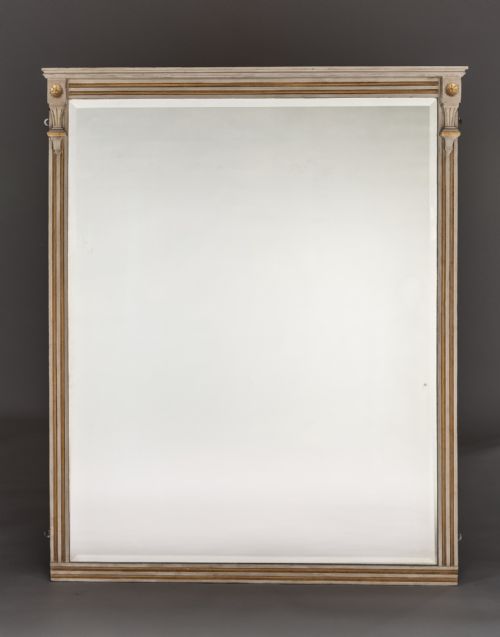
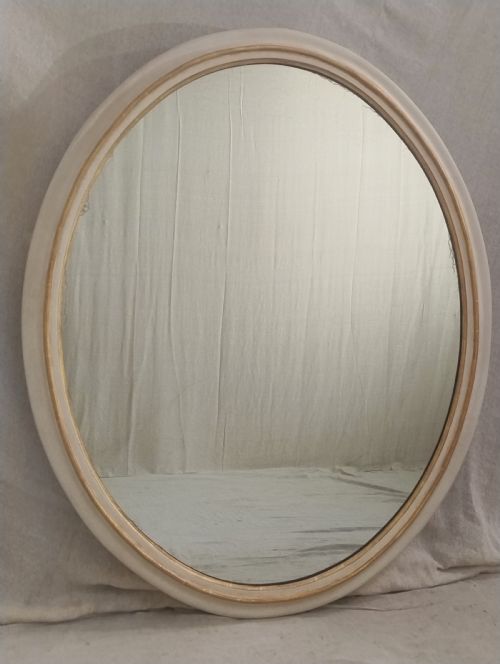


White Gilt Wall Mirror
A white gilt wall mirror brings light and classical proportion into a room, combining painted surfaces with bright metallic highlights.
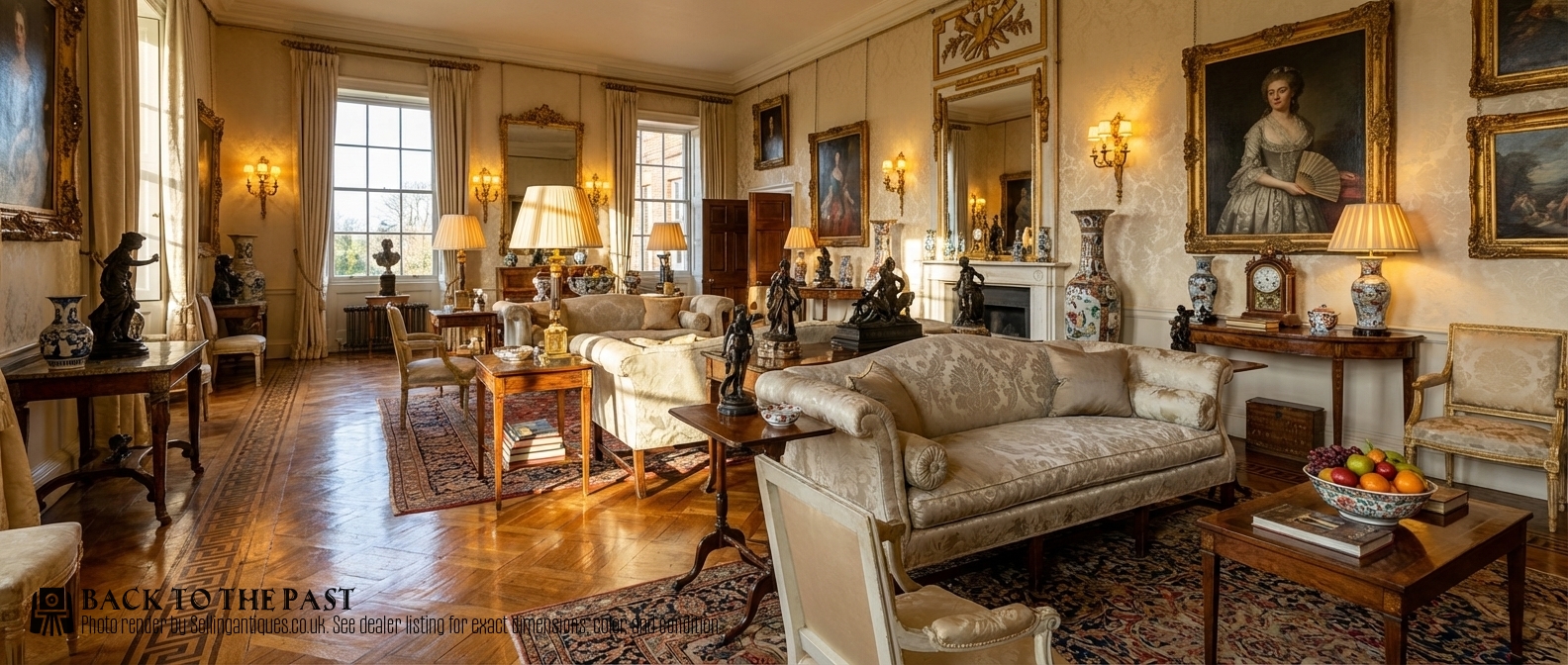
White Gilt Wall Mirror
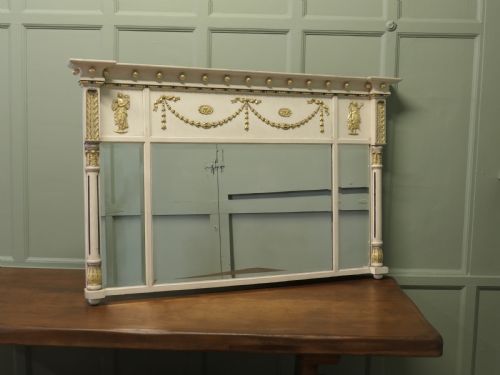
A white gilt wall mirror is typically found in large formats designed for domestic interiors, with overmantel mirrors forming a significant portion of the selection. These pieces span the nineteenth and early twentieth centuries, drawing on Victorian, Edwardian, and Regency aesthetic traditions.
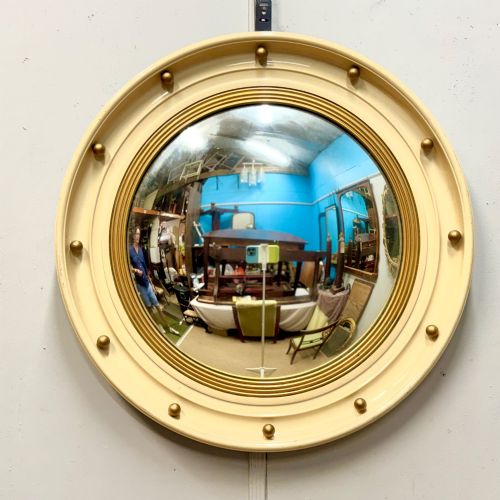
The dominant aesthetic combines painted white or off-white woodwork with parcel-gilt details, creating a lighter visual weight than solid dark timber frames. Common configurations include triple-plate formats, convex glass round mirrors, and grand overmantel designs suited for placement above a fireplace.
How they were made
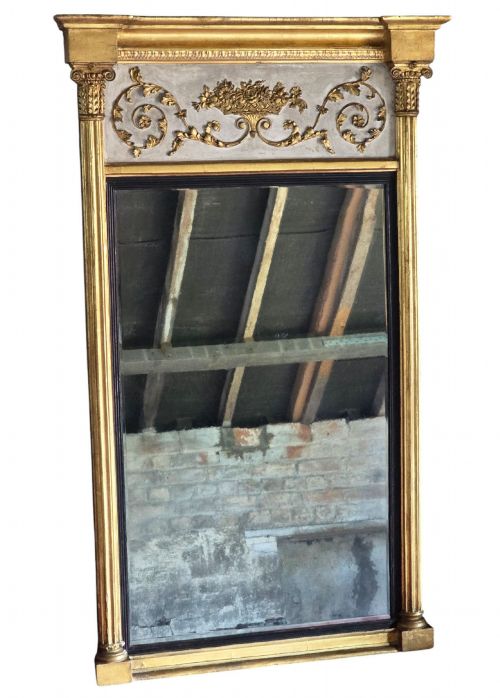
Makers constructed the structural frames from wood, applying layers of gesso to build up intricate ornamentation before applying gold leaf or paint. Carved wooden elements and moulded gesso formed the basis for classical motifs, which were then highlighted with gilt highlights against painted surfaces.
Surface finishes rely on traditional paint and gold leaf applied over timber and gesso grounds. Many surviving pieces show the natural distress of age, where over-painting, crackle finishes, and the underlying gesso interact through decades of wear.
Convex butler mirrors were once placed in dining rooms so servants could monitor the entire table discreetly from a single corner.
What varies in quality
Quality rests in the crispness of the carved wood and gesso ornamentation, where deep relief moulding and hand-carved detail distinguish finer works from simpler production pieces. The proportion of the frame to the mirror plate also governs the visual balance of the object.
The integrity of the original surfaces separates exceptional items from heavily altered examples, particularly regarding the preservation of early paint layers and genuine gold leaf. The clarity and weight of the mirror glass itself further indicate the standard of the piece.
The White Gilt Wall Mirror Glossary
- Gesso
- A plaster mixture applied to wood frames to create a smooth surface for carving and gilding. This material allows for intricate relief decoration that holds gold leaf effectively.
- Overmantel mirror
- A large horizontal mirror designed specifically to hang above a fireplace mantelpiece. These pieces often feature extensive moulding and multiple mirror plates.
- Parcel-gilt
- A decorative treatment where only specific raised portions or details of an object are gilded with gold leaf. The rest of the surface is typically painted or left as exposed wood.
- Trumeau
- A decorative wall mirror or panel, often incorporating painted scenes or carved woodwork within an architectural setting. French examples from the nineteenth century frequently employ this format.
- Convex glass
- A curved mirror plate that provides a wide-angle reflection of the room. These are commonly found in round butler or parlour mirrors from the late nineteenth century.
White Gilt Wall Mirror: Frequently Asked Questions
How do I clean a gilt mirror frame?
Dust the frame gently with a soft, dry brush to remove surface particles without disturbing the delicate gold leaf or painted finish.
Avoid using liquid cleaners, water, or chemical sprays, as moisture can damage the underlying gesso and lift the gilding from the wood.
Where should I hang an overmantel mirror?
These large mirrors are traditionally placed directly above a fireplace mantelpiece to reflect light and anchor the focal point of the room.
Ensure the wall fixings are secured firmly into structural studs or masonry, as nineteenth-century frames carry considerable weight.
What is the difference between Regency and Victorian styles?
Regency designs lean towards classical restraint, drawing inspiration from neoclassical and architectural forms with clean, balanced proportions.
Victorian pieces often display heavier ornamentation, embracing revival styles like Rococo and Italianate with elaborate moulded gesso details.
Are original mirror plates usually bevelled?
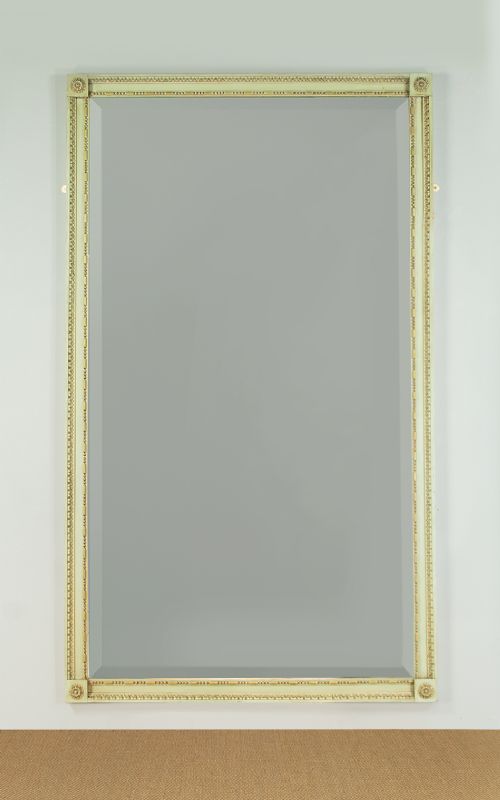
Many nineteenth-century and Edwardian mirror plates feature flat glass with polished edges rather than heavy bevels, depending on the specific period and style.
Original glass often shows minor foxing and speckling, which collectors value as proof of age rather than a defect.