
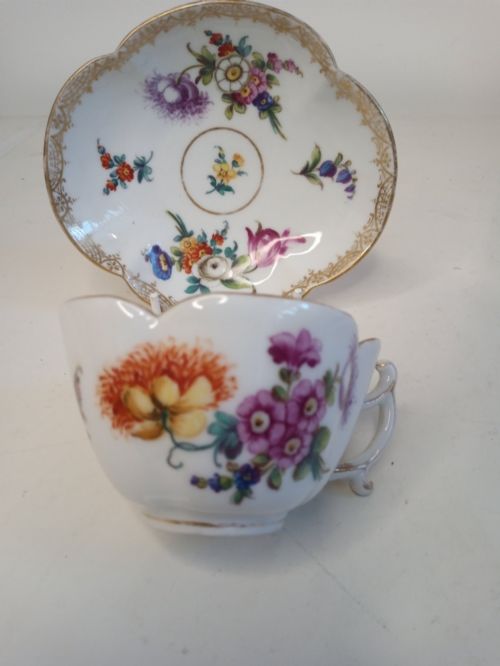


White Floral Porcelain Cup
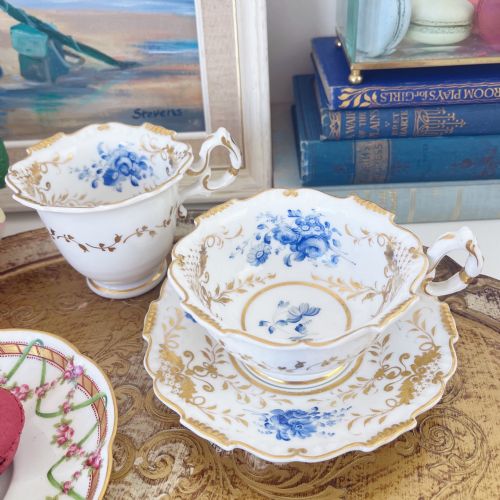
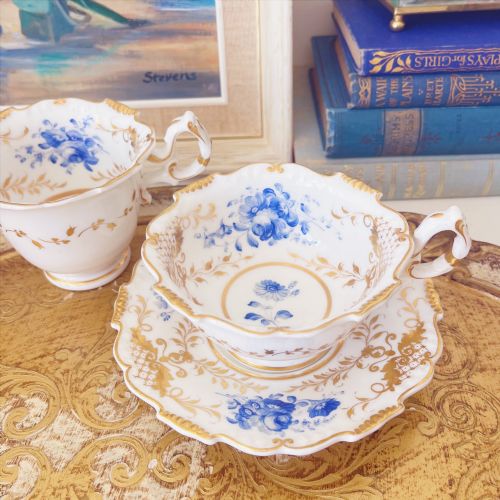
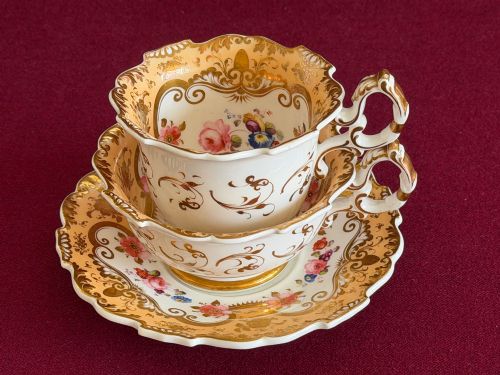
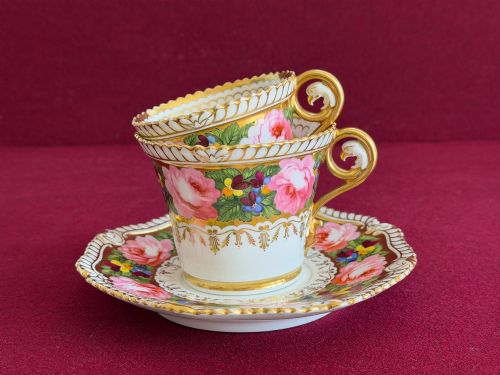
A white floral porcelain cup brings centuries of handpainted botanical artistry directly to the table.
White Floral Porcelain Cup
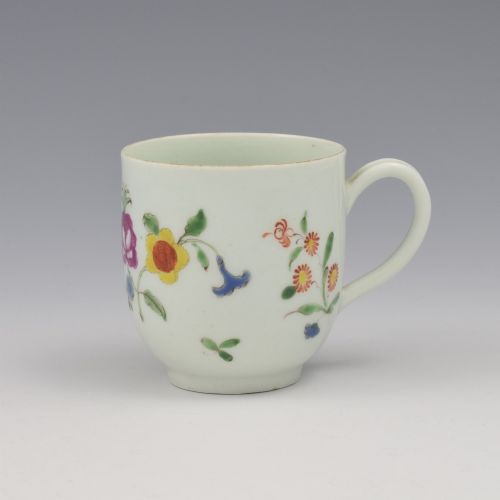
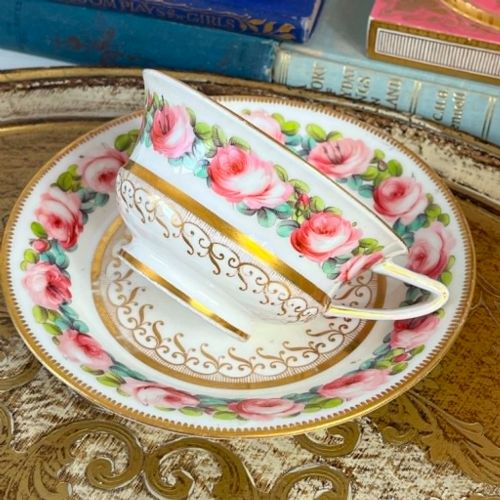
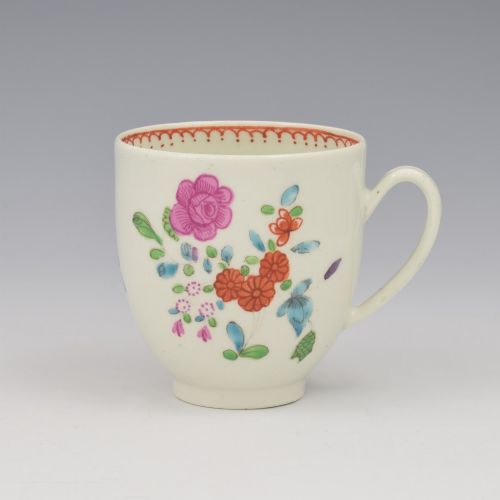
A white floral porcelain cup encompasses teacups, coffee cups, demitasses, and broth cups originating from the eighteenth century through the early twentieth century. Pieces on this page span Georgian, Regency, Victorian, and Edwardian periods, alongside Chinese export wares.
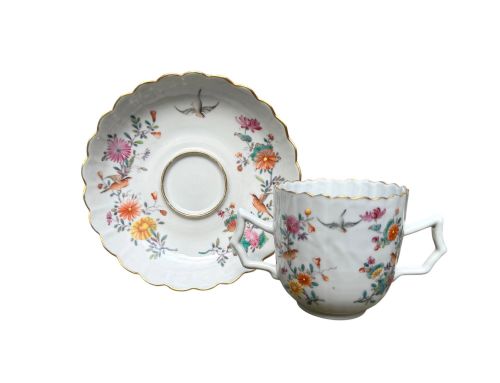
Most examples appear alongside matched saucers or stands as duos and trios, taking forms from simple teabowls to pedestal and cabinet cups. Makers and factories range from English potteries like Worcester, Coalport, and Daniel to continental houses such as Meissen, KPM, and Richard Ginori.
Buyers encounter handpainted botanical motifs, notably pink cabbage roses and Dresden flowers, rendered across porcelain and bone china bodies. These vessels served tea, coffee, and broth in domestic and formal settings across generations.
Judging quality
Quality rests upon the precision of the handpainted botanical brushwork and the refinement of the porcelain or bone china body. Superior examples display crisp floral detailing, delicate potting, and skilled application of gold leaf or gilding.
The sophistication of the form, whether a standard teacup or a cabinet cup with intricate handles, distinguishes standard production from exceptional artistry. Maker attribution, such as early Worcester or Daniel output, further defines the standing of a piece.
Listings feature porcelain, bone china, enamel, and gold leaf across eighteenth-century, Regency, and Victorian periods.
H & R Daniel·Chamberlain Worcester·Richard Chaffers·Coalport·Meissen·Yates·Richard Ginori·Minton·Spode Copeland·KPM·Royal Worcester·Hirsch Dresden
The White Floral Porcelain Cup Glossary
- Teabowl
- A handleless drinking vessel used for tea before the widespread adoption of handled teacups. These forms were standard in eighteenth-century sets.
- Demitasse
- A small cup used for serving strong black coffee or espresso. They frequently appear paired with matching saucers.
- Broth cup
- A two-handled vessel designed for consuming light soups or broths. Lidded versions also occur within nineteenth-century production.
- Gilding
- The application of gold leaf or gold paint to ceramic surfaces for decoration. This technique highlights rims, handles, and motifs.
- Famille rose
- A palette of opaque enamel colours dominated by pink, used on Chinese porcelain. The style influenced European ceramic decoration.
White Floral Porcelain Cup: Frequently Asked Questions
What is a white floral porcelain cup?
A white floral porcelain cup is a drinking vessel featuring handpainted botanical motifs on a white ceramic body. These pieces include teacups, coffee cups, and demitasses produced by European and Chinese makers.
They reflect aesthetic styles ranging from eighteenth-century rococo and Regency elegance to Victorian and Edwardian manufacturing. Most examples survive alongside their original saucers.
How were these cups used?
These vessels functioned primarily during formal tea and coffee services in domestic households. Different shapes accommodated specific drinks, from teabowls for early tea infusions to demitasses for coffee.
Larger handled cups served broth or functioned as cabinet pieces displayed in drawing rooms. Their delicate materials suited genteel social rituals.
How do I care for antique porcelain?
Antique porcelain requires gentle hand washing in lukewarm water with mild soap. Dishwashers and abrasive sponges damage delicate enamels and gold leaf gilding.
Storing pieces safely prevents chipping on fragile rims and handles. Sudden temperature changes can also stress historical ceramic bodies.
How do I identify the period?
Period identification relies upon ceramic paste characteristics, potting styles, and handpainted decorative motifs. Georgian and Regency pieces often feature distinct handle shapes and enamel palettes.
Factory marks, when present on the underside, provide specific manufacturing eras. Stylistic cues such as bat wing patterns or Dresden flowers point to nineteenth-century production.