




White Dial Mantle Clock
A white dial mantle clock brings brass, enamel and steady French movement to a room.
White Dial Mantle Clock
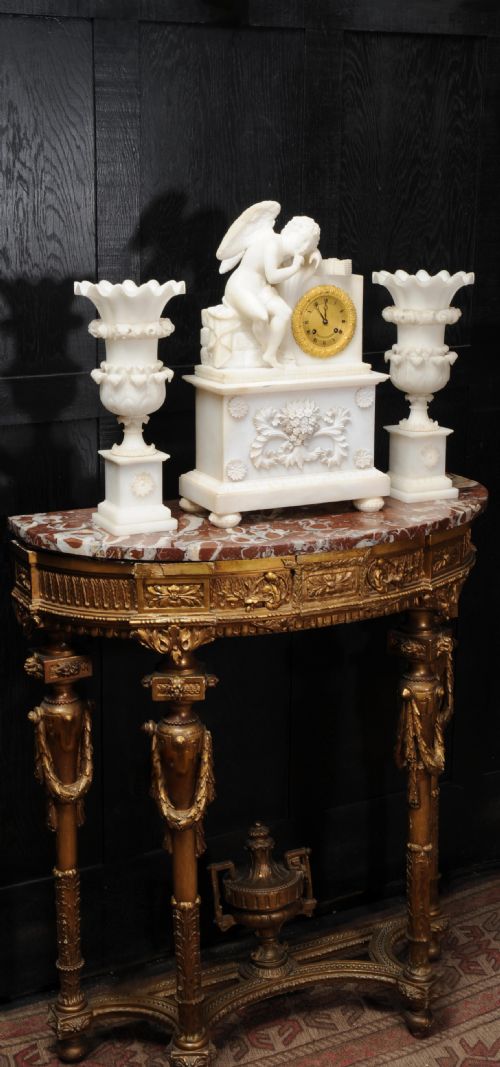
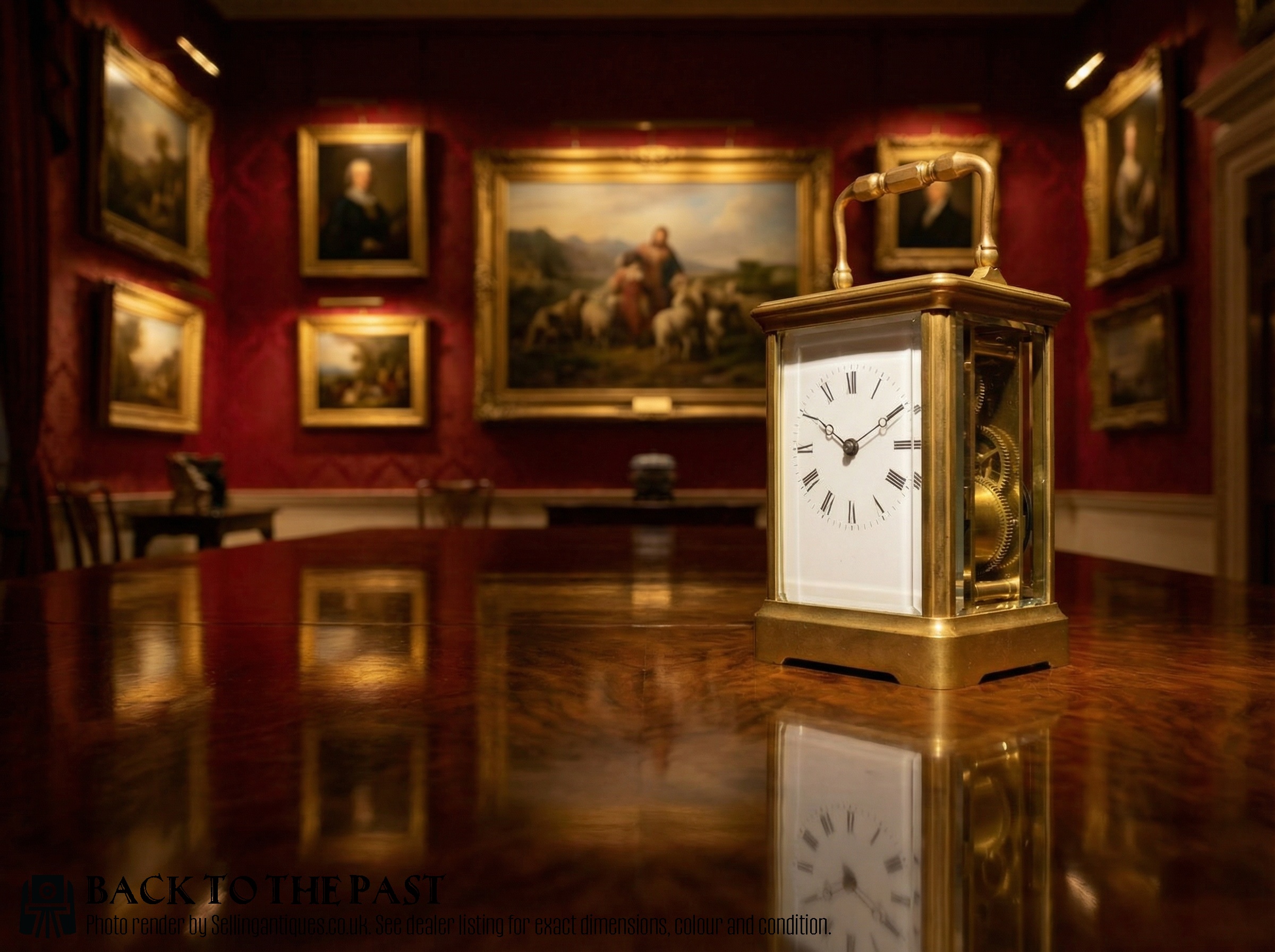
A white dial mantle clock spans compact carriage forms and substantial mantel pieces originating from the nineteenth century into the Edwardian period. Buyers encounter miniature brass designs alongside French repeating clocks housed in gorge cases and decorated with enamel dials.
The selection ranges from Victorian carriage models to ornate Louis XVI revival pieces and marble clock sets. These objects combine timekeeping utility with the distinct decorative styles of the Belle Epoque and Georgian revival periods.
Materials and construction methods
Clockmakers constructed these pieces utilising brass, gilt brass, and ormolu alongside structural elements of white marble, alabaster and glass. Cases often feature intricate hand engraving and engine turned brass masks surrounding the central enamel dial.
Mechanisms incorporate striking and repeating functions, sometimes mounted on bells and housed within robust brass framing. Miniature versions demand precise micro mechanical assembly to fit complex gear trains into compact table cases.
White Dial Mantle Clock Retail Price Guide 2026
Typical asking prices for white dial mantle clock among the pieces listed under this phrase on Sellingantiques today, from the lower quarter to the upper quarter. They describe what is for sale here now, not the wider market.
Some nineteenth century carriage clocks were built with specialised horse racing interest complications for nineteenth century trackside timekeepers.
Distinguishing quality factors
Superior examples separate themselves through the crispness of case engraving, the presence of original gilding, and the integration of complications such as alarm or petit sonnerie functions. The weight of the brass housing and the clarity of the painted white enamel numerals directly reflect the workshop standard.
The completeness of matching fitted leather travel cases and the preservation of original glass panels influence the standing of a piece. Finer items exhibit precise finishing on interior movement plates and well executed decorative detailing on the dial face.
Charles Frodsham·Holingue Frères·Henry Jacot
The White Dial Mantle Clock Glossary
- Carriage clock
- A portable spring driven timepiece originally designed for officers travelling in carriages, usually featuring a brass frame with glass panels.
- Gorge case
- A stepped rectangular brass carriage clock case style with a moulded cornice at the top and base.
- Petit sonnerie
- A striking clock movement that chimes the hours and quarters automatically as they pass without needing a pull cord.
- Ormolu
- Gilt bronze decoration applied to metalwork and clock cases, providing a rich golden surface finish over bronze.
- Engine turned
- A mechanical decorative technique producing precise geometric patterns engraved into metal surfaces such as clock masks.
- Enamel dial
- A metal dial face covered with fused powdered glass, creating a smooth white background for painted Roman or Arabic numerals.
White Dial Mantle Clock: Frequently Asked Questions
How do I wind a carriage clock?
Most mechanical models use a dedicated key inserted into winding squares located on the underside or back plate of the movement. Turn the key gently until resistance signals the mainspring is fully tensioned.
Avoid overwinding, as this places excessive strain on the internal springs and can damage the delicate escapement mechanism.
What is a repeating carriage clock?
A repeating movement allows the owner to press a button or cord on the top of the case to sound the last elapsed hour and quarters on demand. This function proved useful for telling time in the dark before electric illumination.
Such mechanisms require additional gear trains and intricate lever systems within the brass housing.
How do I distinguish French and English clocks?
French pieces from this era frequently utilise platform escapements visible through glass panels and often incorporate striking or repeating complications on small bells. Many carry maker marks from Paris workshops on the back plate.
English interpretations often follow domestic revival styles with distinct casework proportions and different signature engraving styles.
Where should I place a mantle clock?
Position the clock on a stable, level surface away from direct sunlight, excessive moisture and heavy drafts. Mantel shelves, sideboards and sturdy tables provide suitable support for heavy brass and marble bodies.
Ensuring the surface is level helps the pendulum or balance wheel maintain a consistent beat and accurate timekeeping.