


White Ceramic Sauceboat
A white ceramic sauceboat brings eighteenth-century dining tables to life with sculpted forms and delicate hand-painted motifs.
White Ceramic Sauceboat
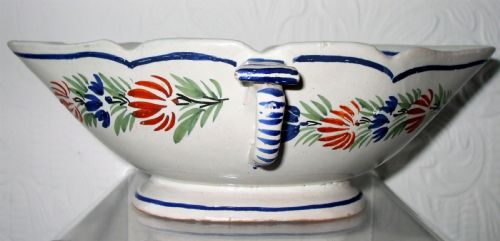
A white ceramic sauceboat is a table vessel designed for serving gravies and sauces, appearing frequently in eighteenth-century forms. These pieces include moulded cream boats and double sauceboats across Georgian and French Country styles.
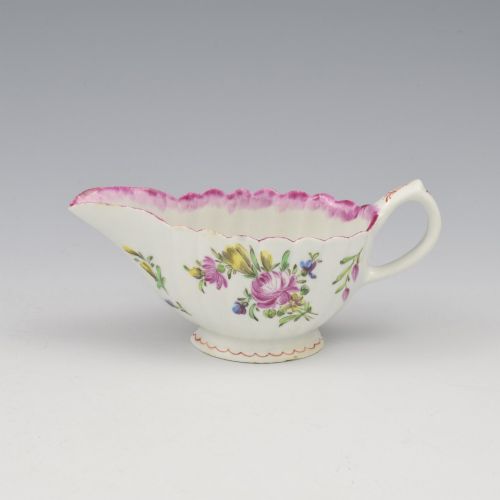
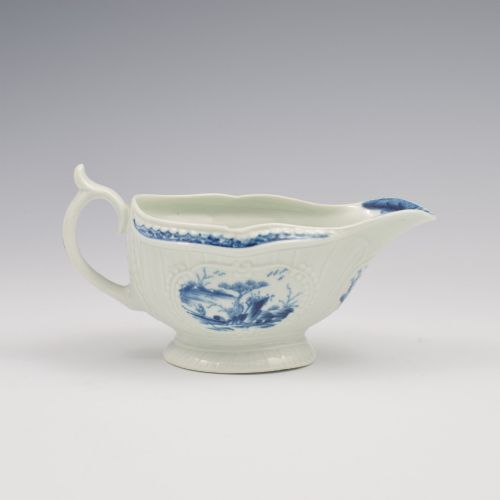
The selection here draws primarily from eighteenth-century soft-paste porcelain and nineteenth-century faience and earthenware. Examples range from fluted Bow porcelain to early Worcester blue and white patterns.
Moulded shapes mimic natural forms such as lettuce leaves or feature triangular platforms and dolphin ewers with lamprey handles. Such vessels combine utility with sculptural modelling characteristic of the period.
Materials and construction
Potters shaped soft-paste porcelain and earthenware into intricate moulds, producing fluted bodies, lettuce forms, and dolphin ewers. These methods allowed workshops to achieve crisp relief details like the lamprey handles on dolphin ewers.
Decoration relied on cobalt glaze and enamel paints applied by hand over or under the glaze. Chinese figures, floral sprays like the rose pattern, and landscape scenes such as the fisherman and billboard island defined the surface aesthetic.
Some eighteenth-century potters gave sauceboats playful handles shaped like sea lampreys clinging to dolphins.
Assessing quality
Quality rests on the crispness of the moulded relief and the precision of the hand-painted cobalt or enamel decoration. Pieces with complex modelling, such as dolphin ewers or lettuce forms, demand greater skill from the potter.
The clarity of the glaze and the refinement of the paste separate standard domestic wares from exceptional factory productions. Early soft-paste porcelain bodies exhibit a translucency and warmth distinct from later earthenware.
Bow Porcelain·Dr Wall Worcester·Chelsea Derby·Quimper
The White Ceramic Sauceboat Glossary
- Soft-paste porcelain
- An artificial porcelain composition fired at lower temperatures than hard paste, developed by European factories in the eighteenth century. It typically shows a warm, slightly creamy body under the glaze.
- Faience
- Tin-glazed earthenware produced in France and other European regions, often decorated with bright hand-painted colours. The opaque white glaze provides a smooth ground for folk motifs and provincial patterns.
- Cobalt glaze
- A metallic oxide pigment used to produce deep blue decoration under the transparent glaze. It withstands high firing temperatures and remains stable on early porcelain and earthenware.
- Cream boat
- A small vessel closely related to the sauceboat, historically used for serving cream at the table. These pieces share the moulded handles and spouts of their larger counterparts.
- Dolphin ewer
- A vessel form incorporating moulded dolphin motifs into the body and handle structure. Eighteenth-century porcelain factories utilised this sea-life theme for fanciful sauce and cream boats.
White Ceramic Sauceboat: Frequently Asked Questions
How were these sauceboats used?
Historical dining practices involved placing these vessels on the dining table to hold warm gravies, melted butter, or sweet sauces. Their spouts and handles allowed servants or diners to pour liquids cleanly.
Beyond dining tables, many examples functioned as part of larger matching service sets alongside platters and tureens.
How do I care for antique porcelain?
Antique porcelain and faience require gentle hand washing in warm water using mild soap. Avoid modern dishwashers, harsh scrubbers, and extreme temperature changes.
Display these pieces away from direct sunlight and secure them on stable surfaces to protect their historical glazes and delicate handles.
How can I tell eighteenth-century pieces apart?
Eighteenth-century pieces are identified through their paste composition, glaze characteristics, and painting styles. Early soft-paste porcelain often displays characteristic potting flaws and a warm tone under strong light.
Stylistic markers such as Georgian chinoiserie figures, distinct blue and white transfer or painted patterns, and specific maker motifs help narrow down dates.