


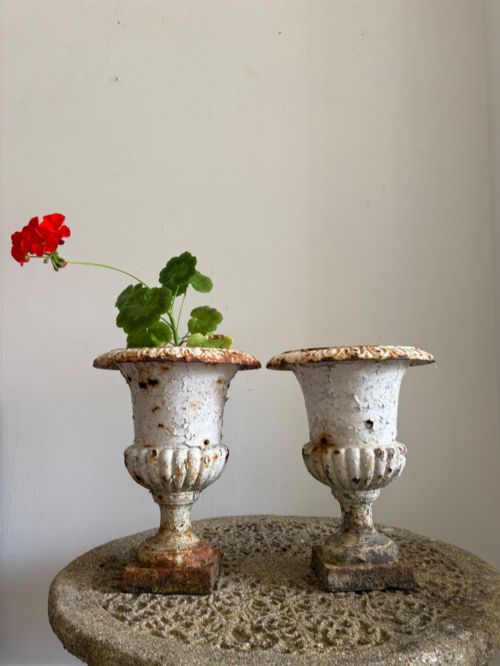
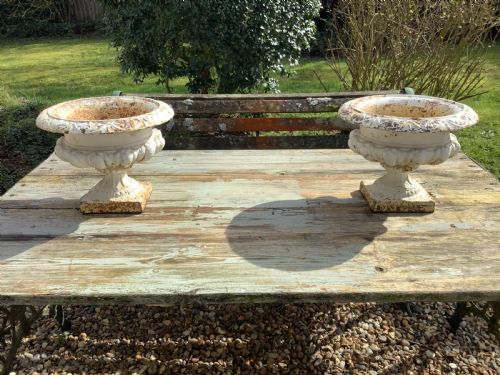


White Cast Iron Urns
White cast iron urns bring classical presence to gardens and terraces, offering enduring form and robust structure through decades of weathering.
White Cast Iron Urns
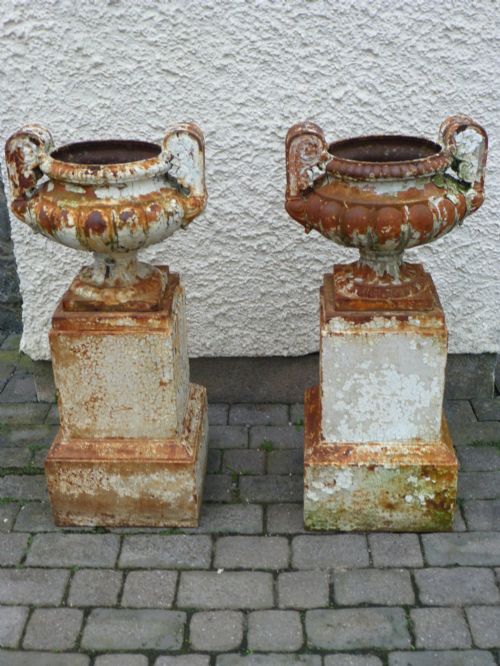
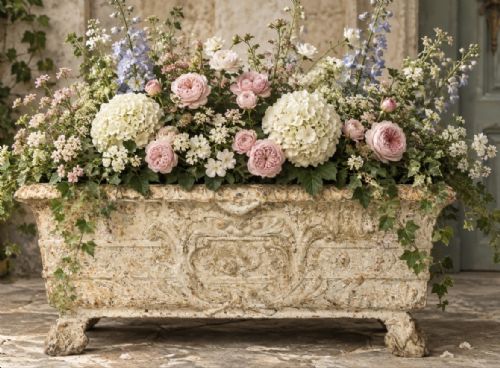
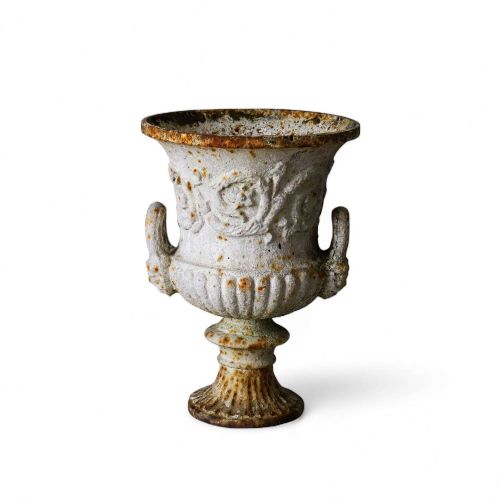
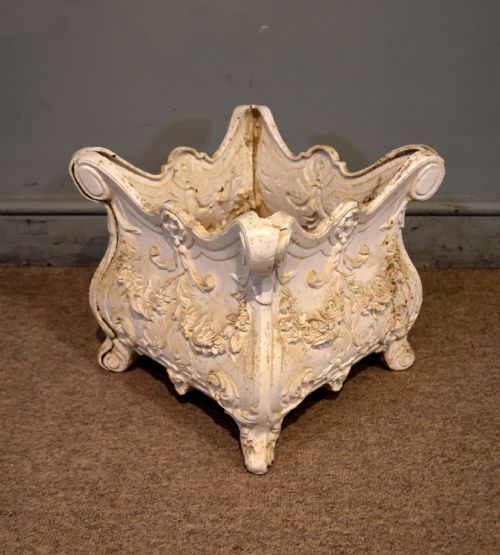
White cast iron urns encompass garden vessels and planters shaped in classical silhouettes, drawing primarily from nineteenth-century designs. Buyers encountering these pieces will find heavy garden urns, campana shapes, and tazza forms raised on plinths or pedestals.
The selection centres on nineteenth-century examples, spanning the Regency period through the Victorian era up to the nineteen-twenties. These vessels serve practical roles as garden planters while providing a strong architectural focal point outdoors.
What varies in quality
Quality rests in the crispness of the casting and the balance of the classical proportions, where finer pieces display sharp relief work on foliage and fluting. The presence of matching original plinths or pedestals elevates the standing of a pair.
The distinction also lies in the historical provenance of the foundry work, separating standard commercial castings from notable foundry production. Weathered surfaces and layers of historic paint contribute character when the underlying metal remains sound.
White Cast Iron Urns Retail Price Guide 2026
Typical asking prices for white cast iron urns among the pieces listed under this phrase on Sellingantiques today, from the lower quarter to the upper quarter. They describe what is for sale here now, not the wider market.
Some nineteenth-century garden urns carry decades of stubborn white paint that stubbornly resists British weather, outlasting several generations of gardeners.
Falkirk Carron Foundry·Coalbrookdale·Andrew Handyside
The White Cast Iron Urns Glossary
- Campana
- A bell-shaped garden urn with a flaring rim and a tapering body. This form derives from ancient Roman pottery and metal vessels.
- Tazza
- A shallow bowl-shaped urn or cup raised upon a stem and foot. Such vessels often feature decorative handles or gadrooned borders.
- Gadrooning
- A decorative carved or cast motif consisting of convex curves or flutes in a parallel series. This ornament frequently edges the rim of an urn.
- Acanthus
- A classical leaf ornament derived from Mediterranean flora, widely utilised in stone and iron ornamentation. It appears frequently on the body or base of nineteenth-century urns.
White Cast Iron Urns: Frequently Asked Questions
How do I care for cast iron urns outdoors?
These robust garden vessels require minimal maintenance beyond occasional cleaning to prevent debris buildup. Ensuring drainage holes remain clear protects the metal from internal water pressure during freezing weather.
Over time, the exterior paint will continue to weather naturally. Applying a protective coating can help preserve surviving historic paint layers if desired.
Can these urns stay outside all winter?
Cast iron stands up well to seasonal temperature shifts, making year-round outdoor placement standard practice for garden urns. The heavy metal construction prevents tipping during high winds.
To prevent cracking from ice expansion, line the interior or ensure soil drains freely before winter arrives. Elevating the base slightly off damp ground also protects the metal.
How do I identify a nineteenth-century urn?
Nineteenth-century pieces often display heavier metal gauge and more pronounced casting seams than later reproductions. Examining the style of ornament, such as Victorian classical revival motifs, helps place the date.
Foundry marks or specific registry numbers, when present, offer definitive clues to the manufacturing origin and period. Weathering patterns on the paint layers also indicate considerable age.
Where should I place an urn in the garden?
Urns work effectively as focal points at the end of path vistas, flanking doorways, or positioned centrally on terrace spaces. Pairing them with matching plinths adds height and architectural presence.
Consider the weight of the piece when choosing a location, as large cast iron vessels require a stable, level surface. Planting trailing foliage or structural shrubs enhances the classical silhouette.