


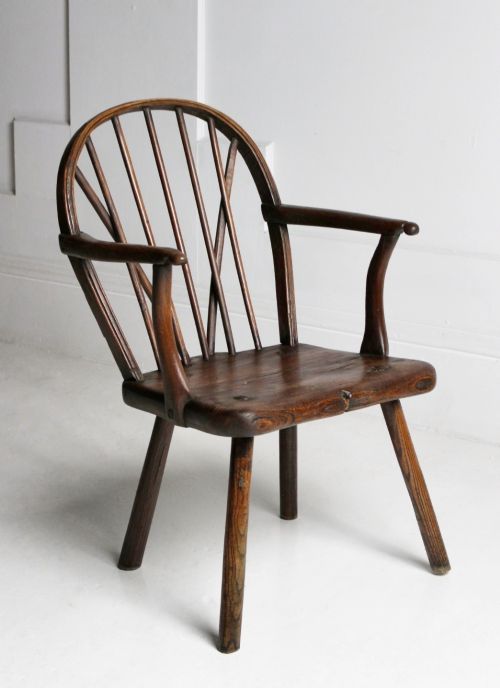


Welsh Vernacular Oak Chair
These pieces are a welsh vernacular oak chair, crafted for daily use in country homes from sturdy native timbers.

Welsh Vernacular Oak Chair
When you search for a welsh vernacular oak chair, you find robust domestic seating originating from Welsh regions such as the Conwy, Swansea, and Carmarthen valleys. These pieces range from substantial armchairs and panelled seats to lighter side chairs and stick backs.
The selection here encompasses various centuries, featuring examples from the seventeenth century through to the nineteenth century. Many pieces incorporate regional forms like comb backs, hoop backs, and lambing chairs, alongside smaller child's versions.
Materials and construction
Makers utilised solid native woods, primarily oak supplemented by ash, elm, and yew-wood panels. Some examples feature painted surfaces or tapestry upholstery to complement the exposed timber.
Joinery techniques rely on traditional pegging, panel construction, and spindle turning. Stick backs and comb backs utilise shaped seats drilled to receive uprights and armbows.
Welsh Vernacular Oak Chair Retail Price Guide 2026
Typical asking prices for welsh vernacular oak chair among the pieces listed under this phrase on Sellingantiques today, from the lower quarter to the upper quarter. They describe what is for sale here now, not the wider market.
Several miniature armchairs and rockers were thoughtfully sized down so the youngest household members could join the fireside.
Distinctions in quality
The character of a welsh vernacular oak chair depends heavily on the balance of its proportions and the integrity of its timber. Generous proportions and thoughtful integration of secondary woods like yew elevate certain examples.
Carved detailing, regional stick-back formations, and early dating from the seventeenth or eighteenth centuries distinguish exceptional survivals from later or simpler country pieces.
The Welsh Vernacular Oak Chair Glossary
- Vernacular
- Domestic furniture built by regional craftsmen using local traditions rather than metropolitan pattern books. These pieces reflect the specific needs and materials of their local area.
- Stick back
- A chair construction method where turned spindles or sticks are tenoned directly into a solid wooden seat. This method provides sturdy support without heavy framework.
- Comb back
- A Windsor-style variation featuring an extended high back topped by a horizontal crest rail resembling the teeth of a comb. This form offers robust head and back support.
- Backstool
- An early term for an upholstered or panelled side chair without arms. They served as versatile seating around domestic tables.
- Lambing chair
- A regional seat featuring panelled sides designed to shield the occupant from drafts. They frequently appear in smaller child sizes.
Welsh Vernacular Oak Chair: Frequently Asked Questions
What is a vernacular chair?
A vernacular chair is a piece made by local country joiners without reference to formal urban styles. They prioritise practical utility and local wood supplies.
These pieces showcase regional building methods passed down through generations of rural makers.
How old are these chairs?
The pieces span from the seventeenth century through the nineteenth century, with Georgian examples being common. Dating relies on construction methods, timber patination, and regional style evolution.
Earlier examples often display panelled construction, while later pieces favour stick and comb back forms.
What woods were used?
Makers relied primarily on oak for main frames and panels. Ash, elm, and yew-wood frequently appear in secondary elements, spindles, and decorative panels.
Some examples also retain early paint finishes or feature tapestry upholstery.
Were these made for children?
Yes, rural makers produced smaller versions including child's armchairs, lambing chairs, and rockers. These functional miniature seats mirrored adult forms precisely.
They provided sturdy seating for children within the domestic Welsh farmhouse.