



Welsh Pot Board Dresser
A welsh pot board dresser brings centuries of country craftsmanship into a room, offering a sturdy timber base with an open lower shelf for display and storage.

Welsh Pot Board Dresser
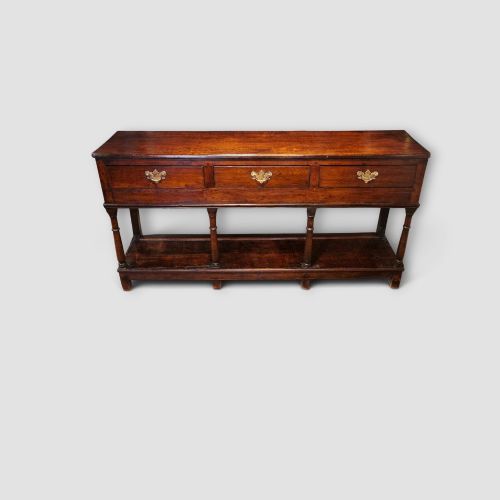
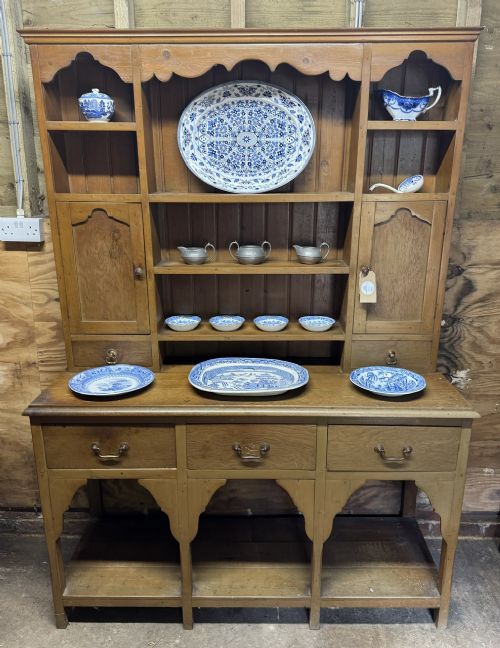
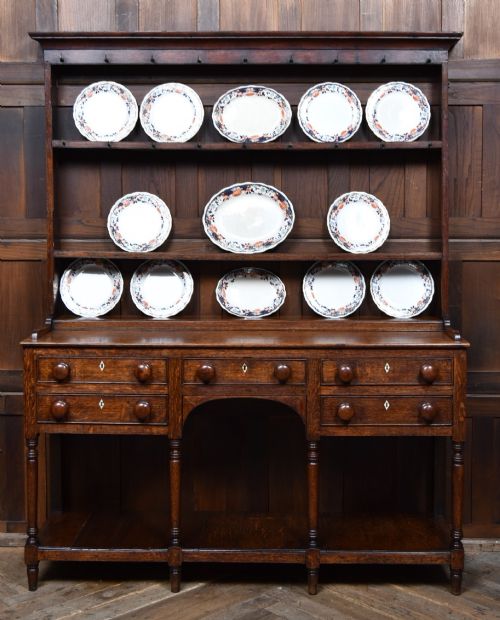
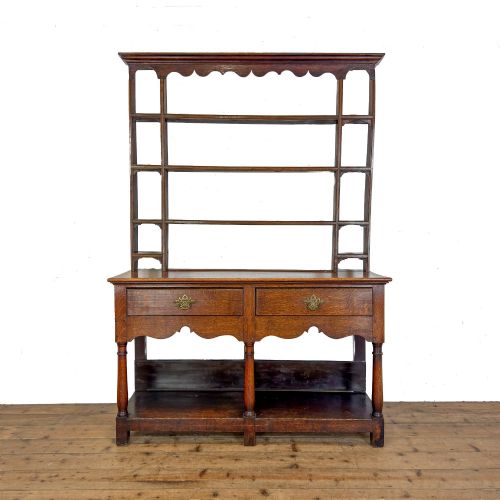
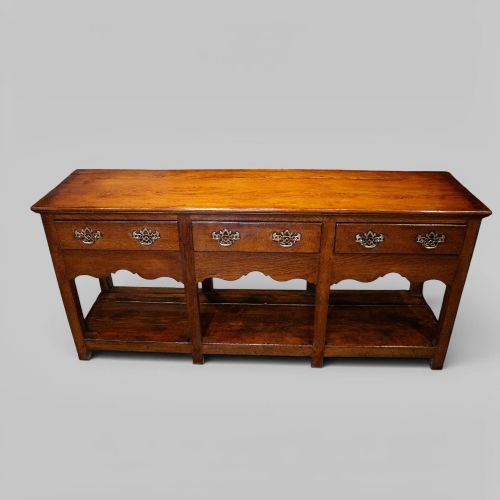
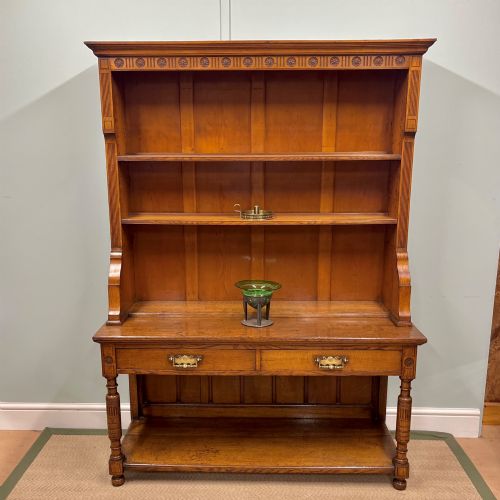
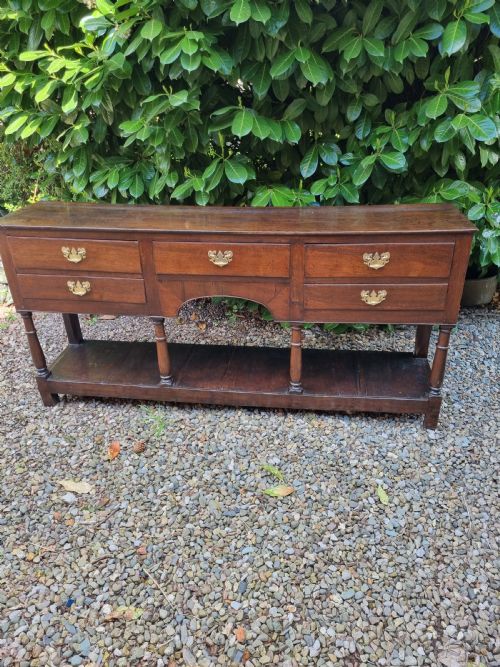
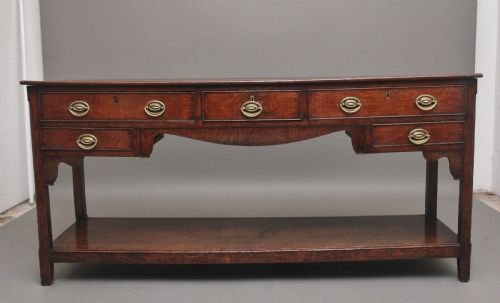
A welsh pot board dresser is a traditional piece of dining furniture combining a lower sideboard base with an open plate rack or flat top surface. The defining feature is the lower pot board shelf, raised off the floor between the legs, originally designed to store pots and pans.
Most examples encountered here originate from the eighteenth and nineteenth centuries, spanning Georgian and Victorian periods. They take the form of either a dresser base alone or a complete unit paired with its original open delph rack.
Regional variations appear across different counties, with examples from mid Wales and Carmarthenshire displaying distinct drawer configurations and proportions. Timber selection typically favours domestic hardwoods, reflecting the vernacular cabinet-making traditions of the countryside.
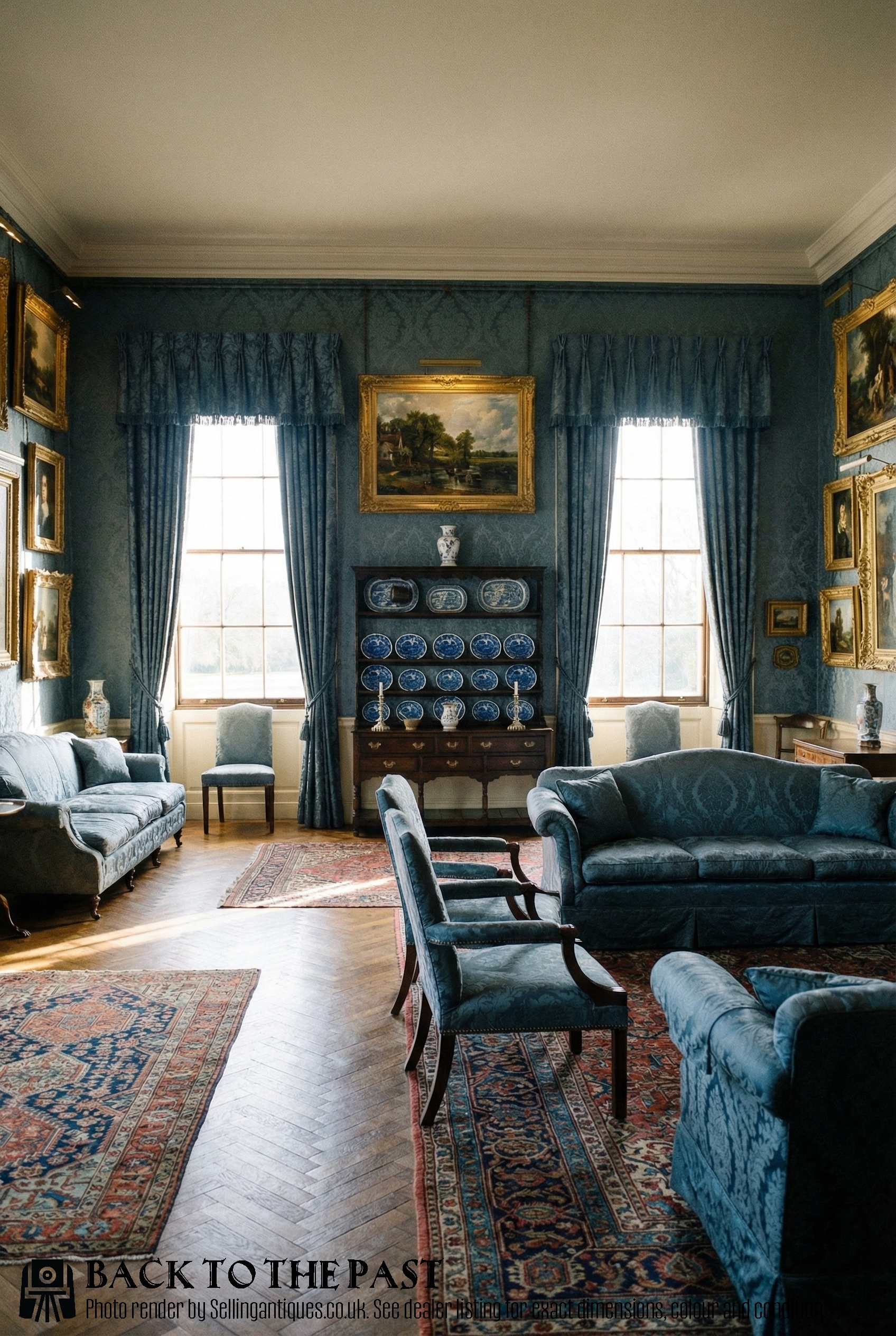
How they were made
Construction relies primarily on solid oak, joined using traditional pegged mortise and tenon methods to ensure rigidity across the base and rack. Secondary timbers such as pine occasionally appear in internal drawer linings and backboards.
Hardware consists of brass pulls and handles, paired with hand-cut dovetail joints on the drawers. Surfaces often retain original patinas, wax finishes, or early painted surfaces built up over generations of domestic use.
Welsh Pot Board Dresser Retail Price Guide 2026
Typical asking prices for welsh pot board dresser among the pieces listed under this phrase on Sellingantiques today, from the lower quarter to the upper quarter. They describe what is for sale here now, not the wider market.
Spice drawers tucked into the superstructure allowed families to keep valuable seasonings close at hand.
What varies in quality
The degree of original surface preservation distinguishes superior examples from heavily restored pieces, with untouched patinas commanding greater appreciation. Proportion and scale also dictate quality, particularly in smaller cottage variants which require finer joinery to maintain structural harmony.
Drawer configuration complexity, such as the inclusion of spice drawers or numerous working drawers, signals higher ambition in the original workshop. The presence of a matching open rack that has remained with the base since manufacture adds considerably to the integrity of the piece.
The Welsh Pot Board Dresser Glossary
- Pot board
- The lower open shelf positioned between the legs of a dresser base, traditionally used for storing heavy kitchen utensils.
- Delph rack
- The wooden plate shelf mounted above the dresser base, designed to display ceramic plates and platters upright.
- Vernacular
- Furniture designed and built by local craftsmen using regional traditions and readily available materials rather than following metropolitan fashion.
- Patina
- The surface sheen and colour developed over decades through oxidation, handling, and regular polishing.
- Dovetail
- A joint formed by interlocking wedge-shaped fingers, commonly used to construct sturdy drawer boxes.
Welsh Pot Board Dresser: Frequently Asked Questions
What is a welsh pot board dresser used for?
These dressers function as versatile storage and display furniture for dining rooms and kitchens. The top surface and open rack hold tableware, while the lower pot board accommodates larger kitchen items or decorative objects.
The drawers provide enclosed storage for cutlery and linens. Historically, they served as the central working hub of a rural household.
How do I date a welsh pot board dresser?
Dating relies on observing construction methods, timber characteristics, and hardware styles. Eighteenth-century examples often feature hand-cut dovetails, pegged joints, and heavy oak planks with deep patinas.
Nineteenth-century variants can incorporate pine secondary woods and slightly lighter framing. Regional design traits also help narrow down the period of manufacture.
Are the plate racks usually original?
Many dressers survive with their matching open racks, though some bases were separated from their upper sections over time. Original racks share the same timber wear, patina, and construction techniques as the base below.
Matching pine or oak grain and consistent joinery indicate that the base and rack started life together.
How do I care for an oak dresser?
Protect the timber by keeping the piece away from direct heat sources and sudden temperature fluctuations. Regular application of a traditional beeswax helps nourish the wood and maintain the natural patina.
Avoid using modern silicone sprays or harsh chemical cleaners on antique surfaces.