



Weathered Iron Planter Pair
These weathered iron planter pair selections bring heavy classical form and aged garden character directly to terraces, lawns and courtyards.
Weathered Iron Planter Pair
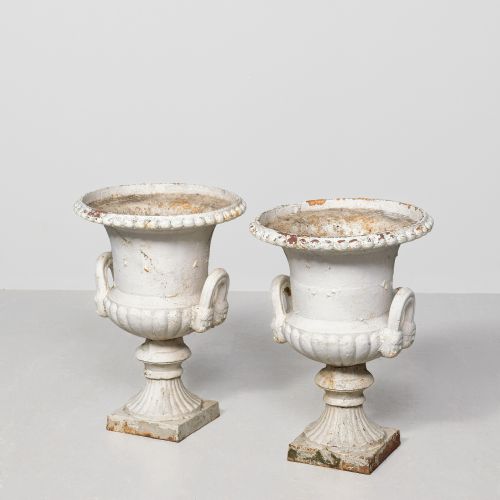
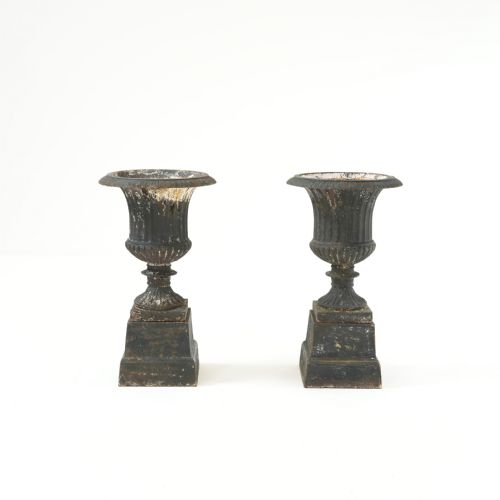
A weathered iron planter pair brings matching symmetry to outdoor spaces, most frequently appearing as cast iron garden urns and campana vessels originating from the nineteenth century and the Victorian era.
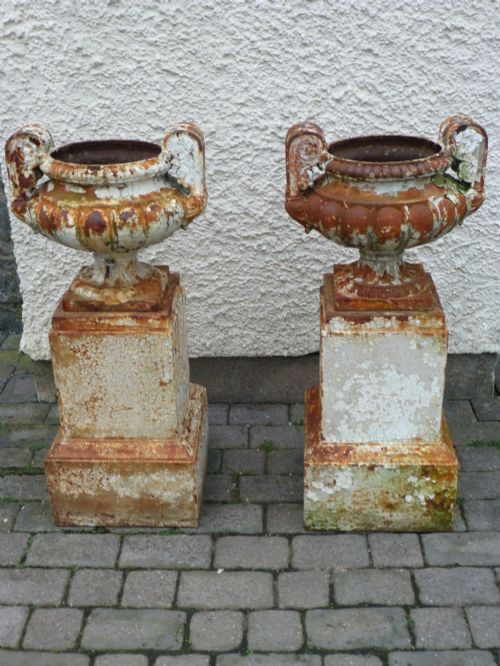
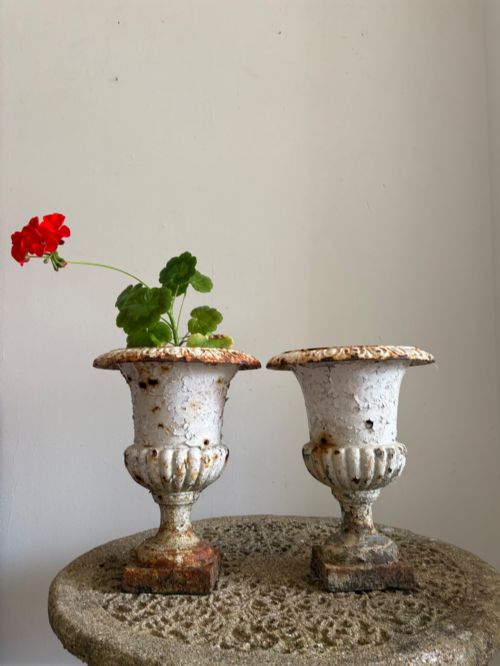
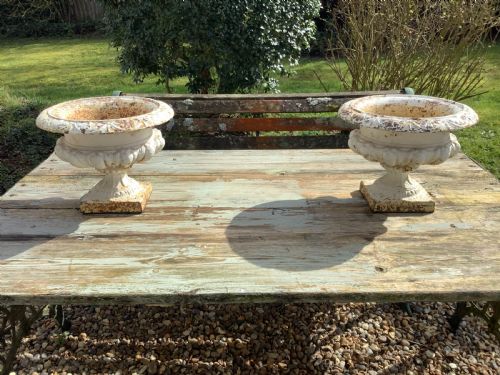
The selections range from tall fluted urns raised on original plinths to shallow tazza forms, smaller table urns, and strapwork planters constructed from wrought or sheet iron.
Buyers seeking this weathered iron planter pair discover both monumental garden statues and compact vessels dating from the Regency period through to the mid-twentieth century.
How they were made
Foundries utilised molten metal poured into moulds to create heavy cast iron urns, often mounting the vessels onto separate matching plinths for height and stability.
Wrought iron and sheet iron variations involved hand-beating, rolling and riveting strapwork into open frameworks designed to hold earth and plants.
Original painted surfaces and distressed finishes accumulated naturally over decades of outdoor exposure, bonding with the metal beneath.
Current listings span the nineteenth century, Victorian era, Edwardian period, and twentieth century, featuring cast iron, wrought iron, stone, and paint.
What varies in quality
Quality rests in the crispness of the classical casting detail, where sharply rendered foliage, fluting and handles separate finer foundry work from softer production.
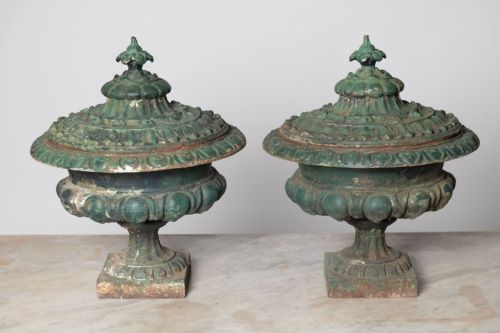
The presence of original matching plinths and lids elevates an assemblage, keeping the proportions balanced as the metal ages outdoors.
Falkirk Carron foundry
The Weathered Iron Planter Pair Glossary
- Campana
- A bell-shaped garden vessel with a flared rim and footed base. These traditional urns dominate classical garden design.
- Plinth
- A heavy rectangular or square base block supporting an urn. Matching plinths raise garden planters off damp ground.
- Tazza
- A shallow bowl-shaped vessel mounted on a stem and foot. These wide planters suit trailing foliage and low planting.
- Strapwork
- Decorative intersecting flat bands of wrought or sheet iron. This technique creates open geometric garden vessels.
Weathered Iron Planter Pair: Frequently Asked Questions
How do I style a weathered iron planter pair?
Position the matching vessels symmetrically on either side of a doorway, garden gate or pathway to create an immediate classical focal point. Their substantial weight anchors large outdoor spaces effectively.
Fill the urns with trailing ivies, seasonal blooms or small evergreen shrubs that complement the aged dark metal and distressed paint finishes.
Can I leave these iron planters outside in winter?
Cast iron and wrought iron are exceptionally durable outdoor materials that withstand frost and rain year-round. Ensure drainage holes remain clear so expanding ice does not crack the metal body.
Elevating the base slightly on stones prevents moisture from trapping underneath during prolonged wet spells.
How do I identify a Victorian iron urn?
Victorian examples typically display heavy, dense cast iron construction with classical Neoclassical motifs such as fluting, egg-and-dart rims, and acanthus leaf moulding. They frequently accompany matching stepped plinths.
The presence of weathered historical paint layers also points toward nineteenth-century origin.