






Weather Station Instrument
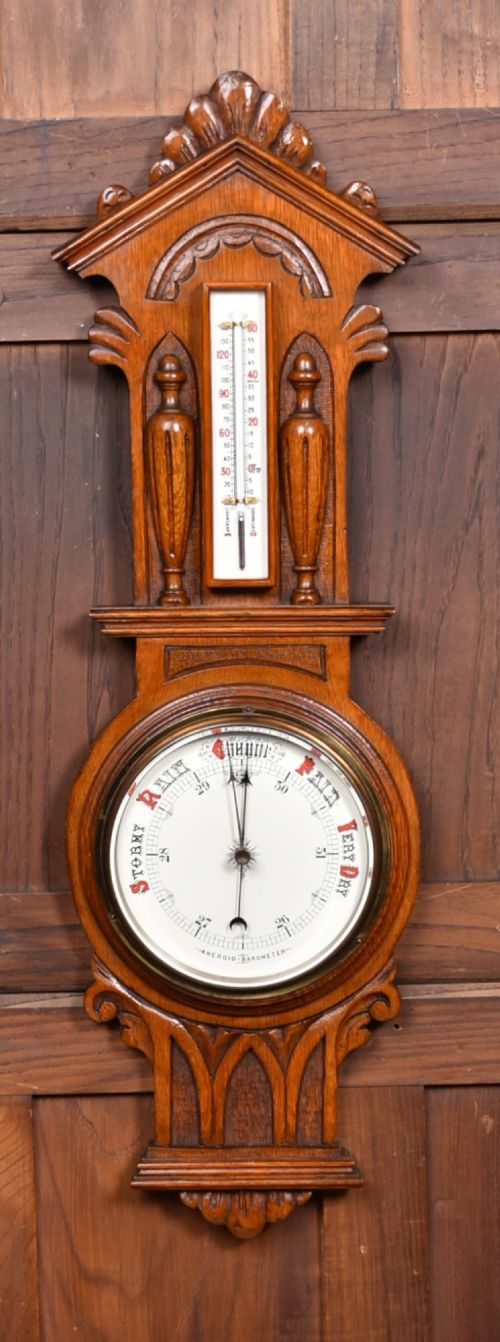
When you handle a weather station instrument, you hold a piece of domestic science framed in oak, mahogany, or brass.
Weather Station Instrument
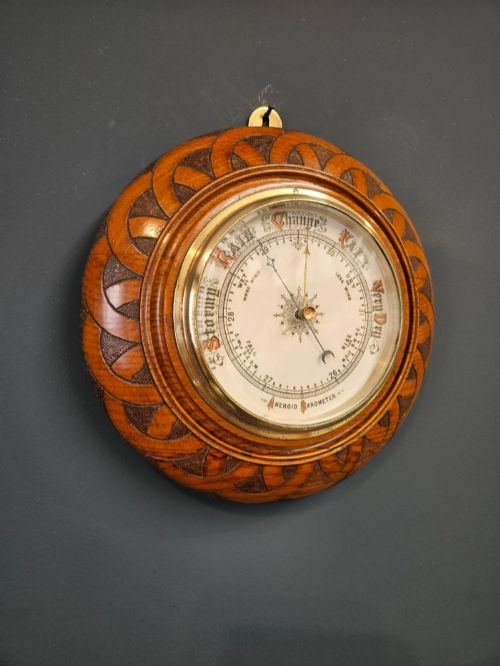
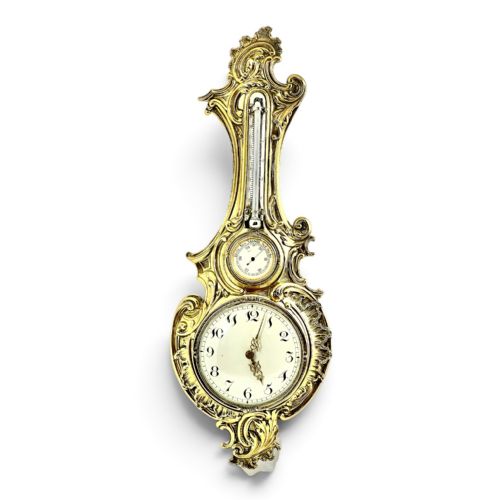
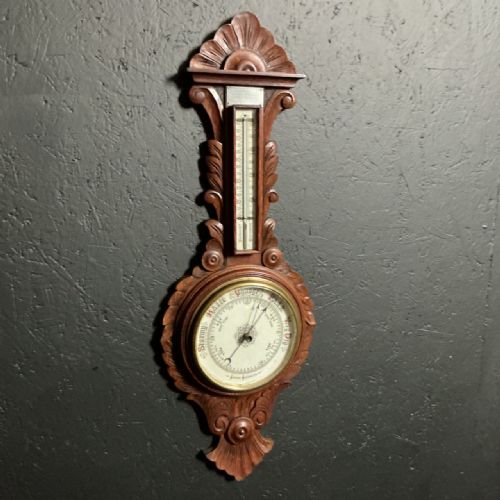
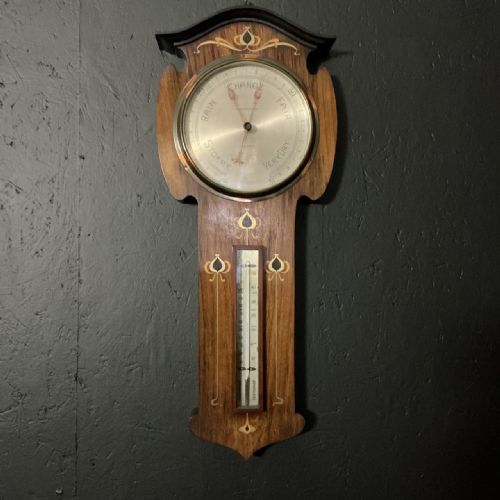
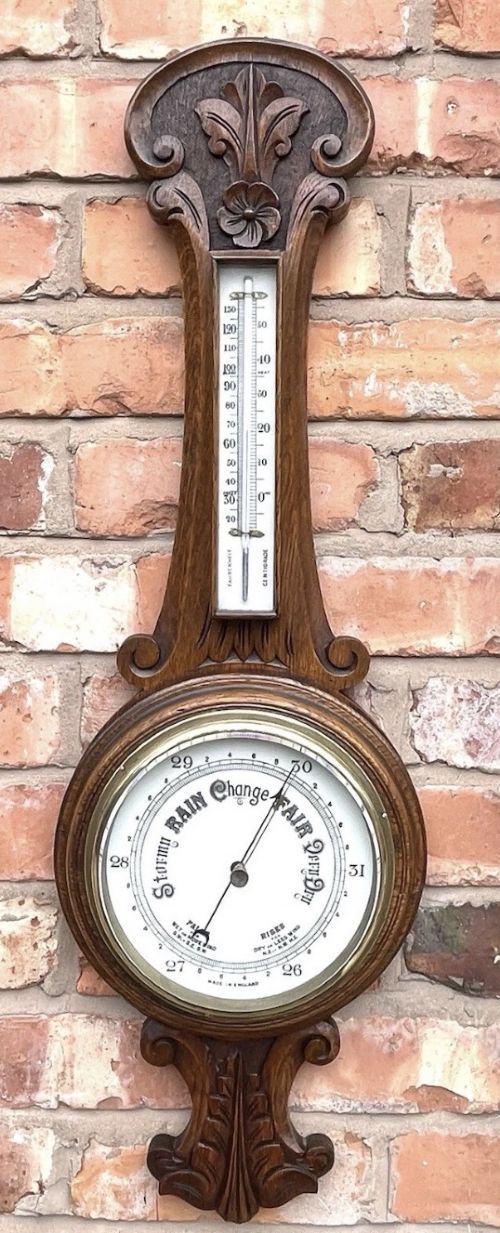
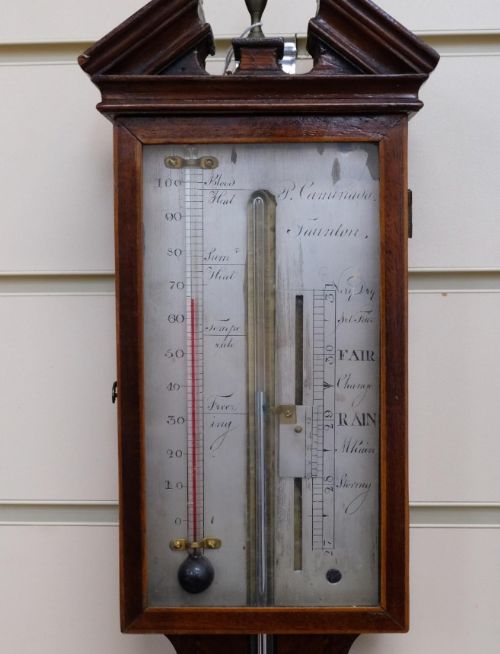
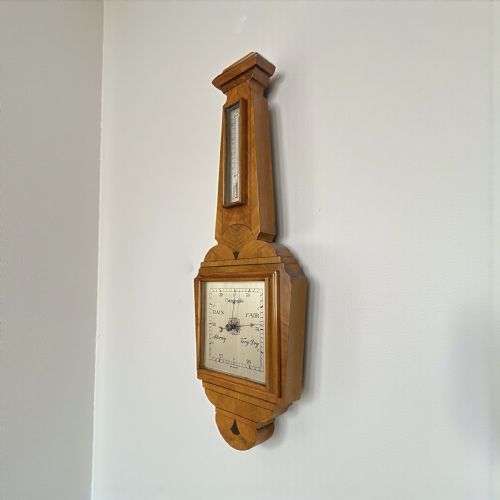
A weather station instrument combines barometers, thermometers, and hygrometers to measure atmospheric changes within a single cased apparatus. You will most frequently meet wall-mounted oak or mahogany banjo barometers and desk compendiums originating from the Victorian and Edwardian periods.
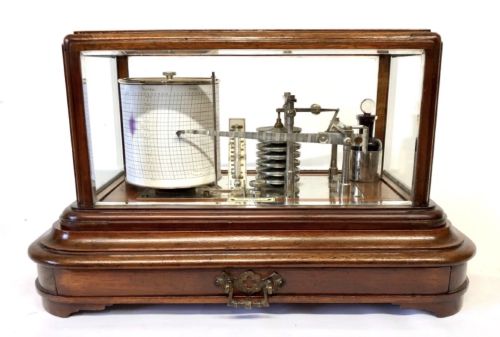
The objects serve both practical forecasting and domestic decoration, housing sensitive mechanical dials in carved wooden or brass frames. Pieces range from simple mercury stick barometers to complex barographs recording pressure continuously on paper drums.
How they were made
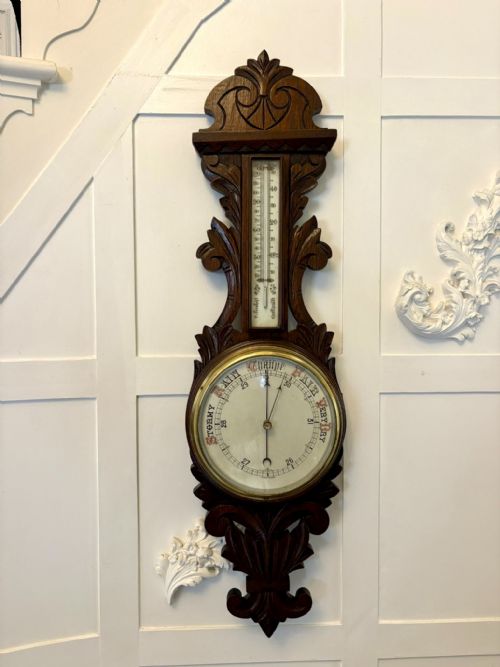
Cases rely on seasoned timber such as oak, mahogany, and walnut, frequently turned, carved, or inlaid with marquetry depending on the period. Black Forest examples display deeply carved foliage and animal motifs executed in walnut.
Internal mechanisms depend on brass gearing, glass barometer tubes filled with mercury, or aneroid metal capsules paired with enameled dials and steel pointers. Precision assembly ensures the delicate expansion and contraction of metal or fluid translates accurately to the visible scale.
Weather Station Instrument Retail Price Guide 2026
Typical asking prices for weather station instrument among the pieces listed under this phrase on Sellingantiques today, from the lower quarter to the upper quarter. They describe what is for sale here now, not the wider market.
Some nineteenth century hygrometers rely on human hair to sense moisture in the air.
What varies in quality
Quality rests in the precision of the maker's signature and the crispness of the timber carving rather than mere age. Named makers such as Negretti and Zambra or Short and Mason command greater attention for their superior mechanical reliability and finished casework.
The integrity of the dial faces, whether silvered brass or porcelain, and the retention of original glass covers determine the overall preservation of the apparatus. Elaborate styling, such as Rococo revival flourishes or Black Forest carvings, dictates the sculptural presence of the instrument.
Gaupp & Co·Wilh Lambrecht·P Caminada·Elliott Brothers·Negretti & Zambra·W Watson & Sons·J Hughes·Short & Mason Limited·Maple & Co·Antoine Redier·Vecchio & Co·R Fuess·Dollond London
The Weather Station Instrument Glossary
- Aneroid barometer
- An instrument measuring atmospheric pressure by the expansion and contraction of a flexible metal capsule, eliminating the need for liquid mercury. It typically displays readings on a circular dial face.
- Barograph
- A recording barometer that traces atmospheric pressure over time onto a rotating drum fitted with graph paper. These mechanical units often operate inside a glass and mahogany case.
- Hygrometer
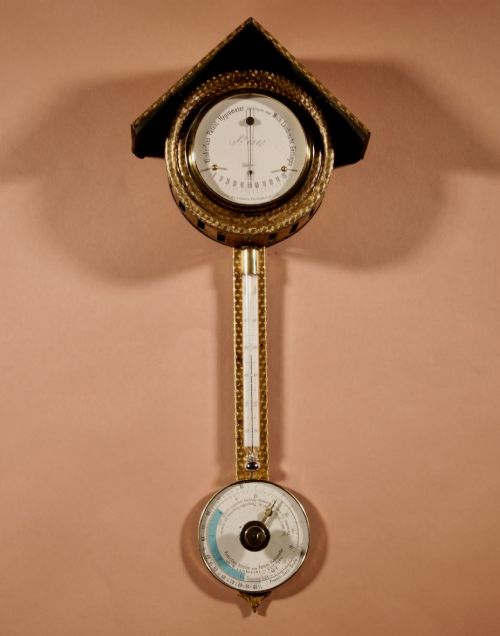
- A device measuring the humidity of the air, frequently utilising human hair to register moisture levels. It appears often in scientific weather stations alongside thermometers.
- Banjo barometer
- A wall-hanging instrument shaped like a banjo, housing a circular dial at the base and a long thermometer or hygrometer shaft above. The wooden case is frequently carved or veneered in mahogany or oak.
- Stick barometer
- A tall, narrow instrument enclosing a vertical glass tube filled with mercury to measure barometric pressure. These pieces rely on a exposed vernier scale for reading precise measurements.
Weather Station Instrument: Frequently Asked Questions
How do aneroid barometers work?
An aneroid barometer measures atmospheric pressure using a sealed, flexible metal capsule that expands or contracts as pressure changes. This movement transfers through internal levers to a pointer on the dial.
Unlike mercury stick barometers, this design contains no liquid, making the apparatus safer and easier to mount on walls or transport.
Where were weather stations placed?
These instruments were typically mounted on interior hallway or study walls, or placed upon heavy desks as compendiums. Domestic placement required locations away from direct heat sources and drafts to ensure stable readings.
Larger barographs and complex stations sat securely in libraries or offices where owners could observe continuous pressure traces over the week.
How do you date an antique barometer?
Dating relies on stylistic clues, casing materials, and maker signatures inscribed on the dial or paper scale. Victorian pieces frequently feature heavy carved oak or walnut, while Regency examples prefer clean mahogany stick designs.
Makers recorded in the mechanism or case history provide the firmest dates, connecting the piece to active workshop years.